
Can Invisalign Widen Your Smile?
14 September 2026 | Cosmetic Dentistry, Invisalign, Orthodontics
If you have searched 'invisalign to widen smile', the short answer is that Invisalign may help some smiles look broader, but it does not physically widen every jaw. Clear aligners can sometimes move teeth within the dental arch, which may reduce the dark spaces at the corners of the smile and create a wider-looking appearance. Whether this is suitable depends on your teeth, gums, bite, bone support and the cause of the narrow appearance.
A dental assessment is needed before anyone can say whether aligners are appropriate. Some people may be suited to Invisalign, some may need braces or another orthodontic option and some may be better served by a cosmetic or restorative approach.
Can you use invisalign to widen smile?
When people ask about 'invisalign to widen smile', they are usually asking whether clear aligners can make the upper teeth show more broadly when they smile. In some cases, yes, aligners may help by expanding the dental arch or uprighting teeth that lean inwards.
It helps to separate two ideas: widening the dental arch and widening the jaw bone. Invisalign moves teeth through controlled pressure. In adults, this usually means changing tooth position within the existing bone rather than making the jaw itself significantly wider.
For a growing child or teenager, jaw development may still be influenced with certain orthodontic appliances, depending on timing and anatomy. For adults, true skeletal widening is more limited and may require different treatment planning.
What a narrow smile can mean
A smile can appear narrow for several reasons. Some people naturally have a smaller dental arch. Others have teeth that tilt inwards, crowding, missing teeth, a bite issue or dark side spaces known as buccal corridors. Buccal corridors are the shadows between the back teeth and the corners of the mouth when smiling.
There is also a wide range of normal smile shapes. A smile does not need to be broad to be healthy. Treatment should only be considered if there is a genuine dental concern, a bite issue or a cosmetic goal that can be addressed safely.
How clear aligners may make a smile look wider
For some patients considering 'invisalign to widen smile', the planned movement may involve gently uprighting teeth that tilt towards the tongue or palate. This can make more tooth surface visible from the front.
Invisalign treatment uses a series of removable, custom-made clear aligners. Each aligner is designed to apply small forces to selected teeth. Attachments, which are small tooth-coloured shapes bonded to the teeth, may be used to help the aligners grip and guide movement.
If you are new to clear aligners, Dental Spa has a separate guide explaining how Invisalign clear braces work and who they may suit.
What Invisalign may change
The type of change possible depends on the starting position of your teeth. A dentist may look at whether the arch can be broadened safely, whether crowding needs to be managed and whether the bite will remain stable.
| Smile concern | How Invisalign may help | Important limitation |
|---|---|---|
| Teeth leaning inwards | May upright teeth so they sit in a broader position | Requires enough bone and gum support |
| Mild to moderate crowding | May create space through planned tooth movement | Severe crowding may need braces, extractions or other planning |
| Dark spaces at smile corners | May reduce the appearance of shadowing in some cases | Facial anatomy and lip shape also affect appearance |
| Narrow upper arch appearance | May broaden the dental arch in selected cases | Does not necessarily widen the jaw bone |
| Gaps with narrow-looking smile | May close spaces and align teeth | The cause of the gaps affects the plan |
If your main concern is spacing rather than smile width, you may find Dental Spa’s article on whether Invisalign can close gaps between teeth useful.
What Invisalign cannot do
A key point in any discussion about 'invisalign to widen smile' is that aligners move teeth; they do not change every underlying facial or jaw shape. If a smile appears narrow because the upper jaw itself is very narrow, clear aligners alone may not be enough.
In adults, there are biological limits to how far teeth can be moved safely. Moving teeth too far outside the supporting bone may increase the risk of gum recession, sensitivity, bite instability or relapse. Your dentist or orthodontic provider needs to balance cosmetic goals with long-term oral health.
Clear aligners also rely on patient cooperation. They need to be worn as instructed and removed for eating, drinking anything other than water and cleaning. If aligners are not worn consistently, tooth movement may not follow the planned sequence.
Possible risks and trade-offs
All orthodontic treatment has potential risks and benefits. During Invisalign treatment, some people experience temporary pressure, tenderness or speech changes. Other possible considerations include gum irritation, changes to the bite, root shortening, tooth mobility during movement or the need for refinements.
After treatment, retainers are usually needed to help maintain tooth position. Teeth can shift over time, including after aligner treatment, so long-term retention should be part of the discussion before you begin.
What an Invisalign assessment involves
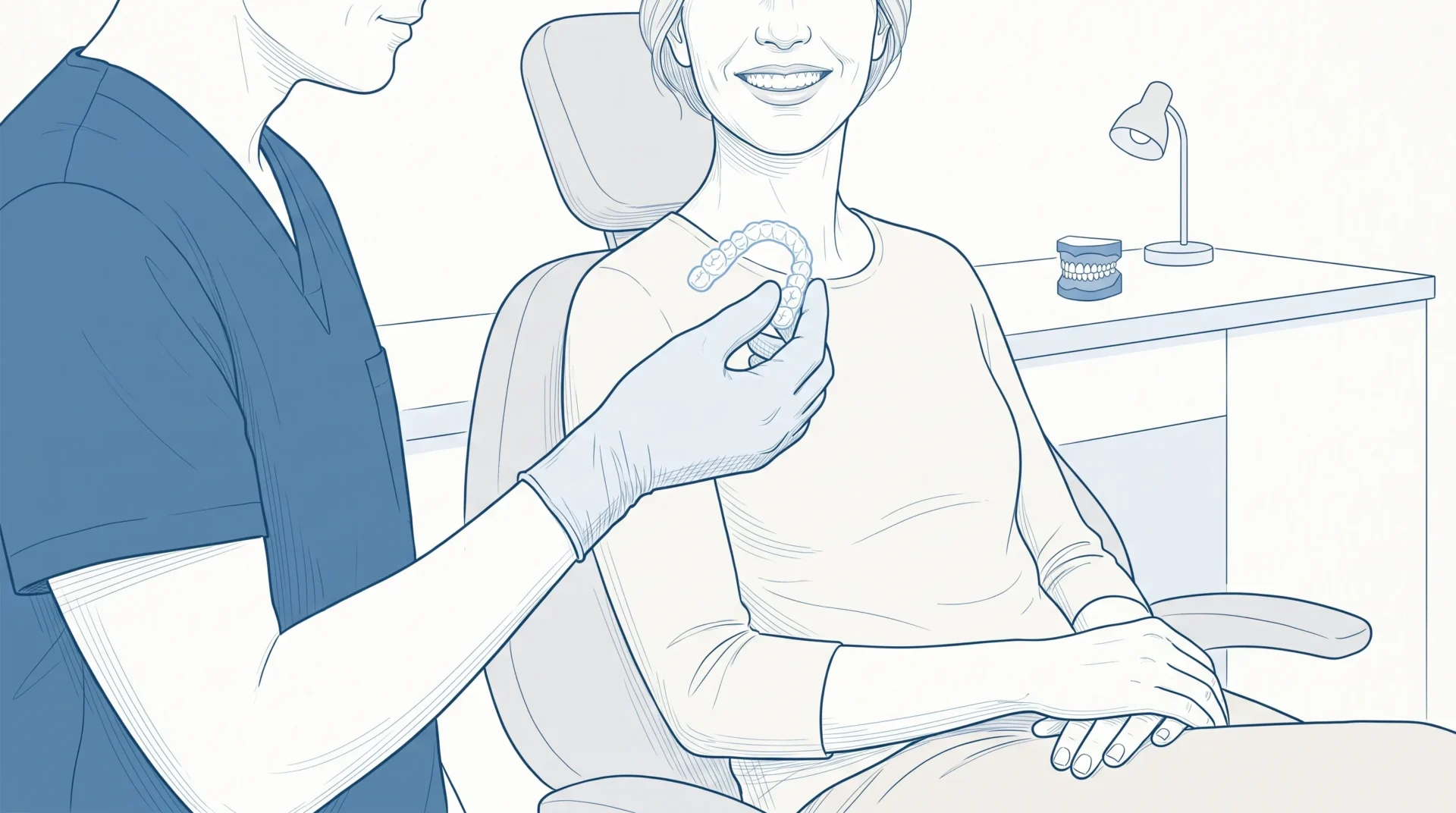
If you are exploring 'invisalign to widen smile' in Geelong, an appointment usually starts with a discussion about what concerns you and what you would like to understand. This is not about deciding on treatment before your mouth has been examined. It is about working out what is realistic and safe.
Your dentist may assess your teeth, gums, bite, jaw relationship and oral hygiene. Records such as photos, X-rays or a scan or impressions may be recommended where appropriate. These help show how the teeth fit together and whether widening movements could be planned without compromising oral health.
For general Australian patient information about orthodontic treatment options, the Australian Society of Orthodontists provides resources through Orthodontics Australia.
Questions your dentist may consider
A careful assessment may include:
- Whether your teeth lean inwards or the jaw itself is narrow
- How much crowding or spacing is present
- Whether your gums and bone can support the planned movement
- Whether your bite would improve, worsen or stay stable
- Whether braces, aligners or another option may be more appropriate
- Whether cosmetic treatment would address your concern without unnecessary orthodontic movement
This is why two people who both want a wider-looking smile may receive different recommendations.
Other options for a broader-looking smile
Not every person searching for 'invisalign to widen smile' will be advised to use Invisalign. Sometimes another option may be more suitable, either on its own or as part of a broader treatment plan.
Traditional braces may be considered when tooth movement is complex or when greater control is needed. Some patients prefer aligners because they are removable and less visible, but braces may still be appropriate for certain bite issues or movements. Dental Spa compares these options in more detail in its guide to whether Invisalign is better than braces.
Common alternatives to discuss
| Option | What it may be considered for | Key considerations |
|---|---|---|
| Invisalign or clear aligners | Mild to moderate alignment changes and selected arch broadening | Requires suitable anatomy and consistent wear |
| Braces | More complex tooth movement or bite correction | Fixed to the teeth and adjusted over time |
| Palatal expander | Some growing children with a narrow upper jaw | Timing and growth stage are important |
| Veneers or bonding | Changing visible tooth shape, size or colour | Does not correct bite alignment and may involve tooth preparation |
| Crowns or implants | Restoring damaged or missing teeth where clinically indicated | Used for restorative needs, not simply to widen a healthy smile |
| No treatment | When the smile is healthy and concerns are mild or cosmetic only | A dentist can explain normal variation and monitoring options |
Cosmetic dental treatments can sometimes change how broad the front teeth appear, but they do not move the teeth into a new bite position. They may also involve irreversible changes to natural tooth structure, so they should be considered carefully.
How to decide whether treatment is worth considering
A wider-looking smile can be a cosmetic goal, an orthodontic goal or both. The right plan depends on why the smile appears narrow and whether changing it would also support a stable bite and healthy gums.
It can be useful to ask your dentist what problem treatment is intended to address. Is the goal to reduce crowding, improve the way the teeth meet, close spaces, make more teeth visible or change tooth shape? Clear goals make it easier to compare options without feeling pressured into a particular treatment.
If you live in Geelong or nearby areas such as Newtown, Geelong West, East Geelong, Belmont or Highton, you may prefer to discuss these questions with a local dental team so appointments, reviews and retainers are easier to manage.
Helpful questions to ask at your appointment
Before starting any aligner treatment, consider asking:
- What is making my smile look narrow?
- Can my teeth be moved safely within the available bone?
- What changes are realistic in my case?
- What are the possible risks or limitations?
- Would braces, cosmetic dentistry or no treatment be reasonable alternatives?
- What retention would be needed after treatment?
The answers should be specific to your mouth, not based only on photos or a general description of your smile.
Frequently Asked Questions
Can Invisalign make my smile wider? Invisalign may help some smiles appear wider by moving teeth into a broader arch position or uprighting teeth that lean inwards. It cannot widen every jaw and suitability depends on your anatomy, bite, gum health and treatment goals.
Can adults use invisalign to widen smile? Adults may be able to use clear aligners to broaden the appearance of the dental arch in selected cases. Adult jaw bones are no longer growing, so skeletal widening is more limited than it may be in younger patients.
Is Invisalign better than braces for widening a smile? Neither option is automatically better. Invisalign may suit some mild to moderate movements, while braces may be recommended for more complex tooth movement or bite correction. A clinical assessment is needed to compare them properly.
Will widening my smile with aligners hurt? Some pressure or tenderness can occur when teeth move, especially when changing to a new aligner. Experiences vary between patients. Your dentist can discuss ways to manage discomfort and when symptoms should be checked.
How long does Invisalign take to widen a smile? Treatment time varies depending on the amount and complexity of tooth movement required, how well the aligners are worn and whether refinements are needed. Your dentist can provide an estimate after assessing your teeth and treatment plan.
Discussing your options in Geelong
If you are considering Invisalign because your smile looks narrow, a dental examination can help identify whether the concern is related to tooth position, jaw width, bite alignment or another factor. Your dentist can then explain the potential benefits, risks, limitations and alternatives.
To discuss whether clear aligners may be suitable for your circumstances, you can contact Dental Spa in Geelong to arrange an assessment. Treatment recommendations should always be based on your individual oral health, medical history, anatomy and preferences.
Disclaimer
The information provided on this website is for general informational and educational purposes only. It is not intended to replace professional dental advice, diagnosis or treatment. Dental needs and treatment outcomes vary between individuals. Always seek advice from a qualified dental practitioner regarding your specific circumstances before making decisions about your oral health or treatment. A consultation and clinical assessment are required to determine which treatment options may be suitable for you. All dental procedures carry potential risks and benefits, which will be discussed with you before treatment.