
Is Invisalign Better Than Braces? Key Differences to Consider
7 September 2026 | Braces, Invisalign, Orthodontics
If you're wondering whether Invisalign is better than braces, the most accurate answer is that it depends on your teeth, bite, oral health and day-to-day habits. Invisalign can be a good option for some people who want a less noticeable, removable aligner system. Braces may be more appropriate where tooth movement is more complex, or where a fixed appliance would make treatment easier to manage.
Both options can be used to straighten teeth when they are planned and monitored properly. The right choice is usually less about which treatment is generally better and more about which one may be suitable for your individual circumstances.
Short answer: neither option is better for everyone
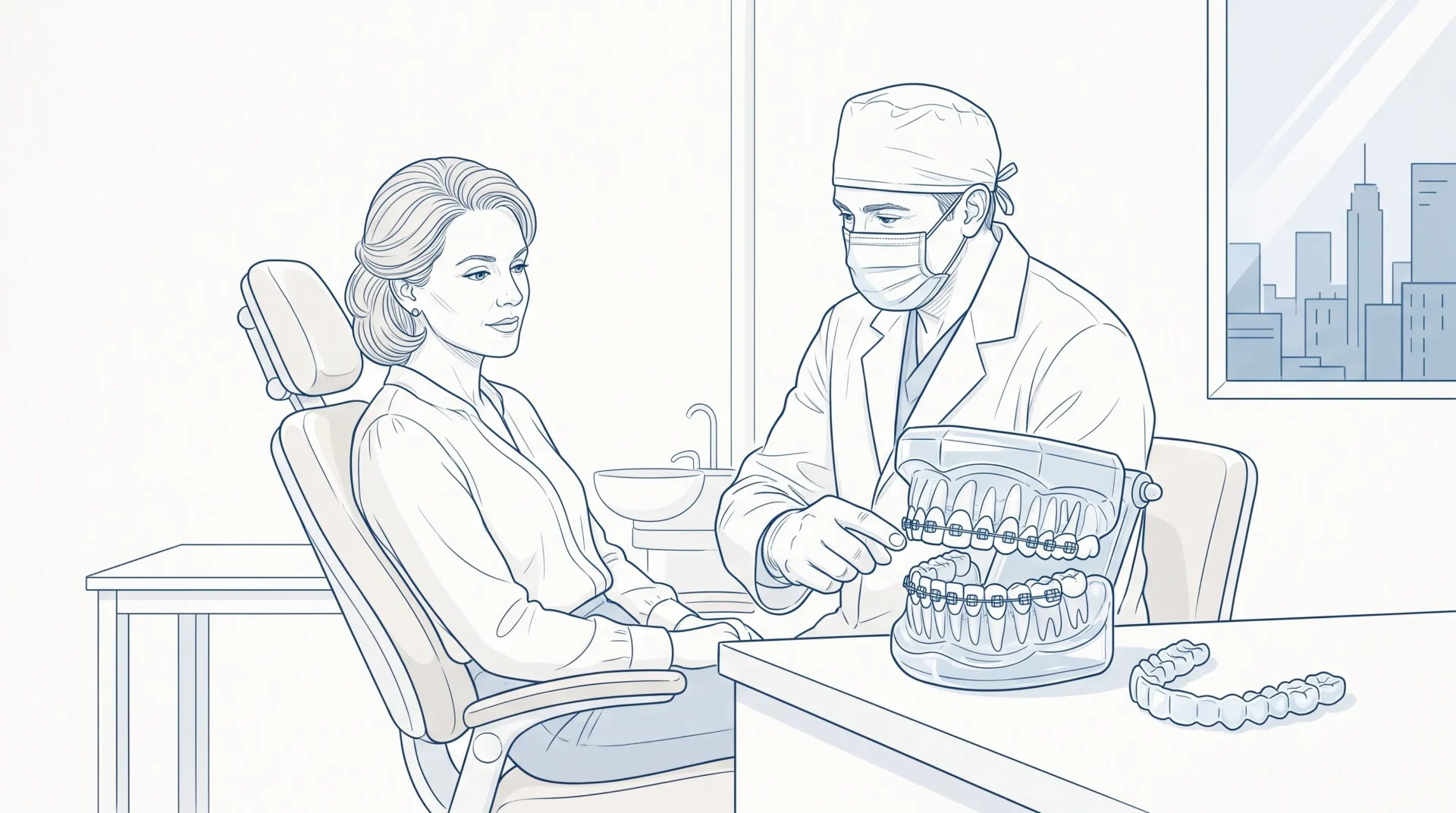
Invisalign and braces work in different ways. Invisalign is a brand of clear aligner treatment. It uses a series of custom-made, removable plastic aligners that apply gentle pressure to move teeth over time. Braces use brackets attached to the teeth and connected by wires, which are adjusted during treatment to guide tooth movement.
For some adults and teens, the removability and appearance of Invisalign are important advantages. For others, braces may offer more predictable control for certain tooth movements or bite issues. Your dentist will also consider gum health, tooth decay risk, previous dental work, jaw growth in younger patients, your medical history and whether referral to an orthodontist may be appropriate.
If you are comparing options in more detail, Dental Spa has a separate guide on clear aligners or braces and what may suit your needs.
How Invisalign and braces work
Invisalign aligners are made to fit closely over the teeth. Each aligner is worn for a set period before changing to the next one in the series. Many Invisalign plans involve wearing aligners for about 20 to 22 hours per day, although your exact instructions may differ. You remove them for eating, drinking anything other than water, brushing and flossing. You can read more about how long Invisalign aligners should be worn each day if wear time is one of your main concerns.
Braces stay fixed to the teeth throughout treatment. They can be made from metal or tooth-coloured materials, depending on the option recommended and available for your case. Because braces are not removable, they keep working throughout the day and night. Adjustments are made at review appointments, and some people may also need elastics or other appliances as part of their plan.
For general consumer information about orthodontic treatment in Australia, Orthodontics Australia is a useful patient resource.
Key differences to consider before choosing
The following table compares common practical differences. It is not a substitute for a dental examination, but it may help you prepare questions for your appointment.
| Factor | Invisalign | Braces |
|---|---|---|
| Appearance | Clear aligners are less noticeable than many braces, but attachments may still be visible | Brackets and wires are visible, although tooth-coloured options may be available in some cases |
| Removability | Removable for meals, brushing and flossing | Fixed to the teeth until treatment is completed |
| Eating | No brackets or wires during meals because aligners are removed | Some hard, sticky or chewy foods may need to be avoided to reduce appliance damage |
| Cleaning | Teeth can be brushed and flossed without an appliance attached, but aligners also need cleaning | Cleaning takes more time because plaque can collect around brackets and wires |
| Compliance | Depends heavily on wearing aligners as instructed | Less dependent on remembering to wear the appliance because it is fixed |
| Complex tooth movement | May be suitable for many mild to moderate concerns and some more involved cases | May be recommended for more complex movements or bite correction |
| Comfort | No brackets or wires, but pressure and tenderness can still occur | Brackets and wires may irritate cheeks or lips, especially early in treatment |
| Repairs or interruptions | Lost or poorly fitting aligners may delay progress | Broken brackets or wires may need repair appointments |
Is Invisalign better than braces for everyday life?
Invisalign may feel more convenient for people who are comfortable managing a removable appliance. You can take aligners out to eat, so there are usually fewer food limitations compared with braces. Brushing and flossing can also be more familiar because there are no brackets attached to clean around.
The trade-off is responsibility. Aligners only work when they are worn as directed. If they are often left out during the day, misplaced or not seated properly, treatment may not progress as planned. Some people also need small tooth-coloured attachments placed on certain teeth to help the aligners grip, and these can make the treatment more noticeable than expected.
Braces can be simpler from a compliance point of view because they are fixed. This may suit younger patients, busy adults who do not want to track aligner wear time, or people who feel they may forget to put aligners back in after meals. The main daily challenge is cleaning carefully around the appliance and avoiding foods that could bend wires or dislodge brackets.
When Invisalign may be considered
Invisalign may be considered for a range of alignment concerns, depending on the assessment. It is often discussed with patients who have crowding, spacing, mild bite concerns or orthodontic relapse after previous treatment. Some more complex cases may also be treated with aligners, but this depends on the movements required and the clinician's assessment.
It may be more appealing if you:
- Prefer a removable appliance for meals and oral hygiene
- Want an option that is generally less noticeable than fixed braces
- Can commit to wearing aligners for the recommended hours each day
- Are comfortable removing, cleaning and storing aligners safely
- Have dental concerns that aligners can reasonably address
Invisalign is not suitable for every patient. Gum disease, untreated tooth decay, certain bite problems, impacted teeth, missing teeth, complex rotations or significant jaw discrepancies can all affect suitability. Your dentist may recommend another approach or refer you to an orthodontist if your needs are more complex.
When braces may be recommended
Braces may be recommended when more continuous or controlled tooth movement is needed. Because they are fixed, braces can give the treating clinician consistent control over how forces are applied. This can be helpful for some complex rotations, significant crowding, bite correction, vertical tooth movement or cases involving unerupted or impacted teeth.
Braces may also be considered when a patient is unlikely to wear removable aligners consistently. This is not a criticism of the patient. It is a practical part of treatment planning. The most suitable appliance is the one that can be used reliably in real life.
Some patients worry that braces are only for children or teenagers. Adults can also have braces when they are appropriate for the case. Age alone does not decide suitability. Oral health, bone support, tooth position, treatment goals and personal preferences all matter.
Oral hygiene, tooth decay risk and gum health
Orthodontic treatment can make oral hygiene more important, regardless of the appliance. Teeth that are difficult to clean may be more prone to plaque build-up, gum irritation and tooth decay. The Australian Dental Association's patient website Teeth.org.au provides practical information about brushing, flossing and oral health habits.
With Invisalign, you need to clean your teeth before putting aligners back in, especially after eating or drinking sugary or acidic drinks. If food particles or sugars are trapped under aligners, this may increase the risk of decay or enamel changes. Aligners also need regular cleaning according to your dentist's instructions.
With braces, plaque can collect around brackets and wires. This means brushing may take longer, and you may be shown how to use floss threaders, interdental brushes or other cleaning aids. If oral hygiene becomes difficult during treatment, your dentist may recommend extra preventive care or changes to your routine.
Any active dental disease should generally be managed before orthodontic treatment begins. This may include treating tooth decay, gum inflammation or other dental concerns first.
Comfort, speech and appointments
Both Invisalign and braces can cause pressure or tenderness as teeth move. This is a normal part of orthodontic tooth movement for many patients, but the level of discomfort varies. Aligners may feel tight when a new set is started. Braces may rub against the lips or cheeks, particularly early in treatment or after adjustments.
Speech can also change temporarily with clear aligners. Some people notice a slight lisp at first, which may improve as they adapt. Braces can also take time to get used to, especially when eating or speaking in the first few days.
Appointment patterns differ depending on the plan. Invisalign reviews may involve checking that aligners are tracking well and providing the next sets. Braces appointments usually involve wire changes, adjustments and checking the appliance. If something breaks, rubs or stops fitting correctly, you should contact your dental clinic for advice rather than trying to adjust it yourself.
Cost considerations in Geelong
There is no single answer to whether Invisalign or braces costs more. Fees can vary depending on case complexity, treatment length, records, scans, review appointments, attachments, refinements, retainers and whether additional dental care is needed before treatment starts.
For Invisalign specifically, Dental Spa has a guide explaining what affects the cost of Invisalign treatment. A written treatment estimate can help you understand what is included, what may be additional and whether payment options are available.
If cost is a key factor, ask your dentist to explain the available options, the reasons behind the recommendation and any likely maintenance or retention costs after active treatment. The cheapest option is not always the most appropriate, and the most expensive option is not automatically the most suitable.
What a consultation may involve
For patients in Geelong and nearby areas such as Newtown, Geelong West, East Geelong, Belmont and Highton, an orthodontic discussion usually starts with a dental assessment. This helps your dentist understand what you want to improve and whether your oral health is ready for tooth movement.
A consultation may include:
- A conversation about your concerns, preferences and treatment goals
- An examination of your teeth, gums and bite
- Photos, digital scans or X-rays if clinically indicated
- Discussion of Invisalign, braces or other options that may be suitable
- An explanation of potential benefits, limitations, risks, treatment time and costs
- Advice about whether referral to an orthodontist may be appropriate
This assessment matters because two people can have teeth that look similar from the front but require very different treatment plans once the bite, roots, gums and jaw relationship are assessed.
Risks, limitations and aftercare
All dental procedures carry potential risks and benefits. Orthodontic treatment is no exception. Possible issues can include temporary tenderness, gum irritation, ulcers, difficulty cleaning, tooth decay, enamel marks, root resorption, changes in bite, aligner tracking problems, broken appliances or the need to alter the treatment plan.
Results and treatment experiences vary between patients. Some cases may need refinements, extra aligners, elastics, restorative dental work or longer treatment than first expected. If a tooth does not respond as planned, your dentist will discuss the options available.
Retention is also important. After Invisalign or braces, most patients are advised to wear retainers to help reduce the chance of teeth shifting back. Retainers do not make movement impossible, but they are an important part of maintaining the result achieved through treatment.
Questions to ask before deciding
Before choosing between Invisalign and braces, it can help to ask direct questions during your appointment:
- What orthodontic concerns do I have, and how complex are they?
- Am I suitable for Invisalign, braces or both?
- What are the limitations of each option in my case?
- How long might treatment take, and what could change that estimate?
- What happens if aligners are not worn enough or if braces break?
- What are the risks for my teeth and gums?
- What retention will I need after treatment?
- What costs are included, and what might be separate?
A clear discussion can make the decision feel more manageable. It also helps ensure the treatment plan matches your oral health, lifestyle and expectations.
Frequently asked questions
Is Invisalign faster than braces? Sometimes, but not always. Treatment time depends on the type and amount of tooth movement needed, how your teeth respond and whether aligners are worn as directed. Braces may be faster in some cases, while Invisalign may be efficient in others.
Can Invisalign fix the same problems as braces? Invisalign can be used for many alignment concerns, but braces may be recommended for some complex tooth movements or bite issues. A clinical assessment is needed to compare options for your specific case.
Are braces cheaper than Invisalign? Not necessarily. Costs vary depending on complexity, treatment duration and what is included in the plan. Ask for a written estimate that explains fees, retainers and any likely additional care.
Can I eat normally with Invisalign? Aligners are removed for eating, so there are usually fewer food restrictions than with braces. You should brush your teeth before putting aligners back in where possible and follow your dentist's cleaning advice.
Do braces or Invisalign hurt? Both can cause pressure, tenderness or rubbing as teeth move. Experiences vary. If discomfort feels unusual, severe or is linked to a broken appliance, contact your dental clinic for advice.
Will I need retainers after treatment? Retainers are commonly recommended after orthodontic treatment to help reduce relapse. Your dentist will explain the type of retainer, how often to wear it and how to care for it.
Discussing Invisalign and braces in Geelong
If you are considering Invisalign or braces, a dental examination can help determine which options may be appropriate for your teeth, bite and oral health. Dental Spa in Geelong can assess your concerns, explain the potential benefits and limitations, and discuss alternatives so you can make an informed decision.
To discuss teeth straightening options, contact Dental Spa to arrange an assessment in Geelong.
Disclaimer
The information provided on this website is for general informational and educational purposes only. It is not intended to replace professional dental advice, diagnosis or treatment. Dental needs and treatment outcomes vary between individuals. Always seek advice from a qualified dental practitioner regarding your specific circumstances before making decisions about your oral health or treatment. A consultation and clinical assessment are required to determine which treatment options may be suitable for you. All dental procedures carry potential risks and benefits, which will be discussed with you before treatment.