
Simple Dental Care Habits for the Whole Family
28 September 2026 | Children's Dentistry, General Dentistry, Preventative Dentistry
If you searched for “dental care family” because you want a routine that actually works for children, teenagers and adults, the answer is usually simpler than buying more products. Most families need a few steady habits, a realistic schedule and a dental team they feel comfortable asking questions.
Good home care does not need to be complicated. It should fit around school mornings, work, sport, meals and tired evenings. It also needs to change as children grow, adults develop new dental needs and older relatives manage medicines, dry mouth or existing dental work.
This guide focuses on practical daily habits for families in Geelong and nearby areas such as Newtown, Geelong West, East Geelong, Belmont and Highton. It is general information only, so a dental examination is still needed before any treatment or personalised recommendation.
A simple dental care family routine for home
A good routine starts with the basics: brush twice a day, clean between teeth regularly, drink plenty of water and keep sugary foods and drinks to sensible times rather than grazing all day. The Australian Dental Association’s patient site, Teeth.org.au, has useful oral health information for Australian families who want to understand the basics in plain language.
For most people, brushing before bed is the most important brushing session because food particles and plaque can sit on the teeth overnight. Morning brushing helps freshen the mouth and remove plaque before the day begins.
Fluoride toothpaste is commonly recommended because fluoride helps strengthen tooth enamel, the hard outer layer of the tooth. Children need age-appropriate toothpaste and supervision, especially while they are still learning not to swallow it. If you are unsure which toothpaste is suitable for your child, ask your dentist at their next visit.
Make brushing easier for different ages
For many households, the dental care family plan works best when each person has a routine that matches their age and dexterity. A toddler, a teenager with braces and an adult with a crown may all need slightly different support.
Young children usually need hands-on help with brushing. Even when they want to do it themselves, they may miss the gumline and back teeth. A helpful approach is to let them brush first, then have an adult finish the job gently.
Teenagers may need reminders rather than direct help. If they wear braces or clear aligners, they may also need extra cleaning tools and clear instructions from their dentist or orthodontic provider. Food can catch around brackets, wires or attachments, so rushing the routine can increase the chance of plaque build-up.
Adults often know what they should do, but consistency can be harder than knowledge. Keeping floss, interdental brushes or floss picks where they are easy to reach can make the habit more likely to happen.
| Family member | Helpful habit | Why it matters |
|---|---|---|
| Toddlers and preschoolers | Supervised brushing with age-appropriate fluoride toothpaste | Helps build skills while reducing missed areas |
| Primary school children | A set morning and bedtime routine | Makes brushing part of the day rather than a negotiation |
| Teenagers | Extra care around braces, aligners or sports mouthguards | Reduces plaque traps and supports appliance hygiene |
| Adults | Daily interdental cleaning | Helps clean areas a toothbrush cannot reach well |
| Older adults | Review dry mouth, dentures, crowns or implants with a dentist | Dental needs may change with medicines, health conditions or restorations |
Parents with younger children may also find it useful to read about what happens during children’s dental cleans, especially if a child is due for a visit or feels unsure about appointments.
Food, drinks and timing matter
A dental care family routine also needs to consider how often teeth are exposed to sugar and acid. It is not only about how much sugar is eaten, but how often it is consumed across the day. Frequent sipping or snacking gives mouth bacteria more opportunities to produce acids that affect tooth enamel.
Water is the most tooth-friendly everyday drink. In many parts of Victoria, tap water contains fluoride, although families who rely on tank water, bottled water or filtered water may wish to discuss fluoride exposure with their dentist.
For lunchboxes, aim for foods that are filling and practical rather than relying on sticky snacks or sweet drinks. Cheese, yoghurt with no added sugar, wholegrain sandwiches, boiled eggs, cut vegetables and fresh fruit can be good options depending on your family’s preferences and dietary needs.
It is also sensible to avoid brushing immediately after acidic drinks or foods such as soft drink, sports drinks, citrus or vinegar-heavy foods. Waiting a short period and rinsing with water first can be gentler on enamel. If this is a regular issue, ask your dentist for advice suited to your diet and oral health.
For older teens and adults, oral care often sits alongside other personal care habits before work, school or social activities. Items such as lip balm, sunscreen, deodorant or pocket-sized fragrance samples may be part of a bag or bathroom routine, but brushing and interdental cleaning should remain the foundation for mouth health.
Build habits around real family life
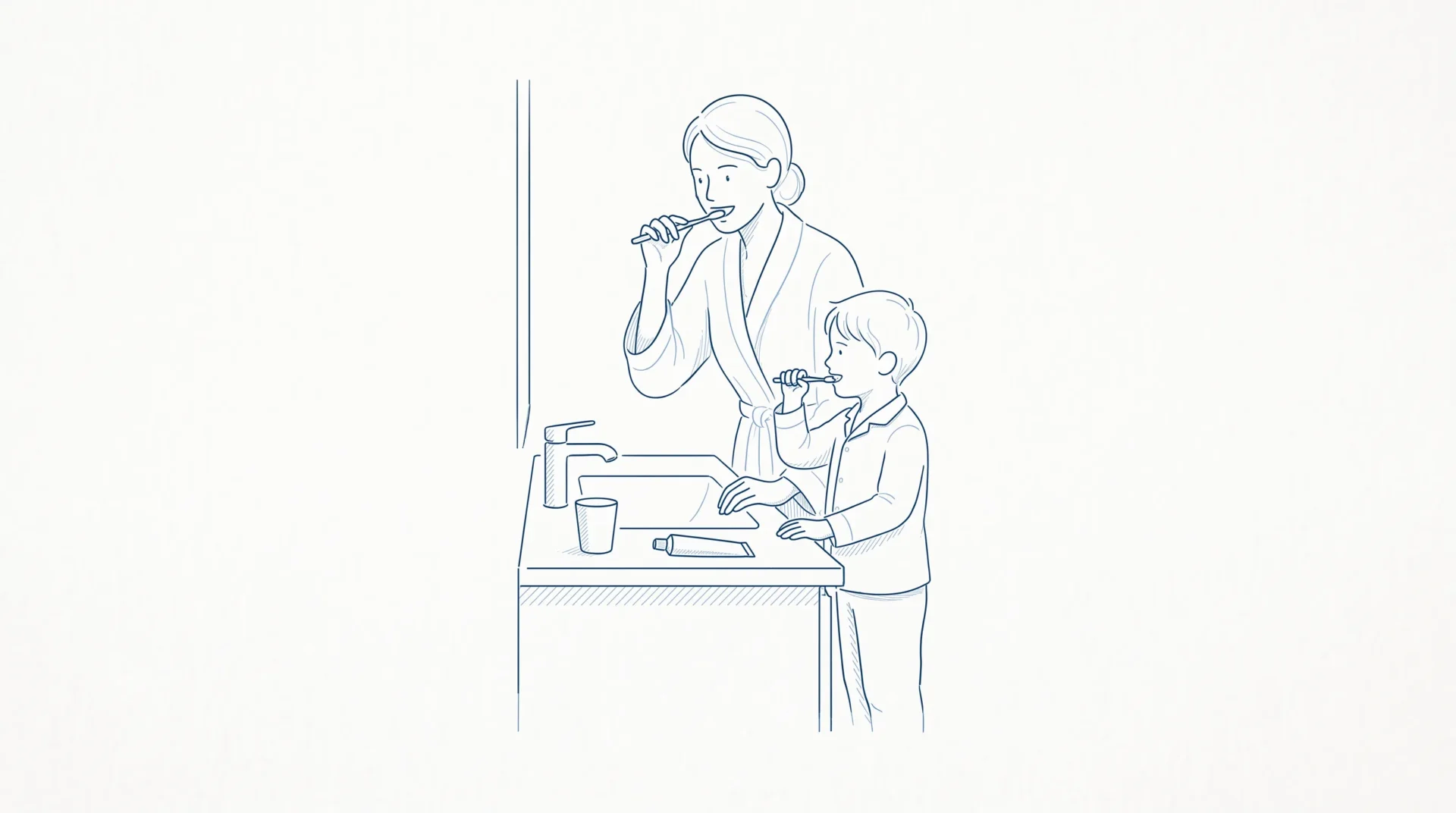
The same dental care family routine is more likely to last when it is connected to habits your household already has. Brushing after changing into pyjamas, flossing while waiting for the shower or keeping a spare toothbrush in a sports bag can make oral care less dependent on memory alone.
Busy families may also benefit from keeping dental supplies visible. A cup with toothbrushes, a timer, floss picks in the bathroom drawer or a small travel kit can reduce friction. The goal is not perfection. It is to make the healthy choice easier most days.
For school-aged children, a simple chart may help for a short period. Avoid turning dental care into a source of shame or conflict. Encouragement and routine usually work better than lectures, especially if adults model the same habits.
If your family schedule is crowded, Dental Spa has a separate guide on planning dental visits for a busy family, including ideas for shared calendars and booking times that are more realistic.
Do not ignore symptoms between check-ups
Home care can reduce the risk of some dental problems, but it cannot diagnose decay, gum disease, cracked teeth or infections. A dental check-up allows a dentist to assess your teeth, gums, bite and existing dental work.
Symptoms that may need professional assessment include toothache, swelling, bleeding gums that do not settle, a broken tooth, a loose adult tooth, sensitivity that is getting worse or a mouth ulcer that has not healed after about two weeks. These symptoms do not always mean something serious, but they are worth discussing with a dentist.
If treatment is recommended, your dentist should explain the likely benefits, possible risks, alternatives and what may happen if you choose not to proceed. Treatment suitability depends on your oral health, medical history, anatomy, goals and individual circumstances. Experiences and outcomes vary between patients.
For more everyday prevention ideas, you may like Dental Spa’s article on oral health for busy lives, which covers practical ways to keep up with brushing, flossing and regular check-ups when your week is full.
What regular dental visits may involve
A practical dental care family checklist should include regular dental visits, but the timing can vary. Some people need appointments more often because of gum health, decay risk, orthodontic treatment, dry mouth, medical conditions or previous dental work. Others may be advised to attend less frequently.
A general dental appointment may include a discussion about symptoms, medical history, medicines, diet, brushing habits and any concerns. The dentist may examine the teeth, gums and soft tissues of the mouth. X-rays may be recommended when clinically appropriate, but they are not needed at every visit for every person.
Professional cleaning may be suggested to remove plaque and hardened tartar that cannot be removed with a toothbrush at home. For children, the visit may focus on getting comfortable, checking development, reinforcing brushing and discussing diet or fluoride needs.
Families who may be eligible for the Child Dental Benefits Schedule can ask the clinic or Services Australia for current information, as eligibility and benefit details can change. It is always worth checking before assuming costs or cover.
Small habits that can help the whole household
Small repeatable actions often matter more than a complicated routine. If your family is starting from scratch, choose one or two habits first rather than trying to change everything at once.
Useful habits include:
- Keeping toothbrushes where they can dry between uses
- Replacing toothbrushes or brush heads when bristles become worn
- Using a mouthguard for contact sport if recommended
- Packing water for school, work and sport
- Limiting sweet drinks to occasional use rather than daily sipping
- Asking your dentist how to clean around braces, implants, crowns or bridges
A good dental care family routine should feel manageable. If a child has sensory sensitivities, a teenager is struggling with braces or an older adult has difficulty holding a toothbrush, your dentist can suggest practical adjustments.
Frequently Asked Questions
How early should children start dental care? Oral care starts before a child can brush independently. Parents can clean gums gently and begin brushing when teeth appear. Your dentist can advise on timing, toothpaste and technique based on your child’s age and needs.
Is flossing necessary for everyone in the family? Cleaning between teeth is important because toothbrush bristles do not reach every surface well. Floss, floss picks or interdental brushes may be suitable depending on tooth spacing, age and dexterity. Ask your dentist which option fits your mouth.
How often should my family have dental check-ups? There is no single schedule that suits everyone. Your dentist may recommend a timeframe based on decay risk, gum health, medical history, age and existing dental work.
What if my child refuses to brush? Keep the routine calm, short and predictable. Letting your child choose a toothbrush, using a song or brushing together may help. If brushing remains difficult, mention it at the next dental visit so the team can suggest age-appropriate strategies.
Can home care replace dental visits? No. Home care supports oral health, but it cannot detect every problem or remove hardened tartar. A dental examination can help identify concerns and guide suitable options.
Dental care for families in Geelong
If your household is trying to improve daily habits, a dental examination can help identify what is working and what may need adjusting. The team at Dental Spa in Geelong provides general, children’s, emergency and cosmetic dental services, with advice tailored to individual needs rather than a one-size-fits-all routine.
To discuss your family’s oral health, you can book an appointment with Dental Spa. Your dentist can assess your teeth and gums, explain suitable options and answer questions about benefits, limitations, risks and alternatives.
Disclaimer
The information provided on this website is for general informational and educational purposes only. It is not intended to replace professional dental advice, diagnosis or treatment. Dental needs and treatment outcomes vary between individuals. Always seek advice from a qualified dental practitioner regarding your specific circumstances before making decisions about your oral health or treatment. A consultation and clinical assessment are required to determine which treatment options may be suitable for you. All dental procedures carry potential risks and benefits, which will be discussed with you before treatment.