
What to Expect at an Invisalign Consultation
9 October 2026 | Invisalign, Orthodontics
If you’re searching for an “invisalign consultation near me” in Geelong, the first appointment is an opportunity to understand whether clear aligners may suit your teeth, bite and daily routine. It usually involves discussing your concerns, examining your oral health and explaining possible treatment options. Photographs, scans or X-rays may also be recommended, either during that visit or at a separate appointment.
A consultation does not commit you to treatment. You should have time to understand the likely benefits, limitations, costs and alternatives before deciding whether to proceed.
Before you book: check what the appointment includes
Ask the practice about the consultation fee, how much time to allow and whether any additional records are included. Appointment arrangements vary, so do not assume that every initial visit includes a scan, a complete treatment plan or a final quote.
You can also mention anything that might affect the appointment, such as dental anxiety, accessibility needs or recent treatment elsewhere. If you have previous dental records, ask whether the practice would like these beforehand.
You can check a treating dentist’s registration through Ahpra’s register of practitioners. A convenient location matters for ongoing appointments, but it is only one part of choosing a practitioner.
What an “invisalign consultation near me” should cover
The exact appointment sequence varies between practices. The following discussions and assessments help a dentist work out whether further treatment planning is appropriate.
Your concerns, preferences and medical history
Your dentist will ask what you would like to discuss. This might include crowding, gaps, a bite concern or teeth that have moved since earlier orthodontic treatment. Orthodontic treatment means treatment intended to change tooth positions and, where appropriate, how the teeth meet.
You do not need to arrive knowing which treatment you want. Explain what matters to you, including appearance, eating, cleaning or fitting treatment around work and family commitments.
Expect questions about your medical history, medicines, previous dental treatment and any jaw symptoms. These details can affect assessment and planning.
An examination of your teeth, gums and bite
The dentist will assess more than how straight your front teeth look. They may check for decay, gum inflammation, existing restorations and the way your upper and lower teeth meet.
Healthy teeth and gums provide an important foundation for orthodontic treatment. If the examination identifies an oral health issue, the dentist may recommend addressing it before considering aligners.
Your bite also matters. Moving visible teeth into a neater arrangement is not the only consideration; the proposed movements need to be assessed in the context of your mouth as a whole.
Photographs, scans and X-rays when appropriate
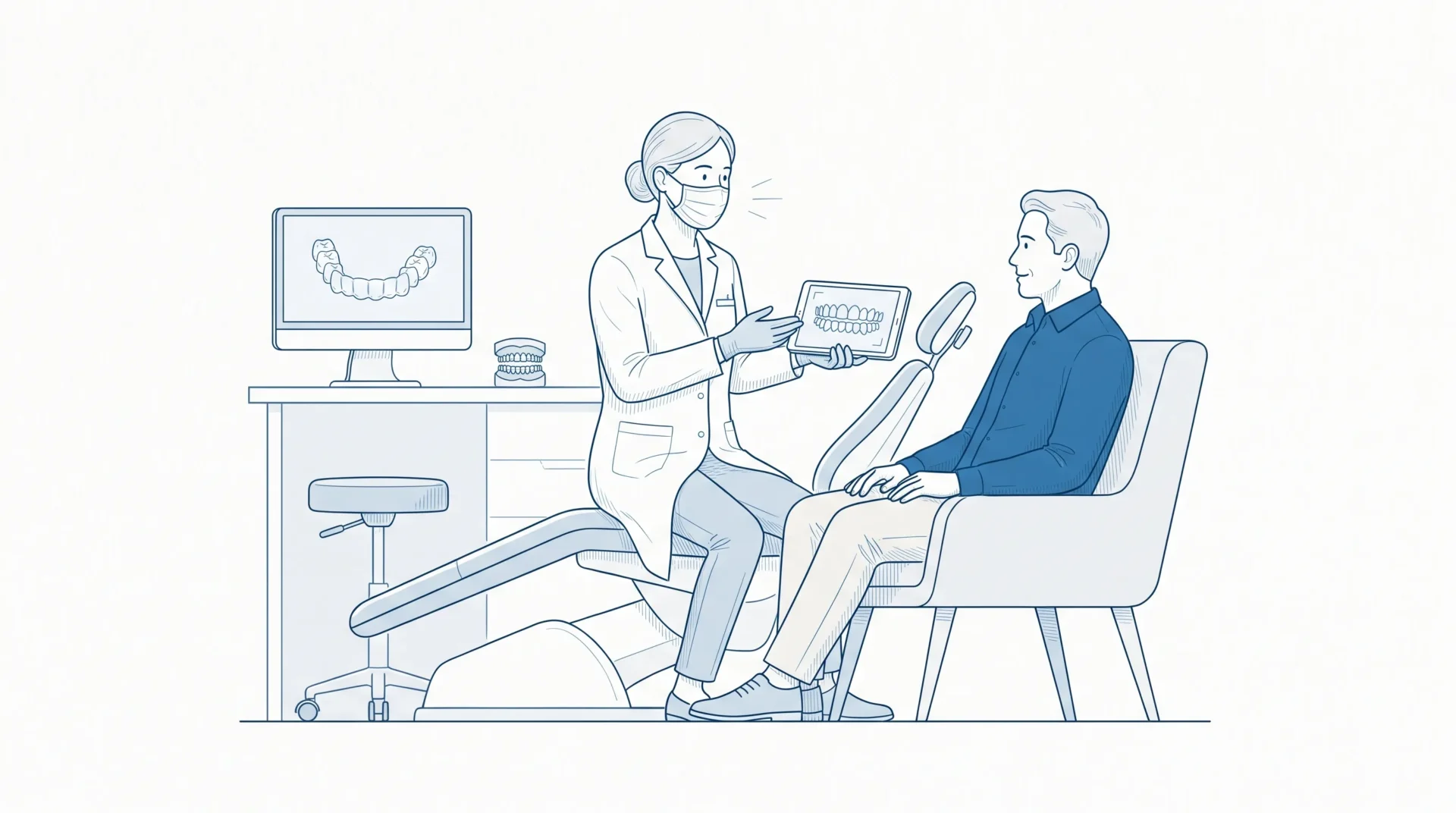
When arranging an “invisalign consultation near me”, ask whether assessment records are taken at the first visit or booked separately. Photographs document tooth positions, while a digital scan or dental impressions can record the shape of your teeth.
X-rays may be recommended where they provide clinically useful information that an examination alone cannot supply, such as information about tooth roots or supporting structures. Your dentist should explain why they are recommended and any associated fees.
A digital treatment preview may be available during planning. A simulation illustrates proposed tooth movements, not a guaranteed outcome. Teeth do not always move exactly as predicted, and the plan may need adjustments during treatment.
Taking records also does not necessarily mean you will receive aligners that day. Further assessment and planning may be needed first.
How the dentist assesses whether Invisalign may suit you
Invisalign uses a series of custom-made, removable clear aligners to apply controlled forces to teeth. It can be considered for some crowding, spacing and bite concerns, but it is not suitable for every situation.
Suitability depends on the movements required, your gum health, existing dental work and your ability to follow the prescribed wear schedule. Dental implants or extensive restorative work can affect the available options.
Finding an “invisalign consultation near me” is a starting point; the examination determines whether clear aligners are a reasonable option for your circumstances.
Your dentist may discuss braces, referral to an orthodontist or no treatment. An orthodontist is a registered dental specialist in tooth and jaw alignment. For background before your appointment, Dentalspa’s explanation of how clear aligners work and who they may suit outlines the main considerations without replacing an individual assessment.
Discussing everyday commitments, benefits and risks
Clear aligners are removable, which can make eating and cleaning more straightforward than with fixed appliances. However, removability also means you need to consistently follow the wear schedule. Invisalign aligners are commonly prescribed for around 20 to 22 hours daily, with your treating practitioner providing instructions for your plan.
Ask how this would fit around meals, sport, shift work or frequent travel. Treatment may involve tooth-coloured attachments, which are small shapes bonded to teeth to help the aligners apply the planned forces. Some patients also need elastics or carefully planned reshaping between teeth.
Temporary pressure, tenderness or changes in speech can occur. Orthodontic treatment also carries potential risks, including gum recession and shortening of tooth roots, called root resorption. Poor oral hygiene during treatment can contribute to decay and gum problems. Your dentist should explain which risks are relevant to your oral health and proposed treatment.
When following up an “invisalign consultation near me” search, ask for a balanced explanation of these limitations, not just the possible appearance changes.
If you are considering different approaches, Dentalspa’s comparison of Invisalign and braces can help you prepare questions. Neither option is automatically better for every patient.
Treatment timing, fees and what a quote includes
A reliable estimate of treatment time requires an assessment. The movements needed, your response to treatment and how consistently you wear the aligners can affect the schedule. Additional aligners may be needed if further adjustments are appropriate.
Ask for a written quote and an explanation of what is included. Useful points to clarify include:
| Item | What to ask |
|---|---|
| Assessment and records | Are consultation, scan and X-ray fees separate? |
| Active treatment | Are review appointments and attachments included? |
| Changes to the plan | How are additional aligners or extended treatment charged? |
| Retainers | Are retainers, retention reviews and replacements included? |
Retainers help maintain tooth positions after active treatment. Teeth can move again, so ongoing retainer wear is commonly recommended according to your clinician’s instructions.
When comparing fees for an “invisalign consultation near me”, check that the quotes cover comparable care. Dentalspa’s guide to factors affecting Invisalign price in Geelong explains why an individual quote is needed.
Dentalspa offers payment plans. Ask about eligibility, fees, interest and the total payable before agreeing to any arrangement. If you have private health insurance, confirm potential benefits directly with your fund.
Preparing for your consultation
Bring an up-to-date list of medicines and any relevant dental history. If another practice has recently taken X-rays, ask whether these can be transferred; your dentist can decide whether they provide the information needed.
A short list of questions can make the discussion easier:
- What concerns could treatment address, and what would it not change?
- What are the alternatives, including choosing not to have treatment?
- Would I need other dental care before starting?
- What happens if my teeth do not move as planned?
- What follow-up appointments and retainer care would I need?
Mention practical concerns honestly. Difficulty wearing aligners consistently does not mean you have failed at anything; it is information that helps the dentist discuss realistic options with you.
Frequently asked questions
Will I receive Invisalign aligners at the first consultation? Usually, the initial appointment focuses on assessment and discussion. Records, planning, consent and manufacture may need to happen before aligners can be fitted. Ask the practice about its appointment sequence.
Does an “invisalign consultation near me” search mean I need a specialist? Not necessarily. A dentist can assess your concerns and explain whether treatment is within their scope or whether referral to an orthodontist is appropriate. A specialist opinion may be recommended for more complex concerns.
Can adults have Invisalign treatment? Adults can be considered for clear aligners. Age alone does not determine suitability; gum health, tooth support, existing dental work and the proposed movements are important factors.
Can I take time to decide after the appointment? Yes. You can ask for the proposed plan and fees in writing, seek clarification or obtain another opinion. A consultation is not an obligation to start treatment.
What if I am mainly concerned about one tooth? Explain that concern, but expect the dentist to examine your overall bite. Moving one tooth can affect neighbouring teeth and how your teeth meet, so the assessment should consider more than the visible area.
Arrange an assessment in Geelong
Dentalspa Geelong offers Invisalign and braces. To discuss your concerns, you can book an appointment with the team and ask what the initial assessment includes.
The purpose is to understand your oral health, the options available and their likely benefits, risks and costs. You can then decide whether treatment fits your needs and preferences.
Disclaimer
The information provided on this website is for general informational and educational purposes only. It is not intended to replace professional dental advice, diagnosis or treatment. Dental needs and treatment outcomes vary between individuals. Always seek advice from a qualified dental practitioner regarding your specific circumstances before making decisions about your oral health or treatment. A consultation and clinical assessment are required to determine which treatment options may be suitable for you. All dental procedures carry potential risks and benefits, which will be discussed with you before treatment.