
When to See a Family Dentist in Geelong
9 October 2026 | Children's Dentistry, General Dentistry, Oral Health
A family dentist Geelong households visit for check-ups can also assess toothache, bleeding gums and dental injuries. Keep the review schedule recommended for you, but arrange an earlier appointment when new symptoms appear. Swelling that affects breathing or swallowing needs emergency medical care rather than a routine dental appointment.
The right timing depends on your symptoms, dental history and individual needs. This guide explains what can usually be planned, what needs an earlier assessment and when to seek urgent help.
A practical guide to appointment timing
You do not need to diagnose a problem before contacting a dental clinic. Describe what you have noticed, when it started and whether it is getting worse so the team can advise on appointment timing.
| Situation | Suggested next step |
|---|---|
| No new symptoms and a routine review is due | Book according to the interval your dentist recommended. |
| Repeated bleeding gums, lingering sensitivity or food regularly catching around a tooth | Arrange an assessment rather than waiting for your next scheduled check-up. |
| A small chip or lost filling without significant pain | Contact the clinic for advice and an appointment. The tooth may still need protection. |
| Significant or worsening toothache, localised swelling or a painful broken tooth | Contact a dentist promptly, preferably that day. |
| A knocked-out adult tooth | Seek immediate dental advice and care. |
| Difficulty breathing or swallowing, rapidly spreading swelling or serious facial injury | Seek emergency medical care. Call 000 for a medical emergency. |
These categories are a guide, not a diagnosis. Pain severity alone does not tell you how much treatment is needed, and some dental problems cause little discomfort initially.
Routine check-ups with a family dentist Geelong families can visit
Follow a schedule based on your oral health
There is no single check-up interval that suits every adult or child. Your dentist may recommend visits around six or twelve months apart, or a different interval depending on your oral health and risk of disease.
A review can assess teeth, gums, existing dental work and the soft tissues inside your mouth. It is also an opportunity to discuss changes in your health, medicines or daily oral care.
Routine appointments with a family dentist in Geelong should be based on your needs, not simply on a fixed calendar rule. Someone with active gum disease or repeated decay may need closer monitoring than someone with stable oral health.
Dentalspa’s guide to how often adults should have a dental check-up explains the factors that can influence this schedule. If you cannot remember when your last examination was, contact the clinic to discuss arranging a review.
Book sooner for symptoms that persist or return
Bleeding gums and changes around teeth
Gums that repeatedly bleed during brushing or cleaning between teeth deserve an assessment. Other reasons to book include swollen gums, persistent bad breath, gum recession or a tooth that feels loose.
Bleeding does not establish a diagnosis by itself. Plaque build-up, brushing technique and other health factors can contribute, and a dentist can assess the cause.
Continue gentle brushing with fluoride toothpaste and cleaning between your teeth unless a clinician advises otherwise. Avoiding an area because it bleeds can allow more plaque to collect.
Sensitivity, toothache and trouble chewing
Brief sensitivity to cold can have several causes, including exposed tooth surfaces, decay or a damaged restoration. Book an appointment if it is new, keeps returning, lingers after the trigger stops or affects eating.
A family dentist in Geelong can assess these patterns and explain whether treatment or monitoring may be appropriate. Mention whether discomfort happens with hot or cold food, biting or without any obvious trigger.
Toothache that disturbs sleep, becomes more intense or comes with swelling warrants prompt contact. Pain relief may ease discomfort temporarily, but it does not address the underlying cause. Healthdirect’s toothache guidance explains why dental assessment matters and when urgent care may be needed.
Mouth sores, patches and other changes
Arrange a dental or medical assessment for an ulcer that has not healed after two weeks, an unexplained lump or a persistent red or white patch. These changes can have several causes and should not be self-diagnosed.
You can also ask about ongoing dry mouth, jaw discomfort or a change in how your teeth meet. Note when the symptoms began and any recent changes to medicines or health conditions.
Know when to seek urgent dental or medical care
Contact a dentist promptly for pain, swelling or injury
Contact a dental clinic that day for significant or worsening pain, a swollen gum or face, or a broken tooth causing substantial discomfort. Fever alongside dental swelling also needs urgent advice.
When contacting a family dentist in Geelong, describe the location of swelling, whether you feel unwell and whether you can open your mouth, swallow and breathe normally. Do not wait for a routine review if symptoms are worsening.
A knocked-out adult tooth needs immediate care. Handle it by the crown, which is the part normally visible above the gum, rather than the root. If it is out of the mouth, keep it moist in milk while seeking urgent dental advice. Do not scrub it or let it dry out. A knocked-out baby tooth should not be put back into its socket.
For less severe damage, Dentalspa’s article on when to seek care for a broken tooth explains how symptoms affect appointment timing.
Seek emergency medical care for serious warning signs
Difficulty breathing or swallowing, swelling spreading towards the eye or neck, or feeling severely unwell with facial swelling requires emergency medical assessment.
Call 000 for breathing difficulties or another medical emergency. Serious facial injuries and bleeding that cannot be controlled also require urgent medical attention.
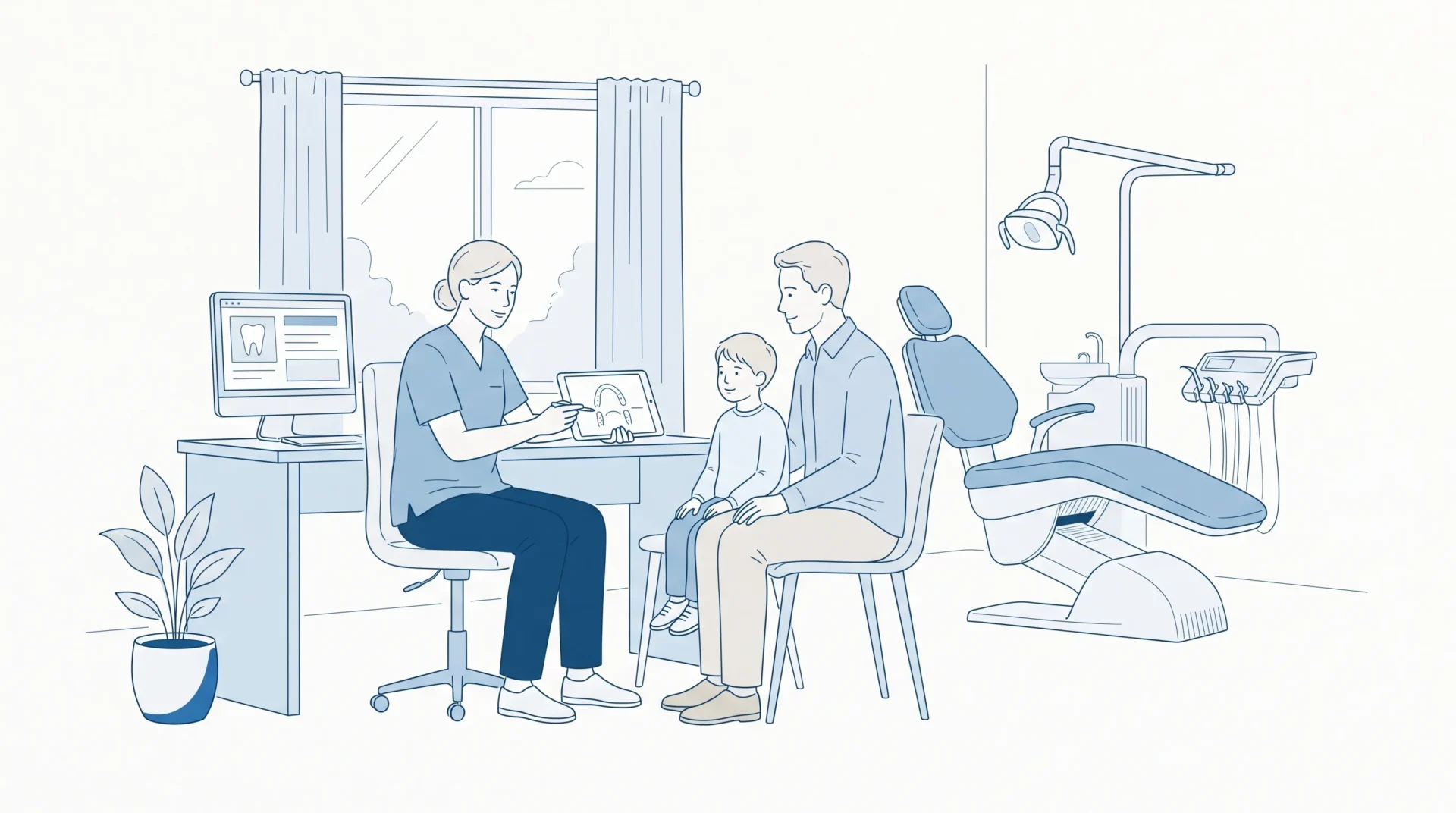
When children should have their first visit
The Australian Dental Association’s oral health guidance recommends a first dental visit when a baby’s first tooth appears or by their first birthday, whichever comes first. You do not need to wait until all the baby teeth have come through.
An early visit gives parents an opportunity to discuss brushing, toothpaste, feeding habits and tooth development. It may involve a brief examination and practical advice rather than treatment.
A family dentist in Geelong can recommend a review schedule based on your child’s teeth and risk factors. Book sooner if you notice a new white, brown or dark area on a tooth, ongoing pain, swelling or difficulty eating. A visible mark is not enough to diagnose decay, but it is worth checking.
Children may not describe discomfort clearly. Avoiding certain foods, chewing on one side or repeatedly touching the mouth can be useful details to mention. Dental injuries also deserve advice, even when a baby tooth is involved.
Health changes may affect your usual appointment timing
Let your dentist know about pregnancy, diabetes, new medicines or treatment for another health condition. These details can influence oral health assessment and treatment planning.
For example, some medicines reduce saliva and contribute to dry mouth. Saliva helps protect teeth, so persistent dryness may require advice about prevention and monitoring. Do not stop prescribed medicines without speaking with the clinician who prescribed them.
A family dentist Geelong residents consult can consider these changes alongside their dental history. Having a health condition does not automatically mean more frequent appointments or additional treatment.
If you are considering whitening, braces, Invisalign or another elective treatment, an examination can assess suitability first. Cosmetic treatment is optional, and existing decay or gum problems may need attention before it is considered.
What an assessment may involve
Your dentist will usually begin by asking about your concern, medical history, medicines and previous dental treatment. Tell them if you are anxious, have had a difficult dental experience or would like explanations before each part of the examination.
Depending on the reason for your visit, an assessment may include:
- Examining your teeth, gums and the soft tissues inside your mouth.
- Checking a painful tooth, damaged filling or area that traps food.
- Assessing your bite and discussing relevant symptoms.
- Taking X-rays when there is a clinical reason to look at areas that cannot be examined directly.
- Explaining findings and discussing treatment, monitoring or referral where appropriate.
X-rays are not automatically needed at every visit. Their use should be based on your history, symptoms and examination findings.
An appointment does not necessarily lead to treatment that day. If treatment is recommended, ask about its expected benefits, risks, alternatives and costs. Some procedures can cause temporary tenderness or sensitivity, while more involved treatment has additional considerations. Your dentist should explain the risks relevant to the proposed care.
Dentalspa’s overview of general dentistry treatments explains common options, but an examination is needed before recommending one for you.
If cost or a long gap between visits is holding you back
You can arrange an assessment even if it has been years since your last appointment. Tell the clinic about your main concern and any budget limitations when booking.
A family dentist in Geelong can explain which findings need attention sooner and which may be monitored or addressed later. Ask for an estimate before agreeing to treatment and clarify what is included. Dentalspa offers payment plans; contact the clinic to confirm current terms and suitability.
For children, the Child Dental Benefits Schedule helps eligible families access certain basic dental services. Eligibility, available benefits and service coverage need to be checked. Do not assume every treatment is covered or that there will be no out-of-pocket cost.
Frequently asked questions
Should I wait until my next check-up if my gums bleed? Repeated bleeding should be assessed, particularly if it comes with swelling, soreness or bad breath. Contact the clinic for advice about an earlier appointment and continue gentle daily cleaning.
Do I need a check-up if nothing hurts? Pain is not the only sign of a dental problem. Follow the review interval recommended for your circumstances rather than waiting for discomfort or automatically booking more frequently.
Should children see a dentist before starting school? Yes. The recommended first visit is when the first tooth appears or by twelve months of age, whichever comes first. Later reviews are based on the child’s individual needs.
Can I book if I am nervous about treatment? Yes. Let the clinic know when you book. You can ask a family dentist in Geelong to explain the examination, discuss your concerns and clarify whether any treatment decision can be made after you have considered the options.
Discuss the right timing for your family
Dentalspa Geelong provides general, children’s and emergency dental care. To discuss symptoms or arrange a routine assessment, contact the team or use online booking. Let the clinic know about pain, swelling or an injury when booking so they can advise on appropriate timing.
Disclaimer
The information provided on this website is for general informational and educational purposes only. It is not intended to replace professional dental advice, diagnosis or treatment. Dental needs and treatment outcomes vary between individuals. Always seek advice from a qualified dental practitioner regarding your specific circumstances before making decisions about your oral health or treatment. A consultation and clinical assessment are required to determine which treatment options may be suitable for you. All dental procedures carry potential risks and benefits, which will be discussed with you before treatment.