
What Your Family Dentistry Visit Can Include
28 September 2026 | Children's Dentistry, General Dentistry, Preventative Dentistry
If you are planning your family dentistry visit in Geelong, it can help to know what may be included before you arrive. A family appointment is often more than a quick look at the teeth. Depending on each person’s age, oral health, symptoms and goals, it may include preventive care, children’s dentistry, emergency assessment, cosmetic discussions or a clear plan for future treatment.
For many households, the main appeal is convenience. Parents, children, teens and older family members may have different dental needs, but a family-focused clinic can help coordinate care in a way that feels practical and easy to understand.
Start with each person’s needs, not a standard script
A useful family dental visit usually begins with a conversation. Your dentist or dental team may ask about medical history, medicines, allergies, previous dental experiences, symptoms, diet, brushing habits and any concerns about appearance or comfort.
This matters because dental care is not one-size-fits-all. A child who is learning to brush independently needs different support from a teenager wearing orthodontic appliances, an adult with a cracked filling or an older person managing dry mouth from medication.
At Dentalspa Geelong, the focus is on understanding what is happening for each person before discussing options. That may include routine prevention for one family member and a more detailed treatment discussion for another.
A dental examination cannot diagnose everything without the right clinical information, and not every treatment is suitable for every patient. Your dentist can assess your mouth, explain what they find and discuss the potential benefits, risks and alternatives of any recommended care.
What your family dentistry visit may include
A family dentistry visit may include several parts, depending on why you booked and what the dentist finds during the appointment. Some visits are mostly preventive, while others focus on a specific symptom such as toothache, a broken tooth or bleeding gums.
Common inclusions may be:
| Part of the visit | What it may involve | Why it may be recommended |
|---|---|---|
| Oral health discussion | Questions about symptoms, medical history, habits and concerns | Helps your dentist understand individual risk factors and priorities |
| Dental examination | Checking teeth, gums, bite, jaw joints, soft tissues and existing fillings or crowns | Identifies visible signs of decay, gum inflammation, wear, cracks or other changes |
| Professional clean | Removal of plaque and tartar, followed by polishing where appropriate | Supports gum health and helps maintain areas that are hard to clean at home |
| X-rays, if clinically indicated | Images of areas not visible during the examination | May help assess decay, bone levels, infection, unerupted teeth or other concerns |
| Preventive advice | Brushing, flossing, fluoride, diet or mouthguard guidance | Helps reduce future dental problems where possible |
| Treatment planning | Discussion of findings, options, costs and timing | Supports informed decisions before treatment begins |
If you want a closer look at a routine preventive appointment, Dentalspa has a helpful guide to what happens at a dentist check-up and clean.
Check-ups, cleans and preventive care
When your family dentistry appointment includes a clean, the dental team may remove hardened deposits called tartar. Tartar cannot usually be brushed away at home, and if it remains around the gumline it can contribute to gum inflammation.
A professional clean may involve scaling, polishing and, in some cases, fluoride application. Fluoride can be considered for patients at higher risk of decay, but suitability depends on age, oral health and individual needs. Some people notice temporary gum tenderness or tooth sensitivity after a clean, especially if there was inflammation beforehand.
Dental X-rays are not automatically needed at every visit. Your dentist may recommend them when the expected benefit is greater than the small radiation exposure involved. For example, X-rays may be useful when checking between teeth, reviewing bone levels or assessing a tooth that is painful.
Preventive advice should be practical. For one person, it may involve changing brushing technique. For another, it may involve interdental brushes, flossing support, reduced snacking, a custom mouthguard or closer gum monitoring.
Children’s dental care during a family visit
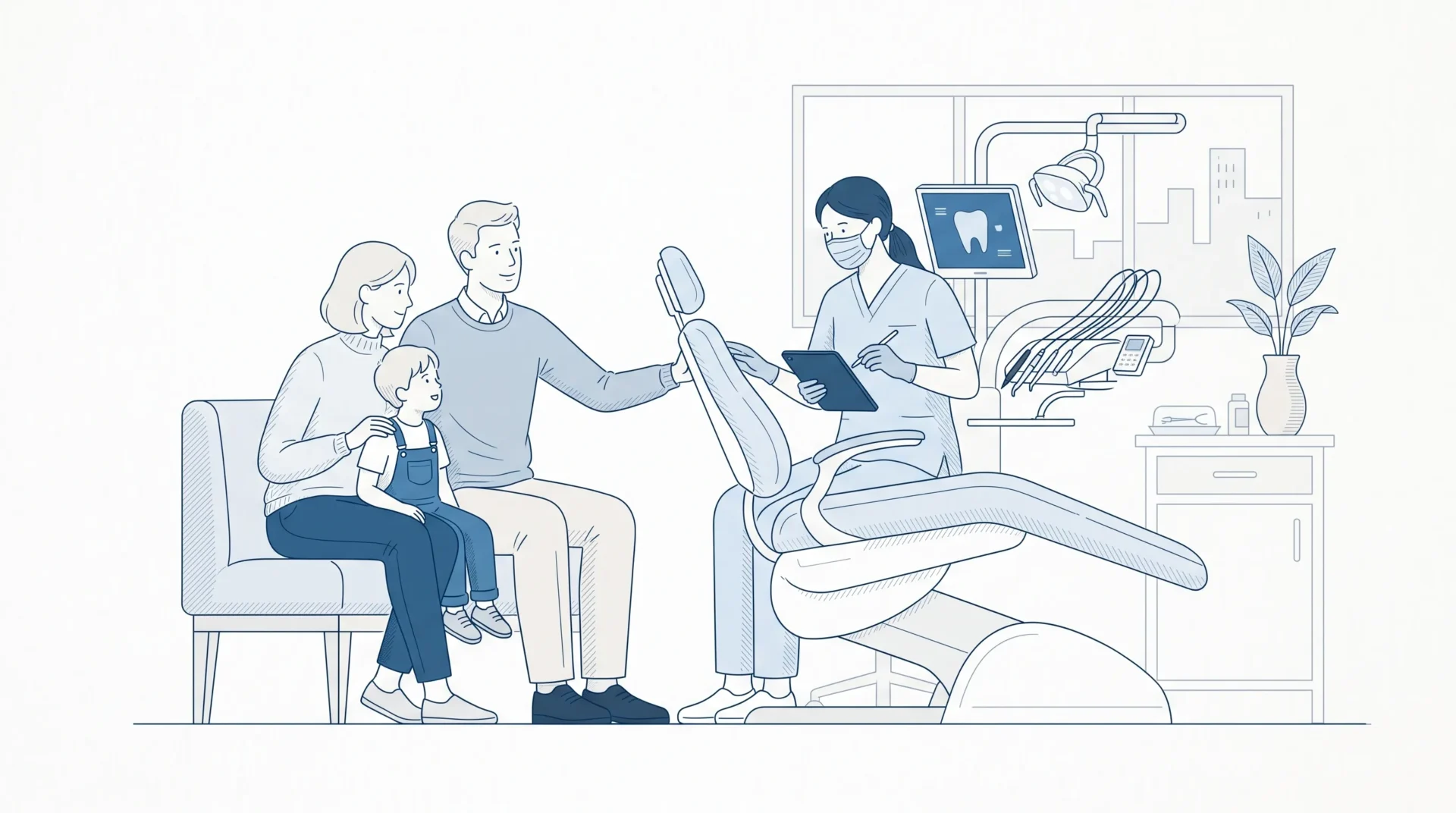
For parents, your family dentistry visit can also be a chance to make dental care feel familiar rather than stressful for children. Children’s appointments may include a gentle examination, checking tooth development, counting teeth, assessing brushing and talking about habits such as thumb sucking or frequent sugary drinks.
A clean may be recommended if plaque or staining has built up, but the approach depends on the child’s age, comfort and oral health. Young children may only need a simple check and guidance for parents, while older children may benefit from a more thorough clean.
The dentist may also discuss fissure sealants if the grooves of adult molars are deep and difficult to clean. Sealants are thin protective coatings placed on chewing surfaces to help reduce the risk of food and bacteria trapping in grooves. They are not suitable for every tooth, and they still require regular brushing and monitoring.
Some children may be eligible for help through the Child Dental Benefits Schedule, depending on family circumstances. Parents can check current eligibility and claiming details through Services Australia information about the Child Dental Benefits Schedule.
For more detail on this topic, Dentalspa has written about what parents should know about children’s dental cleans.
Teen, adult and cosmetic dental discussions
Teenagers may need advice that fits their stage of life. This can include orthodontic monitoring, wisdom tooth development, sports mouthguards, diet advice or cleaning around braces. If teeth straightening is being considered, a dentist can assess whether further orthodontic discussion may be appropriate. Options such as braces or clear aligners depend on bite, tooth position, growth, oral hygiene and treatment goals.
Adults may use your family dentistry appointment to discuss ongoing maintenance, old fillings, gum health, tooth wear, sensitivity or appearance-related concerns. Cosmetic dentistry conversations can include whitening, bonding, veneers, crowns or alignment options, but these should start with an oral health assessment. Teeth whitening, for example, may not be suitable if there is untreated decay, gum disease, cracked enamel or certain types of restorations on visible teeth.
Restorative treatments such as fillings, crowns, root canal treatment or dental implants may be discussed if the examination shows damage, infection, missing teeth or functional concerns. All dental procedures carry potential risks and benefits, and treatment outcomes vary between patients. Your dentist can explain whether monitoring, repair, replacement or referral may be appropriate for your situation.
Emergency concerns that may be assessed
If symptoms appear between scheduled appointments, your family dentistry provider may be able to assess the concern and discuss what needs attention. Dental emergencies can include toothache, facial swelling, a knocked tooth, a broken tooth, bleeding after trauma, a lost filling or pain when biting.
Some symptoms need prompt professional advice. Facial swelling, fever, difficulty swallowing, difficulty breathing or trauma involving the head or jaw should be taken seriously. If symptoms are severe or you are unsure whether it is a medical emergency, contact emergency services or an appropriate urgent care provider.
For dental symptoms, an emergency appointment may include an examination, X-rays if needed, temporary relief measures and a discussion of next steps. The aim is to understand the cause and decide what care is appropriate, not to rush into treatment without assessment.
In some cases, definitive treatment may need a separate appointment. For example, a painful tooth may require further testing, a filling, root canal treatment, extraction or another option depending on the diagnosis, tooth condition and patient preferences.
Treatment plans, costs and payment conversations
Planning your family dentistry care often means balancing clinical needs, timing, costs and family routines. After an examination, your dentist may explain what is urgent, what can be monitored and what options are available. A clear plan should include the reason for any recommended treatment, likely appointment sequence, alternatives, risks, expected maintenance and estimated fees.
This is especially useful when several family members are seen around the same time. One child may need preventive support, a parent may need a filling replaced and another family member may simply need routine maintenance. Clear priorities help families decide what to do first.
Dental costs can vary because treatment needs, materials, appointment complexity and follow-up requirements differ. Payment options or payment plans may be discussed where available, but the most important starting point is a written estimate and a chance to ask questions.
Clear, plain-language terms matter in any household decision, whether you are reviewing a dental estimate or comparing transparent mortgage guidance through New Era Lending. In dentistry, you should feel able to ask what is included, what is optional, what may happen if treatment is delayed and whether there are alternative approaches.
Dentalspa also has a guide explaining how a dentist creates a clear treatment plan, which may help if you want to understand how recommendations are usually formed.
Making a family appointment easier to manage
A family dental visit can be easier when you bring the right information. This is particularly helpful for new patients, children, people with medical conditions or anyone who has not seen a dentist for a while.
Useful things to bring or prepare include:
- A list of current medicines and allergies
- Details of any recent dental X-rays, if available
- Health fund information, if you use one
- Child Dental Benefits Schedule details, if relevant
- Questions about symptoms, costs or treatment options
- A note about dental anxiety or previous difficult experiences
If you are booking multiple family members, ask how appointments are usually arranged. Some families prefer separate visits so each person has enough time. Others may prefer coordinated bookings where practical. The right choice depends on the ages of family members, appointment availability and how much care each person may need.
Dentalspa Geelong offers online booking, which may suit families organising appointments around school, work, sport and other commitments in Geelong, Newtown, Geelong West, East Geelong, Belmont, Highton and nearby areas.
Frequently asked questions
How often should we book your family dentistry visits? The right interval depends on each person’s oral health, age, risk of decay, gum condition and previous dental history. Many people attend regularly for preventive care, but your dentist can recommend a recall schedule after assessing your mouth.
Can children and adults be seen at the same clinic? A family-focused dental clinic may see children, teens, adults and older patients. The care provided should be adjusted to each person’s stage of life, comfort and clinical needs.
Will everyone need X-rays? No. X-rays are recommended when they are clinically justified. Your dentist should explain why an X-ray is being suggested and what information it may provide.
Can cosmetic dentistry be discussed during a family visit? Yes, cosmetic concerns can be raised during an appointment. Your dentist will usually check oral health first, then explain whether options such as whitening, alignment or restorative treatment may be suitable.
What if one family member is nervous about the dentist? Let the clinic know when booking or at the start of the appointment. The dental team can discuss concerns, explain what is happening and adjust the pace where clinically appropriate.
When to book an appointment
A dental examination can help determine the cause of symptoms and which options may be appropriate. If your family is due for routine care, has a dental concern or wants to understand available treatment options, you can book an appointment with Dentalspa Geelong.
Your dentist can assess oral health, explain findings in plain language and outline potential benefits, risks and alternatives before you decide how to proceed.
Disclaimer
The information provided on this website is for general informational and educational purposes only. It is not intended to replace professional dental advice, diagnosis or treatment. Dental needs and treatment outcomes vary between individuals. Always seek advice from a qualified dental practitioner regarding your specific circumstances before making decisions about your oral health or treatment. A consultation and clinical assessment are required to determine which treatment options may be suitable for you. All dental procedures carry potential risks and benefits, which will be discussed with you before treatment.