
How to Choose a Dentist for Your Child
28 September 2026 | Children's Dentistry, General Dentistry, Preventative Dentistry
Choosing a dentist for your child can feel like a bigger decision than choosing one for yourself. If you searched for a child’s dentist because you want someone gentle, safe and age-appropriate, focus on four things first: professional registration, communication style, prevention and practical fit for your family.
A good children’s dental experience is not about making every appointment exciting. It is about helping your child feel informed, respected and comfortable enough to have their teeth checked, cleaned or treated when needed. No single clinic is right for every child, so it helps to know what to look for before you book.
If you searched dentist childs, start with these priorities
Parents are often looking for a dentist who can care for small mouths without rushing, shaming or using language that makes children more anxious. A child-friendly dentist should be able to explain what is happening in simple terms, give parents clear information and recommend treatment only after assessing the child’s teeth, gums, medical history and individual needs.
When parents type dentist childs into Google, they are usually trying to find more than a clinic that simply sees children. They want a dental team that understands early childhood habits, school-aged children, dental anxiety, tooth decay risk, injuries and the way family routines affect oral health.
| What to assess | Why it matters | Helpful question to ask |
|---|---|---|
| Professional registration | Confirms the practitioner is registered to provide dental care in Australia | Is the dentist registered with AHPRA? |
| Experience with children | Children need communication that suits their age and temperament | How do you usually approach nervous or first-time child patients? |
| Preventive focus | Early advice may help reduce the risk of decay and gum problems | Do you discuss brushing, fluoride, diet and fissure sealants where relevant? |
| Practical access | Family appointments need to work around school, work and transport | What appointment times are available for children? |
| Costs and benefits | Parents need clear information before agreeing to treatment | Do you discuss fees, payment options and Child Dental Benefits Schedule eligibility? |
Check registration and child-specific experience
In Australia, dentists must be registered with the Dental Board of Australia through the Australian Health Practitioner Regulation Agency. You can check a practitioner’s registration through the AHPRA public register. This is a practical first step for any parent, especially if you are comparing several clinics.
A general dentist can provide dental care for children, but a paediatric dentist is a registered specialist with additional training in children’s dentistry. Not every child needs a specialist. A general dentist may be suitable for routine check-ups, cleans, preventive advice and many common concerns. More complex needs, significant anxiety, developmental considerations or certain medical conditions may lead your dentist to discuss referral options.
A clinic that appears during a dentist childs search should still be assessed on the quality of its communication and clinical judgement, not just the wording on a website. Ask whether the clinic commonly sees children of your child’s age and how they adapt appointments for toddlers, primary school children or teenagers.
Look for calm, clear communication
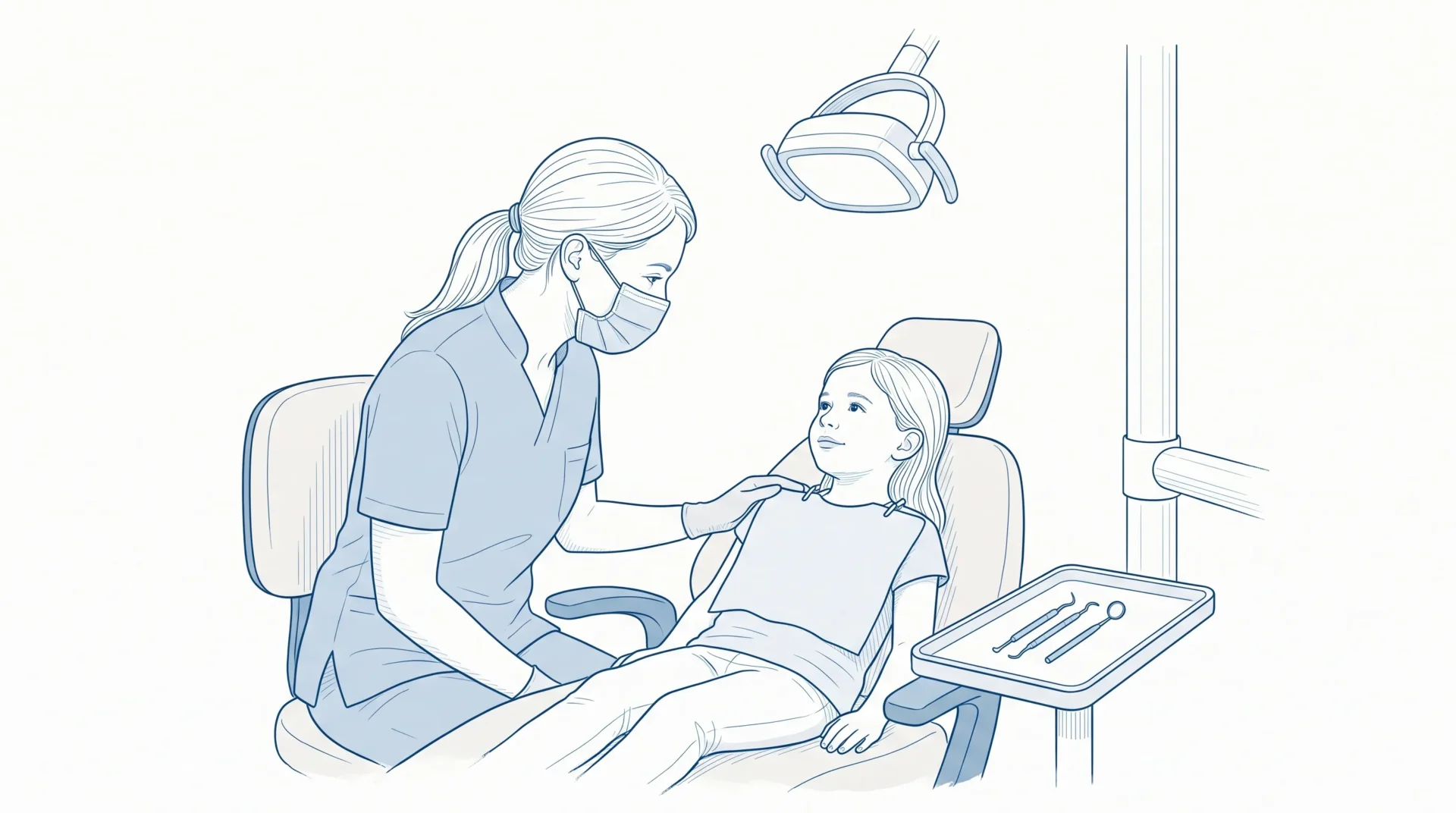
Children often take their cues from the adults around them. A dentist who speaks calmly, explains instruments before using them and checks that the child is coping can make appointments easier to manage. This does not mean promising that treatment will be without discomfort. It means being honest in a gentle, age-appropriate way.
Behind a dentist childs search is often a parent trying to avoid a stressful first visit. Ask how the clinic supports children who are unsure, shy, sensory-sensitive or worried about dental treatment. Some children do better when they can look at a mirror, hold a safe object, take a short break or have the steps explained before the examination begins.
Good communication also includes parents. You should feel able to ask why an X-ray, clean, fluoride treatment, filling or referral has been suggested. Your dentist should explain the potential benefits, limitations, risks and alternatives in language you can understand, then give you time to make an informed decision.
Choose a dentist who focuses on prevention
Children’s dentistry is not only about treating cavities. It also includes checking how teeth are developing, identifying early signs of decay, supporting brushing habits and discussing diet in a practical way. The Healthdirect guide to dental care for children is a useful Australian reference for parents who want a plain-language overview.
A clinic chosen after a dentist childs search should be able to talk about prevention without making parents feel judged. Helpful topics may include fluoride toothpaste, brushing technique, flossing when teeth touch, night-time bottle habits, snacks and drinks, mouthguards for sport and fissure sealants for deep grooves in back teeth where appropriate.
Not every child needs the same preventive care. Some children may only need a check-up and advice. Others may benefit from a clean, fluoride application or more frequent reviews depending on their decay risk. If you want more detail on routine care, Dental Spa has a helpful guide to children’s dental cleans and practical tips to prevent dental decay in children.
Consider the practical side for a Geelong family
Even a suitable dentist can be hard to keep seeing if appointments are difficult to manage. For families in Geelong, Newtown, Geelong West, East Geelong, Belmont, Highton and surrounding areas, practical details can make regular care more realistic.
For many Geelong parents, a dentist childs search becomes easier once they compare appointment times, travel, parking, online booking, sibling appointments and payment options. If your child is eligible for the Child Dental Benefits Schedule, ask the clinic how it is handled before the appointment. The Services Australia Child Dental Benefits Schedule page explains eligibility and what types of basic dental services may be covered, subject to the program rules.
Cost conversations should be clear and respectful. A clinic should be able to explain likely fees before treatment where possible, including whether a consultation is needed before giving a more accurate estimate. For treatment such as fillings, extractions, orthodontic assessment or emergency care, the final recommendation depends on the examination findings.
Questions to ask before booking
If your dentist childs search has left you with several options, a short phone call or online enquiry can help you compare clinics without committing to treatment. You do not need to ask everything at once, but a few practical questions can reveal how the team communicates with families.
Useful questions include:
- Does the clinic regularly see children around my child’s age?
- What usually happens during a first check-up?
- Can a parent or carer stay with the child during the appointment?
- How do you support children who feel anxious or need extra time?
- Will you explain costs and options before treatment is provided?
- Do you discuss Child Dental Benefits Schedule eligibility if it applies?
Listen not only to the answers, but also to the tone. A clinic does not need to promise a particular outcome to be reassuring. In fact, careful and balanced explanations are usually more helpful than broad promises.
What a first appointment may involve
A first dental visit for a child is often simple. The dentist may count the teeth, check the gums, look at how the teeth bite together, assess any areas of concern and ask about brushing, toothpaste, diet, medical history and previous dental experiences. X-rays are not automatic for every child. They are usually considered when the dentist needs information that cannot be seen by looking in the mouth.
If you found the clinic through a dentist childs search, it is still worth asking what the first appointment is likely to involve for your child’s age. A toddler who is having a quick introduction may need a different approach from a teenager with tooth pain or a child who has had a dental injury.
Preparation at home can also help. Try using neutral, positive language such as the dentist will count your teeth or check how your brushing is going. Avoid words that may create worry if they are not needed. Dental Spa has more guidance on preparing your child for their first dental visit.
Be cautious with promises or pressure
Parents should feel informed, not pushed. Be cautious if a clinic makes broad guarantees, describes treatment as risk-free, pressures you into cosmetic treatment for a child or suggests the same option is suitable for every patient. Dental treatment should be recommended because it is appropriate for the child’s oral health, not because it is convenient or popular.
All dental procedures carry potential benefits and risks. Even common treatments, such as cleans, fillings, fluoride applications, extractions or orthodontic procedures, should be explained in context. Suitability may depend on your child’s age, cooperation, dental development, medical history, decay risk, bite, habits and the findings of a clinical examination.
Know when your child needs prompt dental advice
Choosing from a dentist childs search is one decision, but knowing when to seek prompt care is also useful. Contact a dentist or appropriate health service if your child has dental pain that does not settle, facial swelling, a broken tooth, a knocked tooth, bleeding that is difficult to control or signs of infection such as fever with swelling.
If a permanent adult tooth is knocked out, seek urgent dental advice. Handle the tooth by the crown, not the root, and keep it moist while you get help. A baby tooth should generally not be pushed back into the socket unless a dentist specifically advises you to do so. If your child has trouble breathing or swallowing, call 000.
Frequently Asked Questions
What age should my child first see a dentist? Many Australian oral health resources suggest children should see a dentist early, often around the time the first teeth appear or by the first birthday. If your child is older and has not been before, it is still reasonable to book an assessment.
Is a paediatric dentist different from a general dentist? Yes. A paediatric dentist is a registered dental specialist with additional training in children’s dentistry. Many children can be cared for by a general dentist, while some children may benefit from specialist referral depending on their needs.
How do I choose if my child is nervous? Ask how the clinic supports anxious children, whether appointments can be paced appropriately and how the dentist explains procedures. A dentist childs search should lead you to ask about communication style, not just availability.
Does every child need a dental clean? Not always. Some children may need a professional clean, while others may need an examination and home care advice. Your dentist can assess plaque levels, gum health, decay risk and brushing habits before recommending care.
Can I use the Child Dental Benefits Schedule? Some eligible children can access benefits for basic dental services under the Child Dental Benefits Schedule. Eligibility, limits and covered services are set by Services Australia, so check the current rules or ask the clinic before booking.
Choosing a child’s dentist in Geelong
A dental examination can help determine your child’s oral health needs and which options may be appropriate. If you are comparing clinics in the Geelong area, look for clear communication, professional registration, a preventive approach and practical support for family appointments.
To discuss your child’s dental needs, you can contact Dental Spa in Geelong to arrange an assessment. The dental team can explain what may be suitable based on your child’s age, oral health, medical history and individual circumstances.
Disclaimer
The information provided on this website is for general informational and educational purposes only. It is not intended to replace professional dental advice, diagnosis or treatment. Dental needs and treatment outcomes vary between individuals. Always seek advice from a qualified dental practitioner regarding your specific circumstances before making decisions about your oral health or treatment. A consultation and clinical assessment are required to determine which treatment options may be suitable for you. All dental procedures carry potential risks and benefits, which will be discussed with you before treatment.