
How a Dentist Creates a Clear Treatment Plan
17 August 2026 | Cosmetic Dentistry, Dental Fees & Financing, General Dentistry
If you have been told you need more than a simple check-up or filling, a clear dentist treatment plan can make the next decision feel much easier. It should explain what your dentist has found, which options may be available, what each option may involve, and what you need to consider before agreeing to treatment.
A treatment plan is not just a list of procedures. It is a practical conversation based on your oral health, your medical history, your symptoms, your preferences and, where relevant, your budget and timing. It should help you understand the reasons for care, the possible benefits, the limitations and the risks, without making you feel pressured into a particular choice.
Why a clear dental treatment plan matters
Dental problems can be straightforward, but they can also overlap. A chipped tooth may involve enamel only, or it may be linked to tooth decay, grinding, an old filling, gum changes or bite pressure. Cosmetic goals can also depend on underlying oral health. For example, whitening, veneers or aligners may need to be considered alongside gum health, decay risk or existing restorations.
A clear plan helps separate what is urgent from what is optional or longer term. It can also reduce misunderstandings about timing, fees and likely maintenance. Importantly, it gives you a chance to ask questions before treatment begins.
No dental plan can remove all uncertainty. All dental procedures carry potential risks and benefits, and treatment experiences vary between patients. A good plan should acknowledge this, rather than presenting dental care as a guaranteed outcome.
Step 1: Understanding your concerns and health history
A dentist usually starts by asking what brought you in. This may include pain, sensitivity, bleeding gums, a broken tooth, concerns about appearance, difficulty chewing, or a routine check-up.
They may also ask about your medical history. This is not just paperwork. Some conditions, medications and lifestyle factors can influence dental choices, healing, bleeding risk, infection risk or comfort during appointments. Examples may include diabetes, pregnancy, blood-thinning medication, osteoporosis medications, allergies, smoking or previous reactions to local anaesthetic.
Your preferences matter too. Some patients want to address one tooth first. Others want to understand a broader plan for their mouth over time. Some prefer to spread care across several visits where clinically appropriate. Being open about these preferences can help your dentist explain realistic options.
For cosmetic care, this conversation is especially important because appearance-focused treatment should still begin with oral health. If you are considering whitening, veneers, bonding, orthodontics or other cosmetic options, our guide to what to expect from a cosmetic dentist consultation explains how goals, records and suitability are usually discussed.
Step 2: Completing an examination and collecting records
A dentist treatment plan should be based on an examination, not assumptions. Depending on your reason for visiting, this may include checking your teeth, gums, bite, jaw movement, existing fillings or crowns, signs of tooth wear, and any areas of pain or swelling.
Dental records may also be recommended when they are clinically useful. These can include X-rays, photographs, 3D scans, bite records or gum measurements. The purpose is to gather enough information to understand what is happening and to explain options clearly.
For example, an X-ray may help assess decay between teeth, the depth of a filling, bone support around teeth, or the position of a tooth root. A digital scan may help with planning crowns, aligners, retainers or other restorations. Dentalspa has previously explained how an intraoral 3D scanner can support treatment planning by creating a digital model of the mouth in certain situations.
Records are not always needed for every visit. Your dentist should be able to explain why a record is recommended and how it may change the planning process.
Step 3: Explaining the findings in plain language
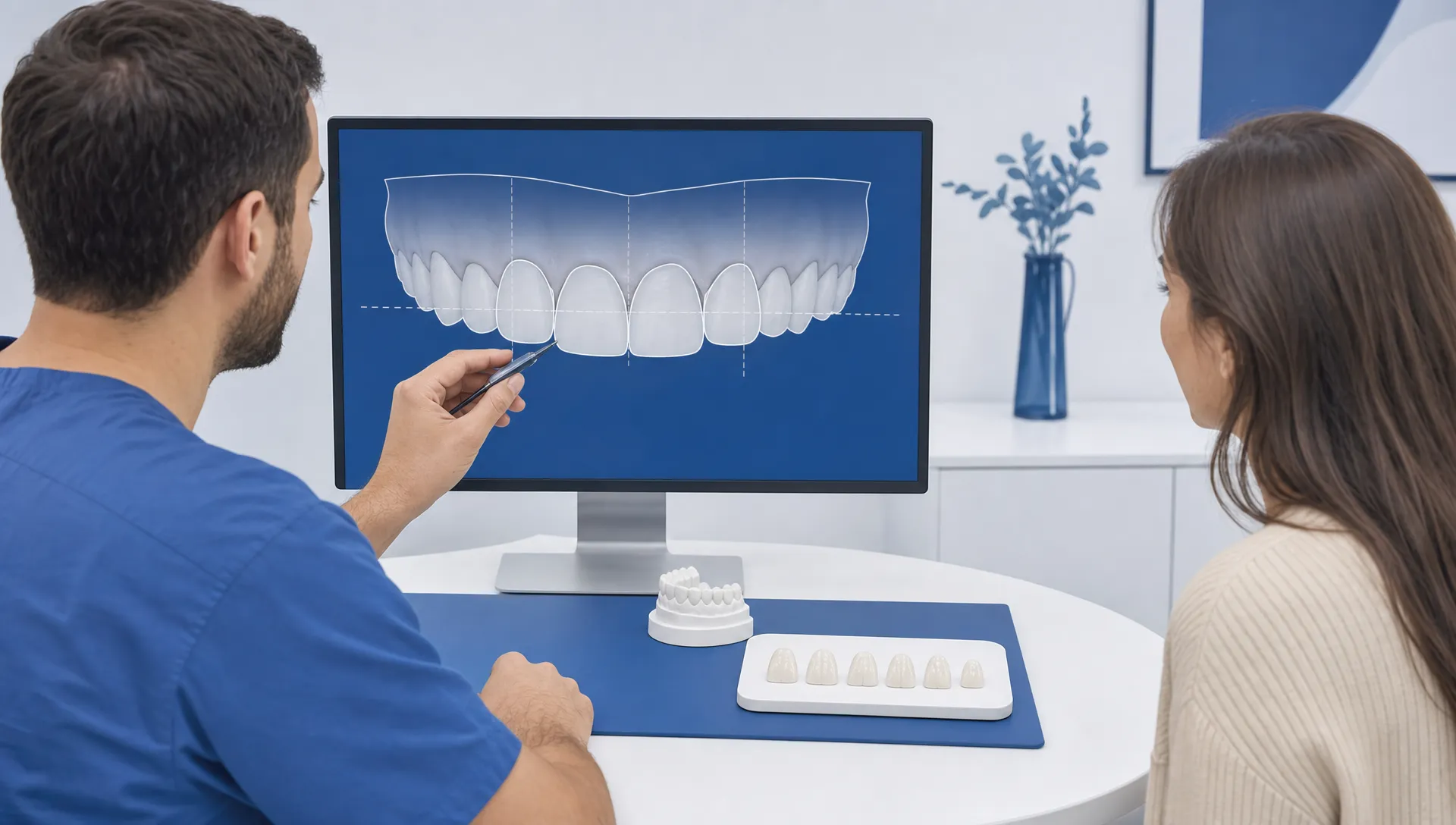
Once the assessment is complete, your dentist should explain what they have found in a way you can follow. This may include showing you an X-ray, photograph or scan, or describing the issue using simple terms.
A helpful explanation usually covers three areas: what is happening now, what may happen if it is not treated, and what can be monitored. Not every finding requires immediate treatment. Some early changes may be watched over time with preventive care, while other issues may need more prompt attention.
If there are symptoms such as facial swelling, dental trauma, severe pain, fever, spreading infection, or difficulty opening the mouth or swallowing, more urgent assessment may be appropriate. In other cases, planning can be more gradual.
The aim is not to frighten you into treatment. It is to give you enough information to make an informed choice.
What a dentist treatment plan should include
A clear plan should bring together the clinical findings and practical details. It does not need to be complicated, but it should be specific enough that you understand what is being recommended and why.
| Part of the plan | What it should explain | Why it matters |
|---|---|---|
| Main findings | The dental issue or concern identified during assessment | Helps you understand the reason for treatment |
| Priority level | Whether care is urgent, recommended soon, elective or suitable for monitoring | Helps you plan timing without unnecessary pressure |
| Treatment options | Reasonable options that may be available, including doing nothing or monitoring where appropriate | Supports informed decision making |
| Benefits and limitations | What the treatment may help with, and what it may not address | Reduces unrealistic expectations |
| Risks and possible complications | Potential issues such as sensitivity, failure, infection, relapse, repair needs or further treatment | Helps you weigh up choices carefully |
| Fees and staging | Estimated fees, appointment sequence and whether treatment can be staged if suitable | Helps with budgeting and planning |
| Maintenance | Home care, review visits, retainers, nightguards or replacement considerations where relevant | Supports longer term care |
Step 4: Comparing options, not just choosing a procedure
A useful plan should explain why one option may be preferred, but it should not ignore reasonable alternatives. For example, a damaged tooth might be assessed for a filling, crown, root canal treatment, extraction or implant replacement depending on the amount of tooth structure, nerve health, gum support, bite forces and your preferences.
Each option has trade-offs. A filling may be more conservative in some cases but may not be suitable if too much tooth structure is missing. A crown may help protect a weakened tooth but requires tooth preparation and may need maintenance or replacement in the future. Root canal treatment may allow a tooth to be retained in suitable cases, but it is not appropriate for every tooth. An implant may be considered when a tooth is missing or cannot be retained, but suitability depends on gum health, bone, medical history and other factors.
If you are looking at these kinds of decisions, Dentalspa has a separate article on root canal treatment, crowns and implants that explains common situations where each may be discussed.
For implant treatment in particular, planning often involves additional steps such as assessing bone, gum health, the space for the replacement tooth and the long term maintenance needs. You can read more about this process in Dental Implants Explained From Consultation to Care.
Step 5: Discussing timing, fees and staged care
Dental treatment is often easier to understand when it is broken into stages. A plan may begin with relief of pain or infection, then move to stabilising decay or gum issues, then rebuilding teeth, and finally maintenance.
Where clinically appropriate, a dentist may discuss staging treatment across multiple appointments. This can help with healing, comfort, scheduling and budgeting. However, staged care is not always suitable. Some dental concerns may need to be addressed before others, and delaying certain treatment may increase the chance of further damage or discomfort.
Fees should be discussed before treatment where possible. An estimate may include itemised treatment, the likely number of appointments, and information you can use when speaking with your private health insurer. If circumstances change during care, your dentist should explain why the plan or estimate may need to be updated.
At Dentalspa Geelong, patients can ask about payment options and appointment timing during their consultation. For families, it may also be worth asking whether any child dental benefits or preventive planning considerations apply to your circumstances.
Step 6: Allowing time for questions and consent
Informed consent is more than signing a form. It means you have been given enough information to understand the nature of the treatment, the expected process, the potential benefits and risks, the alternatives, and the likely consequences of not proceeding.
You should feel able to ask questions such as:
- What is the main problem this treatment is intended to address?
- Are there any other reasonable options?
- What are the risks or common limitations?
- What happens if I wait or choose monitoring for now?
- How many appointments may be involved?
- Will I need maintenance, repairs or replacement later?
- What should I expect after the appointment?
- Are there any costs that may change if new findings appear?
If you feel unsure, it is reasonable to ask for the plan in writing or to book a follow-up discussion. Complex care, cosmetic treatment, orthodontics and implant planning often benefit from time to consider the information.
Why a treatment plan may change
A treatment plan is based on the information available at the time. Sometimes it changes because new information becomes available during treatment. For example, decay may be deeper than expected once an old filling is removed, a crack may extend further than was visible, or a tooth may not respond as hoped after initial care.
Changes can also occur if your symptoms change, your health changes, or you decide to adjust your goals. This does not necessarily mean the first plan was wrong. It means dental care sometimes needs to respond to clinical findings as they become clearer.
Your dentist should explain any significant change, why it matters, and what options are available from that point.
Signs a treatment plan is clear and patient-focused
A clear plan should leave you with a practical understanding of what comes next. You do not need to know every technical detail, but you should understand the main reasons for treatment and the decisions being made.
Signs of a helpful plan include clear language, a logical order of care, discussion of alternatives, honest explanation of risks, and enough time to consider your options. The plan should also be tailored to your mouth, not a standard recommendation applied to everyone.
For many patients in Geelong, Newtown, Geelong West, East Geelong, Belmont or Highton, convenience matters too. It is reasonable to discuss appointment scheduling, expected recovery time where relevant, and whether care can be coordinated around work, school or family commitments.
Frequently Asked Questions
Is a dental treatment plan the same as a quote? Not exactly. A quote or fee estimate is one part of a treatment plan. The plan should also explain the dental findings, treatment options, risks, limitations, timing and maintenance needs.
Do I need to decide on treatment at the first appointment? Not always. Some urgent problems may need prompt attention, but many treatment decisions can be considered after you have had the findings and options explained. Ask your dentist what time frame is reasonable for your situation.
Can a dentist create a plan without X-rays? Sometimes, but it depends on the issue. X-rays or other records may be recommended when they are needed to assess areas that cannot be seen during a visual examination. Your dentist should explain why any record is suggested.
What if I cannot do all recommended treatment at once? Tell your dentist. In some cases, care can be prioritised or staged. Your dentist can explain which items are more urgent, which may be monitored, and what risks may be involved in delaying treatment.
Should I get a second opinion? You can seek another opinion if you feel uncertain, especially for complex, costly or elective treatment. Bringing any X-rays, scans or written plans may help another dentist understand what has already been assessed.
Discussing a treatment plan at Dentalspa Geelong
A dental examination can help determine the cause of your symptoms or concerns and which options may be appropriate for your circumstances. If treatment is recommended, your dentist can explain the potential benefits, risks, alternatives, timing and fees before you decide.
To discuss your dental concerns, you can book an appointment with the team at Dentalspa Geelong. Our aim is to give you clear information so you can make a considered decision about your oral health.
Disclaimer
The information provided on this website is for general informational and educational purposes only. It is not intended to replace professional dental advice, diagnosis or treatment. Dental needs and treatment outcomes vary between individuals. Always seek advice from a qualified dental practitioner regarding your specific circumstances before making decisions about your oral health or treatment. A consultation and clinical assessment are required to determine which treatment options may be suitable for you. All dental procedures carry potential risks and benefits, which will be discussed with you before treatment.