
Dental Implants Explained From Consultation to Care
12 August 2026 | News
Missing teeth can affect far more than the way your smile looks. They can change how you chew, how clearly you speak, how your bite feels and how confident you are in everyday situations. For many people, dental implants offer a stable, long-term way to replace missing teeth without relying on a removable plate.
That said, implants are not a one-appointment decision. They involve careful assessment, planning, treatment and ongoing maintenance. Understanding each stage helps you ask better questions and feel more prepared before you begin.
This guide explains what usually happens from your first implant consultation through to long-term care, so you know what to expect and what to discuss with your dentist.
What is a dental implant?
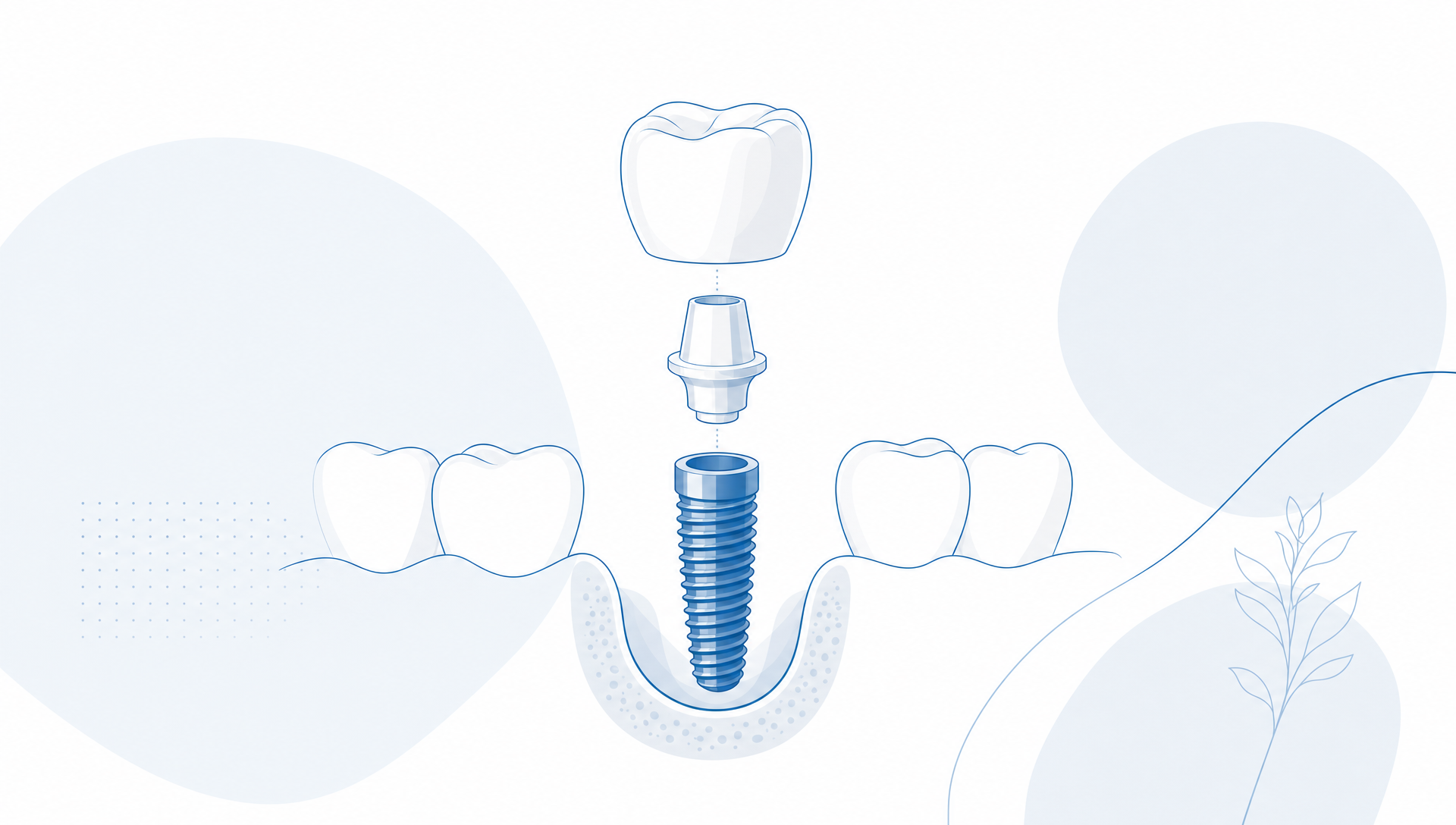
A dental implant is a small fixture, often made from titanium, that is placed into the jawbone to act like an artificial tooth root. Once it has integrated with the surrounding bone, it can support a replacement tooth, bridge or denture attachment.
A complete implant restoration usually has three main parts:
| Implant component | What it does |
|---|---|
| Implant fixture | Sits in the jawbone and acts as the artificial root |
| Abutment | Connects the implant fixture to the visible tooth replacement |
| Crown, bridge or denture | Replaces the visible part of the missing tooth or teeth |
Implants may be considered for a single missing tooth, several missing teeth or, in some cases, to help stabilise dentures. The right option depends on your oral health, bone support, bite, medical history and personal goals.
Why the consultation matters
A dental implant consultation is not just a quick look at the gap. It is a planning appointment that helps determine whether implants are appropriate, what preparation may be needed and what alternatives should be considered.
Your dentist will usually want to understand:
- How long the tooth has been missing or whether it still needs removal
- Whether you have pain, gum disease, infection or loose teeth
- Your medical history, including diabetes, bone conditions or medications
- Whether you smoke or vape, as this may affect healing
- How your teeth meet when you bite
- Your expectations around appearance, comfort, timing and cost
This stage is important because an implant needs a healthy foundation. Gum disease, insufficient bone, heavy grinding or certain medical factors do not always rule out implants, but they may need to be managed before treatment begins.
The Australian Dental Association encourages patients to seek personalised dental advice before choosing treatment, as the best option depends on the condition of the teeth, gums and jaw, not just the missing space.
The first appointment: examination, scans and questions
At your first consultation, your dentist will examine your mouth, gums, remaining teeth and bite. They may take X-rays or recommend 3D imaging to assess the height, width and density of the jawbone around the missing tooth area.
This information helps answer several key questions. Is there enough bone to support an implant? Are nearby tooth roots or nerves close to the planned implant position? Is the gum tissue healthy enough? Is the bite likely to place too much pressure on the implant?
You should also have the opportunity to talk through your concerns. Some people worry about discomfort. Others are unsure whether an implant, bridge, denture or another option is best. If you are still weighing up different treatments, Dentalspa Geelong’s guide to root canal treatment, crowns and implants can help you understand how these options differ.
Are you a good candidate for dental implants?
Many adults with missing teeth can be assessed for implants, but suitability is individual. A thorough consultation is the only way to know whether implants are likely to be safe and predictable for you.
| Assessment factor | Why it matters for implant treatment |
|---|---|
| Gum health | Inflamed or infected gums can increase the risk of implant complications |
| Bone volume | The implant needs enough stable bone for support |
| Medical history | Some conditions and medications can affect healing or bone health |
| Smoking status | Smoking is linked with slower healing and higher complication risk |
| Bite forces | Grinding or clenching may place excess pressure on the implant restoration |
| Oral hygiene habits | Implants need consistent cleaning and professional maintenance |
If your dentist identifies an issue, it does not automatically mean implants are impossible. You may need gum treatment, removal of infection, a bone graft, changes to your oral hygiene routine or a different replacement option.
Your treatment plan: timing, stages and alternatives
Once your dentist has enough information, they can explain your recommended treatment plan. This should include the proposed implant position, the expected number of appointments, whether any preparatory treatment is needed and the likely maintenance requirements after the final tooth is fitted.
Treatment timing varies. Some implants are placed after a tooth has been removed and the area has healed. In other cases, an implant may be placed sooner, depending on the condition of the bone and gum. Some people require additional procedures, such as bone grafting, before the implant can be placed.
A good treatment plan should also include alternatives. For example, a dental bridge, partial denture or, if the tooth is still present, root canal treatment and a crown may be more appropriate in certain situations. Implants are an excellent solution for many people, but they are not the only solution.
This is also the time to ask about fees, health fund item numbers, payment options and how appointments will be sequenced. Dental implant costs can vary significantly because treatment may involve surgery, components, laboratory work, imaging and follow-up care. A written estimate helps you compare options clearly.
What happens during implant placement?
Dental implant placement is a minor surgical procedure performed with local anaesthetic. Your dentist or implant clinician will prepare the site and position the implant fixture in the jawbone according to the treatment plan. The area is then closed or protected while healing begins.
The exact process depends on your case, but the general stages are usually:
- Planning and preparation: Your mouth is assessed, imaging is reviewed and any required dental or gum treatment is completed first.
- Implant placement: The implant fixture is placed into the jawbone under local anaesthetic.
- Healing and integration: The bone gradually bonds around the implant surface over a period that may take several months.
- Abutment and restoration: Once stable, the implant is connected to an abutment and a custom crown, bridge or denture attachment.
- Review and maintenance: Your dentist checks the bite, gum health and cleaning routine to help protect the result.
Some people are surprised to learn that the visible replacement tooth is not always fitted immediately. The healing phase is one of the most important parts of implant treatment because it allows the implant to become stable within the bone.
Will dental implant treatment hurt?
Most patients are more concerned about the idea of implant treatment than the appointment itself. During placement, local anaesthetic is used so the area should be numb. You may feel pressure or vibration, but you should not feel sharp pain.
After the appointment, some swelling, tenderness or bruising can occur. Your dental team will provide instructions for pain relief, cleaning and eating while the area heals. Always follow the advice given specifically for your situation, especially if you have had an extraction or grafting at the same time.
Contact your dentist promptly if pain is worsening rather than improving, swelling increases after the first few days, bleeding does not settle or you develop a fever or unpleasant taste. Early advice can prevent small issues from becoming larger problems.
Caring for your mouth after implant surgery
The first few days after implant placement are about protecting the area while your body starts healing. Your dentist’s instructions should take priority, but common advice often includes eating softer foods, avoiding smoking, avoiding vigorous rinsing early on and keeping the rest of your mouth clean.
Gentle brushing is usually encouraged away from the surgical site, while the implant area may need special care as directed. You may also be given an antibacterial mouth rinse or specific cleaning instructions.
Try not to test the implant with your tongue or fingers. Even when everything feels fine, the bone still needs time to integrate around the implant. Keeping pressure off the area during healing can support a smoother recovery.
Long-term care: implants still need maintenance
A common misconception is that dental implants are “set and forget”. While the implant itself cannot decay like a natural tooth, the surrounding gum and bone can still become inflamed or infected. This condition is often referred to as peri-implant disease, and it can threaten the long-term stability of the implant if it is not managed.
Good implant care is similar to good natural tooth care, but it needs to be consistent. Brush twice daily, clean between the teeth and around the implant, and attend regular dental reviews. Your dentist or hygienist may recommend specific floss, interdental brushes or other tools to suit the shape of your restoration.
Lifestyle factors matter too. Smoking, uncontrolled gum disease, poor plaque control and heavy grinding can all increase the risk of complications. If you grind or clench your teeth, your dentist may discuss a protective splint to reduce pressure on the implant crown.
For practical daily habits that support both natural teeth and implant restorations, Dentalspa Geelong’s article on oral health for busy lives offers simple reminders that are easy to build into a routine.
How dental implants compare with other tooth replacement options
The best tooth replacement option depends on your mouth, priorities and budget. Implants are popular because they do not usually rely on neighbouring teeth for support, but they involve surgery and a longer treatment timeline than some alternatives.
| Option | Potential advantages | Possible limitations |
|---|---|---|
| Dental implant | Stable, fixed replacement that can feel close to a natural tooth | Requires suitable bone, surgery, healing time and ongoing maintenance |
| Dental bridge | Fixed option that can replace a missing tooth without implant surgery | Often involves reshaping neighbouring teeth for support |
| Partial denture | Removable and often more affordable upfront | May feel less stable and needs daily removal and cleaning |
| No replacement | No treatment cost or procedure | Nearby teeth may shift, chewing may change and bite balance may be affected |
Your dentist can help you compare the long-term implications, not just the immediate cost. For example, a cheaper upfront option may need more repairs or replacement over time, while an implant may involve a higher initial investment but provide strong function when well maintained.
Questions to ask before starting implant treatment
Before committing to treatment, it is reasonable to ask detailed questions. A clear conversation helps you understand what is included, what could change and what role you play in the long-term success of the implant.
Useful questions include:
- Am I a suitable candidate for an implant, and why?
- Do I need gum treatment, extraction or bone grafting first?
- How long is the expected treatment timeline?
- What are the risks in my specific case?
- What type of final tooth replacement is planned?
- How will I clean around the implant at home?
- What follow-up appointments will I need?
- What costs are included in the estimate, and what might be separate?
If you are anxious, let the team know early. A supportive dental clinic can explain each step, pace appointments appropriately and help you feel more comfortable throughout treatment.
Why local follow-up matters
Dental implant treatment does not finish the day your new tooth is fitted. Reviews are important because your dentist needs to check the gum tissue, bite pressure, implant crown, neighbouring teeth and your cleaning technique.
Having your implant planned, restored and maintained through a local dental team can make follow-up easier. If something feels different, such as food trapping, looseness, tenderness or a change in your bite, you can arrange a review before it becomes more complicated.
Dentalspa Geelong has supported local families for over 20 years, offering general, cosmetic and emergency dental care in Geelong. If you are considering dental implants, you can book a consultation through the Dentalspa Geelong website and discuss whether implant treatment suits your needs.
Frequently Asked Questions
How long do dental implants last? Dental implants can last for many years when they are well planned, well maintained and supported by healthy gums and bone. Longevity varies between patients and depends on factors such as oral hygiene, smoking, gum health, bite forces and regular dental reviews.
Can anyone get dental implants? Not everyone is immediately suitable. Your dentist needs to assess your bone levels, gum health, medical history and bite. Some patients need preparatory treatment before implants, while others may be better suited to a bridge or denture.
How long does the dental implant process take? The timeline varies. Some cases may take a few months, while others take longer if extraction healing, bone grafting or gum treatment is needed. Your dentist can give you a more accurate estimate after examination and imaging.
Is a dental implant better than a bridge? It depends on your situation. An implant can replace a tooth without using neighbouring teeth for support, but it requires surgery and suitable bone. A bridge may be faster in some cases, but often involves the adjacent teeth. Your dentist can compare both options for your mouth.
Do dental implants need special cleaning? Yes, but it is usually straightforward once you know the right technique. You will need to brush, clean between the teeth and attend professional maintenance visits. Your dental team may recommend specific tools for cleaning around the implant crown or bridge.
What should I do if my implant feels loose? Book a dental appointment promptly. Sometimes the crown or abutment may be loose rather than the implant itself, but it needs professional assessment. Avoid chewing on that side until you have been checked.
Ready to discuss dental implants in Geelong?
If you have a missing tooth, a failing tooth or a denture that does not feel secure, a consultation is the best place to start. You do not need to know which treatment is right before you book. That is what the assessment is for.
At Dentalspa Geelong, you can talk through your options with an experienced local dental team and receive guidance based on your mouth, health and goals. Book online to take the next step toward a confident, functional smile.
Disclaimer
The information provided on this website is for general informational and educational purposes only. It is not intended to replace professional dental advice, diagnosis or treatment. Dental needs and treatment outcomes vary between individuals. Always seek advice from a qualified dental practitioner regarding your specific circumstances before making decisions about your oral health or treatment. A consultation and clinical assessment are required to determine which treatment options may be suitable for you. All dental procedures carry potential risks and benefits, which will be discussed with you before treatment.