
How Invisalign Attachments Are Bonded to Teeth
15 September 2026 | Cosmetic Dentistry, Invisalign, Orthodontics
If your dentist has mentioned attachments, invisalign bonding simply means placing small tooth-coloured composite shapes on selected teeth so clear aligners can grip and guide those teeth more effectively. These attachments are temporary and are usually removed when they are no longer needed, but they can be an important part of helping aligners apply planned forces during treatment.
For many patients in Geelong considering clear aligners, the idea of bonding something to the teeth can raise practical questions. Will the attachments be visible? Are they the same as cosmetic bonding? How are they removed? This guide explains what usually happens, why attachments may be recommended and what to ask your dentist before starting treatment.
What invisalign bonding means during clear aligner treatment
In everyday conversation, “bonding” can mean different things in dentistry. Cosmetic dental bonding usually refers to adding tooth-coloured resin to improve the appearance or shape of a tooth. In clear aligner treatment, invisalign bonding usually refers to attaching small pieces of composite resin to the teeth for orthodontic purposes.
These attachments are not designed to change the look of the teeth permanently. Their job is mechanical. They give the aligner a more precise surface to push against, pull on or rotate, depending on the movement planned in your treatment.
Attachments may be used for movements such as:
- Rotating a tooth that is turned
- Helping a tooth move up, down or sideways
- Improving aligner grip on rounded or short teeth
- Supporting more controlled movement across several teeth
Not every patient needs the same number, shape or position of attachments. Your dentist will assess your teeth, bite, gum health and treatment goals before explaining whether attachments may be part of your plan.
Are Invisalign attachments the same as buttons or bumps?
You may hear attachments described as “buttons”, “bumps” or “ridges”. These terms are often used casually, but they usually refer to small composite shapes bonded to the front, side or back of selected teeth.
Some attachments are rectangular, while others are more rounded or bevelled. Their shape depends on the type of tooth movement planned. They are generally made from dental composite resin, a tooth-coloured material commonly used in restorative dentistry.
The colour is selected to blend reasonably well with your teeth, although attachments can still be noticeable in certain lighting or close-up. They may also feel slightly raised at first, particularly when your aligners are out.
If you want a broader overview before focusing on attachments, Dental Spa has a separate guide on how Invisalign clear braces work and who they may suit.
How the bonding appointment usually works
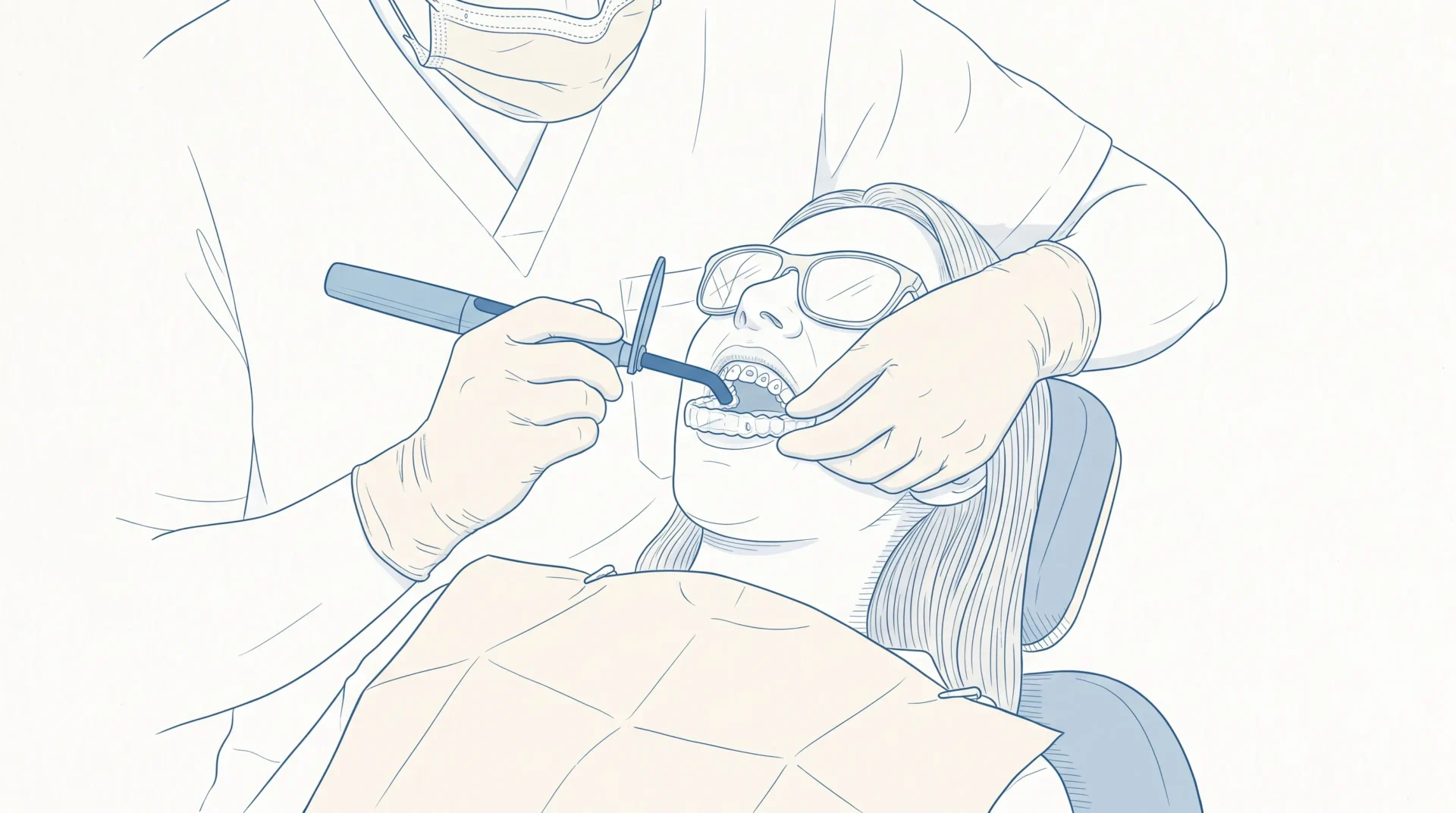
The exact process can vary depending on your treatment plan, but invisalign bonding generally follows a structured sequence. Your dentist may place attachments at the aligner fitting appointment or at a later visit, depending on the staged plan.
| Step | What usually happens | Why it matters |
|---|---|---|
| Tooth preparation | The tooth surface is cleaned and kept dry | A clean surface helps the composite bond properly |
| Conditioning | A dental conditioning gel or bonding agent may be used | This prepares the enamel surface for attachment placement |
| Template placement | A clear template aligner with spaces for attachments is seated over the teeth | The template helps position the attachments accurately |
| Composite bonding | Tooth-coloured composite is placed into the template and shaped | The material forms the planned attachment shape |
| Light curing | A curing light hardens the composite | This sets the attachment in place |
| Finishing | Excess material is removed and the aligner fit is checked | This helps ensure the aligner seats as planned |
The appointment does not usually involve reshaping healthy tooth structure in the way a filling preparation might. However, your dentist still needs to prepare the enamel surface and remove the attachments carefully when they are finished with.
You may notice the attachments feel prominent at first. This sensation often becomes less noticeable as your tongue and cheeks adapt, although comfort varies between patients.
Why attachments may be recommended
The main aim of invisalign bonding is to help the aligner deliver planned tooth movements more predictably. Clear aligners are removable and smooth, which is part of their appeal, but some tooth movements need extra grip.
Without attachments, an aligner may not be able to hold onto a tooth in the way needed for a particular movement. Attachments can act like handles, allowing the aligner to apply pressure in a more controlled direction.
This does not mean attachments guarantee a specific result. Tooth movement depends on many factors, including biology, aligner wear, the complexity of the bite and whether refinements are needed. Your dentist can explain the likely role of attachments in your own plan, including what may happen if an attachment comes loose.
Will attachments be visible?
Attachments are designed to be tooth-coloured, but they are not invisible. Their visibility depends on the shade of your teeth, the number and position of attachments, lighting, lip movement and how closely someone is looking.
They may be more noticeable when your aligners are out because the raised composite catches light differently from natural enamel. With aligners in place, the attachment shape may create a small bump in the tray surface.
If appearance is a major concern, discuss this before treatment starts. In some cases, attachment positions are clinically important and cannot simply be moved for appearance alone. Your dentist can explain which attachments are essential and whether any alternatives are suitable for your circumstances.
Does bonding damage the teeth?
When performed appropriately, invisalign bonding is intended to be temporary and conservative. The composite is bonded to the enamel surface and later polished away when the attachments are no longer needed.
Even so, all dental procedures have potential risks and limitations. Possible issues can include temporary roughness, minor irritation to the lips or cheeks, attachment staining, attachment loss or enamel surface changes during bonding or removal. The risk profile may be different if a tooth has fillings, crowns, veneers, enamel defects or existing sensitivity.
Good home care matters while attachments are in place. Plaque can collect around raised areas, so careful brushing and flossing help protect the teeth and gums during treatment. If an attachment feels sharp, breaks or comes off, contact your dental clinic for advice rather than trying to adjust it yourself.
What happens if an attachment falls off?
An attachment can occasionally debond, especially if it is exposed to strong forces, aligners are removed roughly or there is reduced bond strength on a restored tooth. If this happens, keep wearing your aligners as instructed unless your dentist advises otherwise.
Contact the clinic and explain which tooth seems affected, if you can tell. Your dentist can assess whether the attachment needs to be replaced straight away or at your next planned appointment. This decision depends on the tooth movement being attempted and where you are in the aligner sequence.
It is worth being gentle when removing aligners around attachments. Pulling the aligner off evenly, rather than bending it sharply from one side, may reduce stress on both the tray and the bonded material. Dental Spa’s practical Invisalign tips cover aligner handling, cleaning and storage in more detail.
Eating, cleaning and daily care with attachments
You remove clear aligners for eating and drinking anything other than water, unless your dentist gives different instructions. The attachments stay on the teeth while you eat, so they can trap food around their edges.
Good daily care during invisalign bonding includes brushing around each attachment, cleaning between teeth and keeping aligners clean before putting them back in. A soft toothbrush can help clean the gumline and the small edges around the composite.
Try not to bite directly on very hard objects, such as ice or pen lids. Sticky foods may also tug at the attachments or make cleaning more difficult. If you use whitening toothpaste or are considering whitening treatment, ask your dentist first, because the tooth surface underneath an attachment may not be exposed in the same way while it is bonded.
Comfort, sensory concerns and planning ahead
Some patients are relaxed about attachments, while others feel more aware of changes in tooth texture. This can be especially relevant for people with sensory sensitivities, dental anxiety or neurodivergent needs.
If you or your child prefer predictable routines, ask the dental team to explain the sequence before the appointment. Families who are familiar with structured support services, such as Ons Plekske, may recognise how preparation, clear expectations and a calm environment can make appointments easier to approach.
You can also discuss practical adjustments, such as short breaks, a hand signal, quieter explanations or bringing a support person if appropriate. These adjustments do not change the clinical steps, but they may help the appointment feel more manageable.
How attachments are removed
When attachments are no longer needed, your dentist removes the composite from the tooth surface and polishes the enamel. This may happen at the end of active aligner treatment or at another planned stage.
Removal is different from taking off braces brackets, but the principle is similar in that bonded material is carefully separated from the tooth. Your dentist will check the teeth afterwards and discuss retainers if your active tooth movement is complete.
Retainers are usually part of maintaining orthodontic results, because teeth can shift after aligner treatment. Dental Spa has a related article on Invisalign treatment completion and retention if you would like to understand that phase in more detail.
Who may need extra assessment before attachments are bonded?
Before starting clear aligner treatment, your dentist needs to assess your oral health. This may include checking for decay, gum inflammation, worn enamel, jaw joint symptoms, bite issues and existing dental work.
Extra consideration may be needed if you have:
- Active tooth decay or gum disease
- Large fillings on teeth where attachments are planned
- Crowns, veneers or other restorations
- A history of enamel defects or tooth sensitivity
- Complex bite concerns that may need orthodontic input
- Medical factors that affect healing, oral health or dental care
These factors do not automatically rule out clear aligner treatment, but they may affect planning, timing or material choices. Your dentist can explain the potential benefits, risks and alternatives after examining your mouth.
Questions to ask before attachments are placed
A clear discussion before invisalign bonding can help you understand what is planned and why. You might ask which teeth will receive attachments, whether they are likely to be visible when you smile and what to do if one comes loose.
It is also reasonable to ask how attachments may affect eating, cleaning, speech, comfort and aligner removal. If you have important events coming up, mention them early so your dentist can explain what is clinically appropriate within your treatment plan.
Cost questions should be discussed directly with the clinic, as fees depend on the complexity of treatment, records required, aligner stages, reviews and any additional dental care that may be needed.
Frequently asked questions
Is invisalign bonding the same as cosmetic bonding? No. Cosmetic bonding is usually used to change the appearance or shape of teeth, while invisalign bonding refers to attaching small composite shapes that help clear aligners grip teeth during orthodontic treatment.
Can I remove attachments myself? No. Attachments should be removed by a dental professional using appropriate instruments. Trying to remove them at home may damage the tooth surface or surrounding gums.
Will attachments stain? Attachments can pick up surface staining, especially around their edges. Good brushing, regular dental reviews and following your dentist’s aligner care instructions may help reduce staining, but individual results vary.
Do all Invisalign patients need attachments? Not always. Some treatment plans use several attachments, while others use few or none. Suitability depends on the planned tooth movements, tooth shape, bite and overall oral health.
What should I do if an attachment feels sharp? Contact your dental clinic for advice. A rough edge may be adjusted if clinically appropriate, but you should avoid filing or trimming the attachment yourself.
Considering clear aligners in Geelong?
If you are thinking about Invisalign or have been told you may need attachments, a dental examination can help determine whether clear aligner treatment may be suitable for your oral health, bite and goals.
Dental Spa in Geelong can assess your teeth, explain the role of attachments and discuss possible benefits, limitations, risks and alternatives. To discuss your concerns, you can book an appointment with the team at Dental Spa and receive advice based on your individual circumstances.
Disclaimer
The information provided on this website is for general informational and educational purposes only. It is not intended to replace professional dental advice, diagnosis or treatment. Dental needs and treatment outcomes vary between individuals. Always seek advice from a qualified dental practitioner regarding your specific circumstances before making decisions about your oral health or treatment. A consultation and clinical assessment are required to determine which treatment options may be suitable for you. All dental procedures carry potential risks and benefits, which will be discussed with you before treatment.