
What Parents Should Know About Clear Braces for Teens
16 September 2026 | Braces, Invisalign, Orthodontics
If you are comparing clear braces for teens, you are probably trying to balance appearance, comfort, cost, school routines and your child’s oral health. The short answer is that clear-looking orthodontic options may suit some teenagers, but they are not right for every mouth. A dentist or orthodontic provider needs to assess the teeth, bite, gums, jaw growth, habits and treatment goals before recommending a pathway.
This guide is general information for families in Geelong and surrounding areas such as Newtown, Geelong West, Belmont and Highton. It explains the main options parents often ask about, what an appointment may involve and the practical questions worth raising before treatment begins.
What are clear braces for teens?
The term clear braces can mean different things. Some parents use it to describe ceramic braces, which work in a similar way to metal braces but use tooth-coloured or clear brackets. Others use it to describe clear aligners, such as Invisalign, which are removable plastic trays that fit closely over the teeth.
Both approaches aim to move teeth gradually over time, but they do it differently. Fixed braces use brackets and wires that stay on the teeth. Clear aligners are changed in stages and need to be worn for the recommended number of hours each day.
For teenagers, the right choice depends on more than appearance. Cooperation, oral hygiene, bite complexity, growth stage and whether teeth have fully erupted can all affect what may be suitable.
Why parents consider discreet orthodontic options
For some families, clear braces for teens are mainly about helping orthodontic treatment feel less noticeable at school, sport or social activities. This can matter to a teenager, although appearance should only be one part of the decision.
Parents also ask about comfort, cleaning, food choices and how much responsibility their teenager will need to take. Clear aligners may be appealing because they are removable for meals and brushing, but that same feature means they can be lost, damaged or not worn enough. Ceramic braces stay in place, so they do not rely on a teenager remembering to put them back in, but they still require careful brushing around brackets and wires.
A balanced conversation with your dentist can help separate what sounds convenient from what is clinically appropriate.
Options parents may be offered
The most suitable option for clear braces for teens depends on the orthodontic issue being treated. Mild spacing, crowding or alignment concerns may have different options from more complex bite concerns, impacted teeth or jaw growth issues.
If you would like a broader comparison, Dentalspa has a separate guide on clear aligners or braces and what may suit your needs.
Ceramic braces
Ceramic braces are fixed to the teeth and connected with a wire, similar to traditional metal braces. The brackets are usually tooth-coloured or clear, making them less noticeable for some patients.
They may be considered when fixed orthodontic control is needed but a less visible appearance is preferred. However, ceramic brackets can be more brittle than metal brackets in some situations and the small elastic ties used with them may discolour between visits, depending on the system used and diet.
Clear aligners
Clear aligners are removable trays that fit over the teeth and are replaced as treatment progresses. They may suit some teenagers who can wear them consistently and care for them properly.
Clear aligners need good compliance. If a teenager does not wear them as instructed, treatment may take longer or not progress as planned. Attachments, which are small tooth-coloured shapes bonded to teeth, may be needed to help the aligners grip and move teeth.
Metal braces
Metal braces are still a common orthodontic option and may be recommended for some bite or alignment problems. They are more visible than ceramic braces or aligners, but they can be practical, durable and effective for a range of cases.
| Option | How it works | Practical points for teens | Possible limitations |
|---|---|---|---|
| Ceramic braces | Fixed tooth-coloured or clear brackets and wires | Less noticeable than metal braces for some patients | May still be visible, can require careful care around brackets |
| Clear aligners | Removable trays changed in stages | Removed for eating, brushing and flossing | Requires consistent wear and safe storage |
| Metal braces | Fixed metal brackets and wires | Does not rely on remembering to wear trays | More visible than clear-looking options |
When orthodontic treatment may be considered
Orthodontic treatment may be discussed if a teenager has crowded teeth, spacing, protruding teeth, bite concerns, teeth that do not meet evenly or teeth that are difficult to clean because of their position. It may also be considered before or after other dental treatment, depending on the situation.
The Healthdirect overview of braces and orthodontics explains that orthodontic treatment is used to improve the position of teeth and jaws. For a teenager, timing can be important because jaw growth, tooth eruption and oral habits may influence planning.
Not every teenager with crooked teeth needs immediate treatment. Some situations can be monitored, some may need interceptive care earlier and some may be better assessed by a specialist orthodontist. Your dentist can explain whether monitoring, treatment or referral may be appropriate.
What an orthodontic assessment may involve
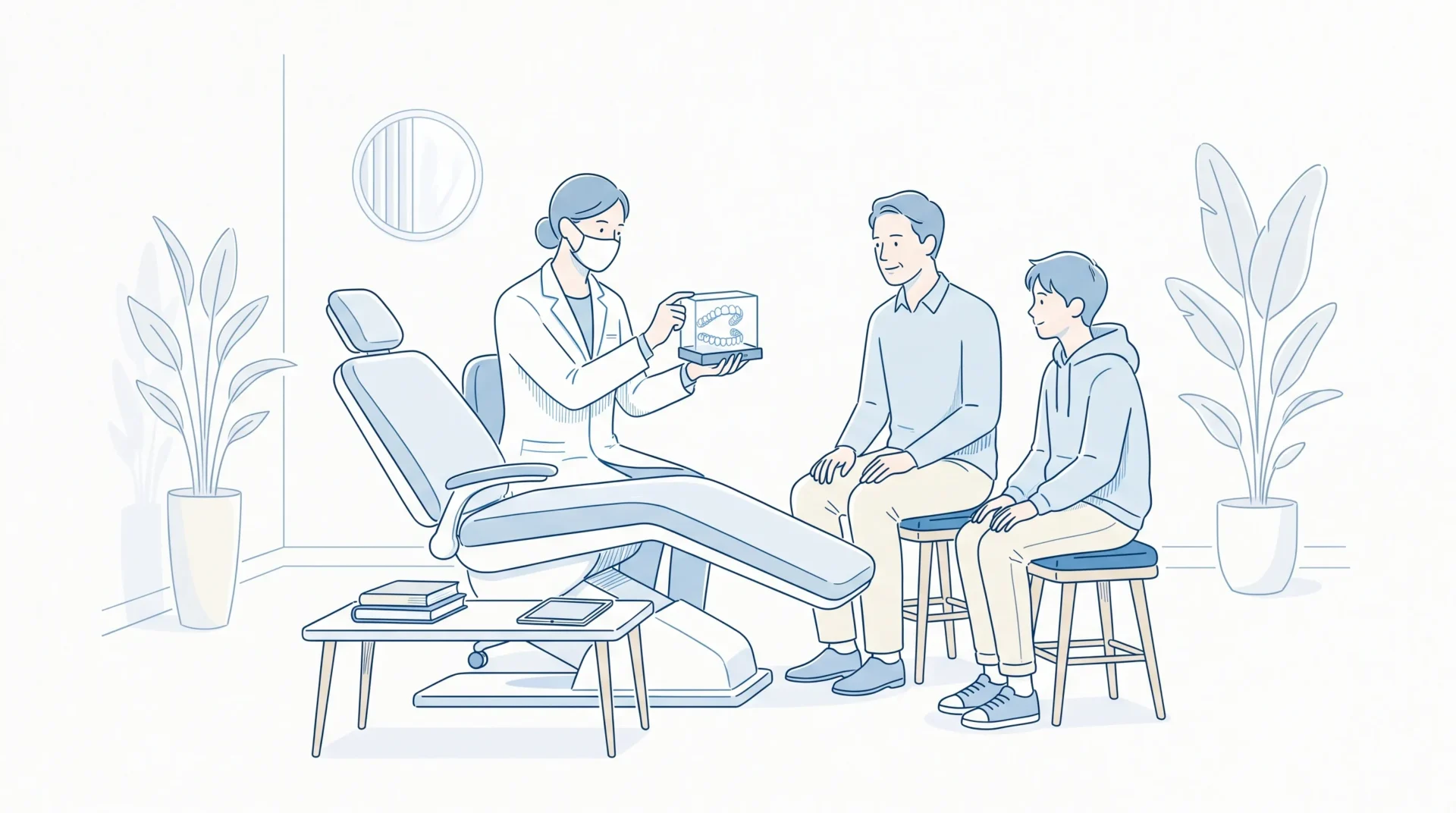
A consultation for clear braces for teens usually starts with a discussion about concerns, goals, medical history, dental history and daily routines. Your dentist may ask about brushing, flossing, sport, instruments, school schedules, grinding, mouth breathing or previous dental treatment.
The clinical examination may include checking the teeth, gums, bite, jaw movement and how the upper and lower teeth meet. Dental photographs, X-rays or digital scans may be recommended if they are needed to understand the case. These records help your clinician consider whether treatment is suitable and what the possible risks, benefits and alternatives may be.
Dentalspa explains this planning process in more detail in its article on how a dentist creates a clear treatment plan. A clear plan should outline the proposed approach, expected responsibilities, approximate timing, fees, review visits and what could change along the way.
Day-to-day practicalities at school, sport and home
Parents often ask whether clear braces for teens will fit around normal school life. In many cases, orthodontic treatment can be managed alongside classes, sport and social activities, but it does take planning.
For fixed braces, teenagers need to avoid certain hard or sticky foods that can damage brackets or wires. They also need to brush carefully around the brackets, especially near the gumline. If your teen plays contact sport, ask whether they need a mouthguard designed for braces.
For clear aligners, the daily routine is different. Aligners are removed for eating and drinking anything other than water, then teeth should be cleaned before the trays go back in. Teens also need a storage case so aligners do not end up wrapped in a napkin, left in a school bag or misplaced.
Small habits make a difference. Keeping a travel toothbrush in a school bag, using the aligner case consistently and attending review appointments can help treatment stay on track, although outcomes still vary between patients.
Risks and limitations parents should understand
Clear braces for teens also come with responsibilities and possible risks. Orthodontic treatment can cause temporary tenderness after adjustments or aligner changes. Fixed braces may irritate cheeks or lips, especially early in treatment. Clear aligners can also feel tight when a new set is started.
Oral hygiene matters. Plaque left around brackets or along the gumline can increase the risk of tooth decay, gum inflammation and white marks on enamel. This is one reason regular dental checks and careful home care remain important during orthodontic treatment.
Other possible risks can include changes to the bite, gum recession in susceptible patients, root shortening, relapse after treatment or a longer treatment time than first estimated. These risks are not the same for everyone. They depend on the individual case, oral health, biology, compliance and the type of movement needed.
A dentist should explain realistic limitations before treatment begins, including what treatment may improve and what it may not change.
Costs, eligibility and payment considerations
The cost of clear braces for teens varies because orthodontic treatment plans are not all the same. Fees can be affected by the complexity of the case, type of appliance, estimated treatment time, review appointments, records and whether referral to a specialist is needed.
It is reasonable to ask for a written treatment plan and fee estimate before deciding. Parents may also want to ask what is included, what may attract additional fees and whether payment options are available. Dentalspa Geelong offers payment plans, but the details should be discussed directly with the clinic so you can understand what applies to your circumstances.
Some families also ask about the Child Dental Benefits Schedule. Services Australia explains the Child Dental Benefits Schedule for eligible children aged 0 to 17, but it does not cover orthodontic or cosmetic dental work. If you are unsure what may be covered for your child, check your eligibility and speak with the dental team before treatment.
Be cautious with mail-order or unsupervised orthodontics
Teenagers should not start tooth movement without an appropriate dental assessment. Teeth, gums, roots and jaws need to be checked before orthodontic treatment is planned, and ongoing monitoring may be needed during treatment.
Mail-order aligners or unsupervised orthodontic products may look convenient, but they can miss important dental issues such as untreated decay, gum disease, root position, bite problems or jaw growth concerns. Dentalspa has a separate article on the risks of online dentistry if you want to understand why in-person assessment matters.
If a treatment offer seems unusually quick, inexpensive or simple, it is sensible to ask what clinical records are being taken, who is supervising the treatment and what happens if teeth do not move as expected.
How parents can support a teenager during treatment
Parents do not need to manage every detail, but support at home can make orthodontic treatment easier for a teenager to follow. Encouragement usually works better than criticism, especially if brushing or aligner wear is becoming a point of tension.
Useful ways to support your teenager include:
- Helping them pack a toothbrush, floss or interdental brushes for school
- Encouraging them to use an aligner case rather than tissues or pockets
- Keeping appointments in a shared calendar
- Asking the dentist which foods are best avoided with fixed braces
- Checking that a sports mouthguard is suitable for their appliance
If your teenager is not coping with cleaning, discomfort or wearing aligners as instructed, mention it at the next appointment rather than waiting. The plan may need practical adjustments, extra coaching or a different discussion about expectations.
Questions to ask before deciding
Before starting clear braces for teens, it can help to bring a written list of questions to the consultation. This keeps the conversation practical and helps both parent and teenager understand what is involved.
You may want to ask:
- What orthodontic issue are we trying to address?
- Are ceramic braces, clear aligners and metal braces all possible in this case?
- What are the benefits, risks and limitations of each option?
- How long might treatment take, and what could change that estimate?
- How often are review appointments usually needed?
- What happens if aligners are lost or braces break?
- Will retainers be needed after treatment?
- What are the fees and payment options?
A good discussion should include alternatives, including the option of monitoring if treatment is not currently needed.
Frequently Asked Questions
Are clear braces for teens the same as Invisalign? Not always. Clear braces can refer to ceramic fixed braces or clear aligners such as Invisalign. They work differently, so your dentist needs to assess which options may be suitable.
What age can a teenager start clear-looking orthodontic treatment? There is no single age that suits everyone. Timing depends on tooth eruption, jaw growth, oral health and the orthodontic issue being assessed.
Do clear aligners hurt? Clear aligners can feel tight or uncomfortable when a new set is started. Fixed braces can also cause tenderness after adjustments. If discomfort is severe, persistent or worrying, contact your dental provider.
Can my teenager eat normally with clear braces? With clear aligners, trays are usually removed for eating. With ceramic braces, some hard or sticky foods may need to be avoided because they can damage brackets or wires.
Will my teen need retainers after treatment? Retainers are commonly recommended after orthodontic treatment to help reduce the chance of teeth shifting. The type and wear schedule depend on the individual case.
Considering orthodontic options in Geelong?
If you are considering discreet orthodontic options for your teenager, a dental examination can help clarify what is happening with their teeth and bite. Your dentist can explain whether treatment may be appropriate, what alternatives exist and what responsibilities your teenager would need to manage.
To discuss your concerns, you can book an appointment with the team at Dentalspa Geelong. A consultation can help you make an informed decision based on your teenager’s oral health, needs and circumstances.
Disclaimer
The information provided on this website is for general informational and educational purposes only. It is not intended to replace professional dental advice, diagnosis or treatment. Dental needs and treatment outcomes vary between individuals. Always seek advice from a qualified dental practitioner regarding your specific circumstances before making decisions about your oral health or treatment. A consultation and clinical assessment are required to determine which treatment options may be suitable for you. All dental procedures carry potential risks and benefits, which will be discussed with you before treatment.