
What Are Dental Implants and How Do They Work?
3 September 2026 | Blog, General Dentistry
If you have typed “dental implants what is it” into Google, you are probably trying to understand whether an implant is a real tooth, a screw, a crown or something else entirely. In simple terms, a dental implant is an artificial tooth root placed into the jawbone to support a replacement tooth, bridge or denture.
Dental implants can be considered when one or more teeth are missing, or when a tooth cannot be predictably restored. They are not suitable for every person or every situation. Your dentist needs to assess your mouth, jawbone, gums, medical history and treatment goals before recommending whether an implant is appropriate.
Dental implants: what is it in simple terms?
A dental implant is a small fixture, usually made from titanium, that is placed into the jawbone by a trained dental professional. Titanium is commonly used because it can integrate with bone in many patients. Some implant systems may use other materials, such as zirconia, depending on the case and the clinician’s recommendation.
The implant itself is not the visible tooth. It sits under the gum and acts as a support. Once healing has occurred, the implant can hold a replacement tooth called a crown, or it may help support a bridge or denture.
The Australian Dental Association’s patient resource, Teeth.org.au, explains dental implants as one option for replacing missing teeth. Like any dental procedure, implants have potential benefits, limitations and risks, so they need to be planned carefully.
How do dental implants work?
Dental implants work by creating a stable foundation for a replacement tooth. After the implant is placed in the jawbone, the surrounding bone may gradually attach to the implant surface. This process is called osseointegration.
Osseointegration does not happen instantly. It usually takes time and varies between patients. Factors such as bone quality, gum health, smoking, oral hygiene, medical conditions and the position of the implant can all affect healing.
An implant-supported tooth usually has three main parts:
| Implant part | What it is | What it does |
|---|---|---|
| Implant fixture | A small post placed into the jawbone | Acts as an artificial tooth root |
| Abutment | A connector attached to the implant | Links the implant fixture to the replacement tooth |
| Crown, bridge or denture | The visible replacement tooth or teeth | Restores appearance and chewing function, depending on the design |
A single missing tooth may be restored with one implant and one crown. Several missing teeth may sometimes be restored with an implant-supported bridge. In some cases, implants can also be used to help stabilise a denture.
The most suitable design depends on the number of missing teeth, the health of the remaining teeth, bite forces, available bone and your preferences.
What happens during dental implant treatment?
Dental implant treatment usually involves several stages rather than one appointment. The exact sequence depends on your individual circumstances, including whether a tooth needs to be removed first, whether bone grafting is needed and how your mouth heals.
A general overview may include:
- Initial assessment: Your dentist examines your teeth, gums and bite, asks about your medical history and discusses what you want to achieve from treatment.
- Imaging and planning: X-rays, scans or digital records may be used to assess bone, tooth position and nearby structures such as nerves or sinuses.
- Treatment discussion: Your dentist explains possible options, the likely stages, estimated timeframes, fees, risks and alternatives.
- Implant placement: The implant fixture is placed into the jawbone under appropriate anaesthesia. Some patients may also need tooth removal or bone grafting.
- Healing period: The implant is left to heal and integrate with the bone. A temporary tooth may be possible in some situations, but not always.
- Final restoration: Once the implant is ready, an abutment and crown, bridge or denture are fitted.
- Ongoing care: Regular dental reviews and careful home cleaning are needed to monitor the implant, gums and surrounding teeth.
For a more detailed look at the patient journey, Dental Spa has a separate guide to dental implants from consultation to care.
Why might a dentist recommend an implant?
A dentist may discuss a dental implant when a tooth is missing or when a damaged tooth cannot be maintained with another treatment. The aim is usually to replace tooth structure in a way that supports chewing, comfort and oral function.
An implant may be considered because it can replace a tooth without attaching to the neighbouring teeth. This is different from a traditional bridge, which often uses nearby teeth for support. An implant may also provide more stability than a removable denture for some patients, depending on the design and oral conditions.
Dental implants may help maintain bone volume at the site of a missing tooth because the implant transfers some chewing forces to the surrounding bone. However, bone response varies and an implant cannot prevent all changes in the jaw over time.
A recommendation should always be based on an examination, not just on the fact that a tooth is missing.
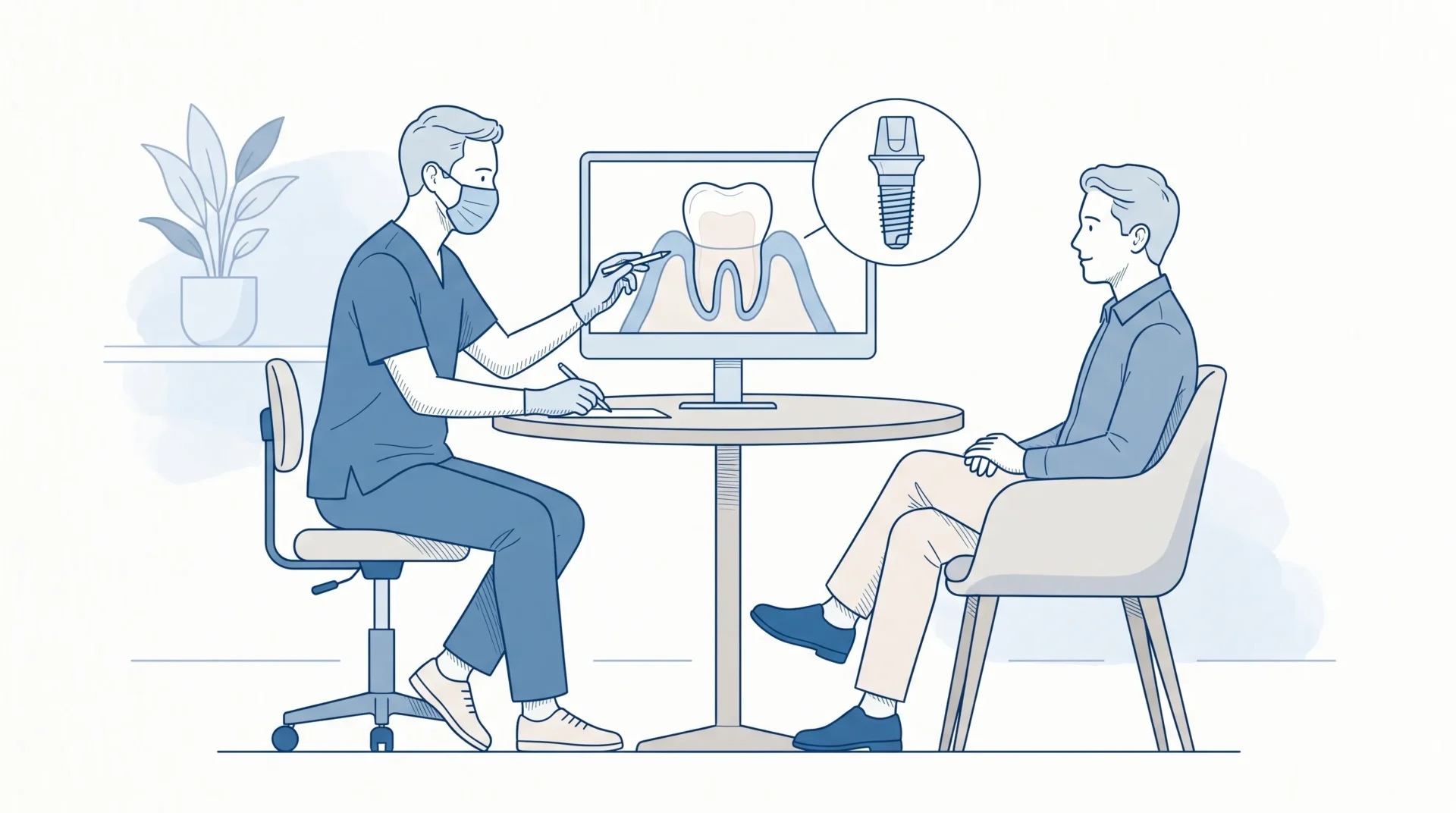
Who may be suitable for dental implants?
Suitability depends on your mouth, your general health and whether implant treatment is likely to be predictable for your situation. A person may be more likely to be considered for an implant when they have healthy gums, enough jawbone to support the implant and a level of oral hygiene that can maintain the area long term.
Your dentist will also consider medical factors. Conditions such as diabetes, a history of radiation therapy to the jaw, some medications, smoking and immune system concerns may affect healing or increase risk. These factors do not automatically rule out treatment in every case, but they need careful assessment.
Bone quantity is another important consideration. If a tooth has been missing for a long time, the jawbone in that area may have changed shape. Some patients need bone grafting before or during implant placement. Others may be better suited to a different replacement option.
Bite forces also matter. Heavy grinding or clenching can place extra stress on implants, crowns and surrounding teeth. Your dentist may discuss protective options if this is relevant.
Dental implants compared with other tooth replacement options
Dental implants are one option, not the only option. Depending on the condition of your teeth and gums, your dentist may also discuss bridges, dentures, crowns or root canal treatment. If the natural tooth is still present, saving it may be considered before extraction and replacement.
Dental Spa has also explained how root canal therapy, crowns and implants compare when different treatment paths are being considered.
| Option | When it may be discussed | Key considerations |
|---|---|---|
| Dental implant | One or more teeth are missing, or a tooth cannot be restored | Requires surgery, healing time and enough bone support |
| Dental bridge | A missing tooth is next to teeth that can support a bridge | May involve shaping neighbouring teeth |
| Removable denture | Several teeth are missing, or a removable option is preferred | May be less stable than fixed options for some people |
| Root canal and crown | The tooth is damaged or infected but may still be restorable | Keeps the natural tooth when suitable, but depends on tooth structure and prognosis |
There is no single option that is right for everyone. The best choice depends on oral health, budget, timeframes, anatomy, comfort with surgery and how the option fits with your wider dental needs.
Benefits, limitations and risks to understand
Dental implants can offer useful benefits for suitable patients. They may support a fixed replacement tooth, avoid placing extra load on adjacent teeth in some designs and provide stability for chewing. They can also be planned to match the shape and shade of nearby teeth, although exact aesthetic outcomes vary.
It is equally important to understand the limitations. Implant treatment takes time, involves a surgical procedure and may require additional care such as bone grafting. The crown, bridge or denture attached to an implant can chip, wear, loosen or need replacement over time. An implant also needs ongoing cleaning and professional monitoring.
Potential risks and complications may include:
- Infection around the implant or gums
- Failure of the implant to integrate with the bone
- Gum recession or changes in appearance around the implant
- Damage or irritation to nearby teeth, nerves or sinuses, depending on implant position
- Loosening or fracture of implant components or the attached crown
- Inflammation around the implant, sometimes called peri-implant disease
- Discomfort, swelling or bruising after surgery
These risks do not mean implants should be avoided in all cases. They mean the decision should be made after a proper assessment and a discussion of benefits, risks and alternatives.
How long does implant treatment take?
Timeframes vary. Some cases are relatively straightforward, while others involve tooth removal, bone grafting, gum healing or staged appointments. Healing also differs from person to person.
In many cases, there is a waiting period between implant placement and the final crown or bridge. This allows time for the implant to integrate with the bone. Your dentist can explain what is realistic for your situation after reviewing scans and completing an examination.
Some patients ask whether they can receive a tooth on the same day as implant placement. This may be possible in selected cases, but it is not appropriate for everyone. It depends on implant stability, bite forces, bone quality and other clinical factors.
Caring for dental implants at home
Dental implants cannot decay like natural teeth, but the gum and bone around them can still become inflamed or infected. Good daily cleaning is essential.
Your dentist or oral health therapist may show you how to clean around the implant crown, under bridges or around implant-supported dentures. This may involve a toothbrush, interdental brushes, floss designed for implants or other cleaning aids.
Regular dental check-ups are also important. These visits allow your dental team to monitor the implant, check the bite, clean areas that are difficult to reach and look for early signs of inflammation.
If you notice bleeding, swelling, soreness, looseness, a change in bite or difficulty cleaning around an implant, arrange a dental assessment. These signs do not always mean there is a serious problem, but they should be checked.
What about dental implant costs?
Dental implant fees vary because treatment plans vary. Costs may depend on the number of implants, the type of restoration, scans, surgical complexity, bone grafting, temporary teeth and the materials used.
A dentist should provide a written treatment plan and fee estimate before treatment begins. This should include what is included, what may be separate and what could change if the treatment plan needs to be adjusted.
Some patients also want to understand payment timing before making a decision. Dental Spa has information on how dental payment plans work for eligible treatments, including the general process for assessment and approval.
Private health insurance may contribute to some parts of implant treatment depending on your policy, waiting periods and annual limits. It is worth checking directly with your health fund using the item numbers supplied by your dentist.
Questions to ask before choosing dental implants
A consultation is the best time to ask practical questions. It can be helpful to write them down before your appointment, especially if you are comparing options.
Useful questions include:
- Am I suitable for dental implant treatment, and why or why not?
- What alternatives could be considered for my missing tooth or teeth?
- Do I need any other treatment before an implant, such as gum care or bone grafting?
- What are the main risks in my case?
- How many appointments may be involved?
- What is the expected healing period?
- What will I use to chew or smile during the healing stage?
- What ongoing maintenance will be needed?
- What fees are involved, and what may change?
These questions can help you compare options clearly rather than feeling rushed into a decision.
When should you speak with a dentist?
You may wish to speak with a dentist if you have a missing tooth, a loose tooth, a badly broken tooth or a denture that feels difficult to manage. A dental examination can help identify whether an implant, bridge, denture, crown, root canal treatment or another option may be appropriate.
If a tooth has been knocked out, you have facial swelling, severe pain, uncontrolled bleeding or signs of infection, seek prompt dental or medical advice. These situations may need urgent assessment rather than routine implant planning.
For people in Geelong, Newtown, Geelong West, East Geelong, Belmont, Highton and nearby areas, an assessment with a local dentist can help clarify what is happening in your mouth and what choices are available.
Frequently asked questions
Are dental implants real teeth? No. A dental implant is an artificial tooth root that supports a replacement tooth, bridge or denture. The visible crown is made to restore the shape and function of a tooth, but it is not a natural tooth.
Are dental implants suitable for everyone? No. Suitability depends on your oral health, jawbone, gums, medical history, medications, smoking status, bite and treatment goals. A dental examination and imaging are needed before a recommendation can be made.
Do dental implants last forever? No dental treatment can be described as lasting forever. Implants and their restorations can last for many years in some patients, but they require maintenance and may need repair or replacement over time.
Is dental implant treatment painful? Implant placement is usually performed with anaesthesia to help manage discomfort during the procedure. Some soreness, swelling or bruising may occur afterwards. Your dentist can explain what to expect and how discomfort is usually managed.
Can I replace several teeth with implants? Sometimes, yes. Implants can be used to support a bridge or denture in selected cases. The number and position of implants depend on bone support, bite forces and the type of restoration planned.
What if I do not want surgery? If you prefer to avoid surgery, your dentist can discuss non-surgical options such as a removable denture or, in some cases, a bridge. Each option has benefits and limitations.
Considering dental implants in Geelong?
Dental implants can be a helpful option for some people with missing teeth, but they need careful planning and an individual assessment. Your dentist can examine your mouth, explain whether implants may be suitable and discuss the potential benefits, risks, costs and alternatives.
To discuss your concerns, you can book an appointment with the team at Dental Spa in Geelong. A dental assessment can help you make an informed decision based on your oral health and personal circumstances.
Disclaimer
The information provided on this website is for general informational and educational purposes only. It is not intended to replace professional dental advice, diagnosis or treatment. Dental needs and treatment outcomes vary between individuals. Always seek advice from a qualified dental practitioner regarding your specific circumstances before making decisions about your oral health or treatment. A consultation and clinical assessment are required to determine which treatment options may be suitable for you. All dental procedures carry potential risks and benefits, which will be discussed with you before treatment.