
Can Teeth Whitening Change the Colour of Crowns?
2 September 2026 | Crowns, Porcelain Crowns, Teeth Whitening
No, teeth whitening does not usually change the colour of dental crowns. Whitening products are designed to lighten natural tooth enamel, not porcelain, ceramic, zirconia or other crown materials. If you are searching for teeth whitening for crowns, the key thing to know is that whitening may make your natural teeth lighter while your crown stays the same shade.
This can be helpful in some cases, but it can also make an existing crown stand out more, especially if it is on a front tooth. A dentist can check the crown, the surrounding teeth and your oral health before explaining which options may be suitable.
What to know about teeth whitening for crowns
Teeth whitening works by using bleaching agents, commonly hydrogen peroxide or carbamide peroxide, to break down stains within natural tooth structure. These agents can lighten some types of staining in enamel and dentine, which is the layer under enamel.
A crown is different. It is a restoration that covers a tooth and is made from dental materials such as ceramic, porcelain fused to metal, zirconia or resin-based materials. These materials do not have the same structure as natural enamel, so they do not respond to whitening in the same way.
That means a crown cannot be predictably whitened with in-chair whitening, take-home whitening trays or whitening strips. Whitening toothpaste may remove some surface stain from a crown, but it will not change the underlying crown shade.
For general consumer information about whitening, the Australian Dental Association’s Teeth.org.au has a helpful overview of teeth whitening, including why a dental check is recommended before starting treatment.
Why a crown may look darker after whitening
A crown can appear darker after whitening because the teeth around it have become lighter. The crown itself has not necessarily changed. It may simply be more noticeable because the surrounding natural teeth are now a different shade.
This is more common with crowns on visible front teeth. A crown that matched well years ago may also start to look different over time if your natural teeth have stained, been whitened or changed in translucency with age.
Other reasons a crown may look darker include:
- Surface staining from coffee, tea, red wine, tobacco or dark coloured foods
- A visible dark line near the gum, sometimes seen with older porcelain fused to metal crowns
- Gum recession exposing the edge of the crown or darker root surface
- Wear, chips or changes to the crown glaze
- Decay, leakage or shadowing around the crowned tooth
If staining is the main concern, it may help to understand the most common causes of tooth stain and how everyday habits can affect both natural teeth and restorations.
What are your options if a crown no longer matches?
The right option depends on why the colour mismatch has happened, whether the crown is healthy and where it sits in your smile. A dentist will usually start by checking the crown margins, bite, gums and the tooth underneath where possible.
| Situation | Possible option | What to consider |
|---|---|---|
| Crown has light surface stain | Professional clean or polish | May improve surface appearance, but will not change the crown’s base colour |
| Natural teeth are darker than the crown | Whitening natural teeth may be discussed | The crown will stay the same colour, so shade planning matters |
| Natural teeth have been whitened and the crown now looks dark | Replacing the crown may be considered | A new crown can be shade matched after whitening has stabilised |
| Crown is old, cracked, loose or has poor margins | Crown replacement may be recommended | The tooth and surrounding gum need to be assessed first |
| Colour difference is mild and not concerning to you | No cosmetic treatment | Not every colour difference needs treatment |
In some cases, your dentist may recommend whitening the natural teeth first, then waiting before matching a replacement crown. This is because tooth shade can continue to settle after whitening. The timing varies depending on the whitening method and your individual response.
If the crown also has functional issues, such as cracking, looseness or leakage, replacement may be considered for dental health reasons rather than appearance alone. Dental Spa has more information on signs that teeth crowns may need replacement.
Should you whiten before or after getting a crown?
If you are planning a new crown on a visible tooth and you also want to lighten your natural teeth, your dentist may discuss whitening first. This allows the new crown to be matched to the lighter tooth shade rather than the old shade.
This is not always the right sequence. If a tooth is painful, cracked, heavily restored or affected by decay, the dental health issue may need to be managed before cosmetic shade planning. A crown that is needed to protect a tooth should not be delayed without professional advice.
For patients in Geelong considering whitening, Dental Spa’s article on tooth whitening at Dentalspa explains general factors that may affect suitability, including existing restorations.
What an appointment may involve
If you visit Dental Spa in Geelong to ask about whitening and crowns, the appointment will usually focus on understanding your current teeth, restorations and goals. This is important because whitening is not suitable for everyone and crown replacement is not always necessary.
Your dentist may:
- Examine your teeth, gums and existing crowns.
- Ask about previous dental treatment, sensitivity and medical history.
- Check whether staining is external, internal or related to a restoration.
- Discuss whether whitening may be suitable for your natural teeth.
- Explain whether a clean, polish, crown review or crown replacement may be appropriate.
- Talk through potential benefits, risks, limitations and alternatives before treatment.
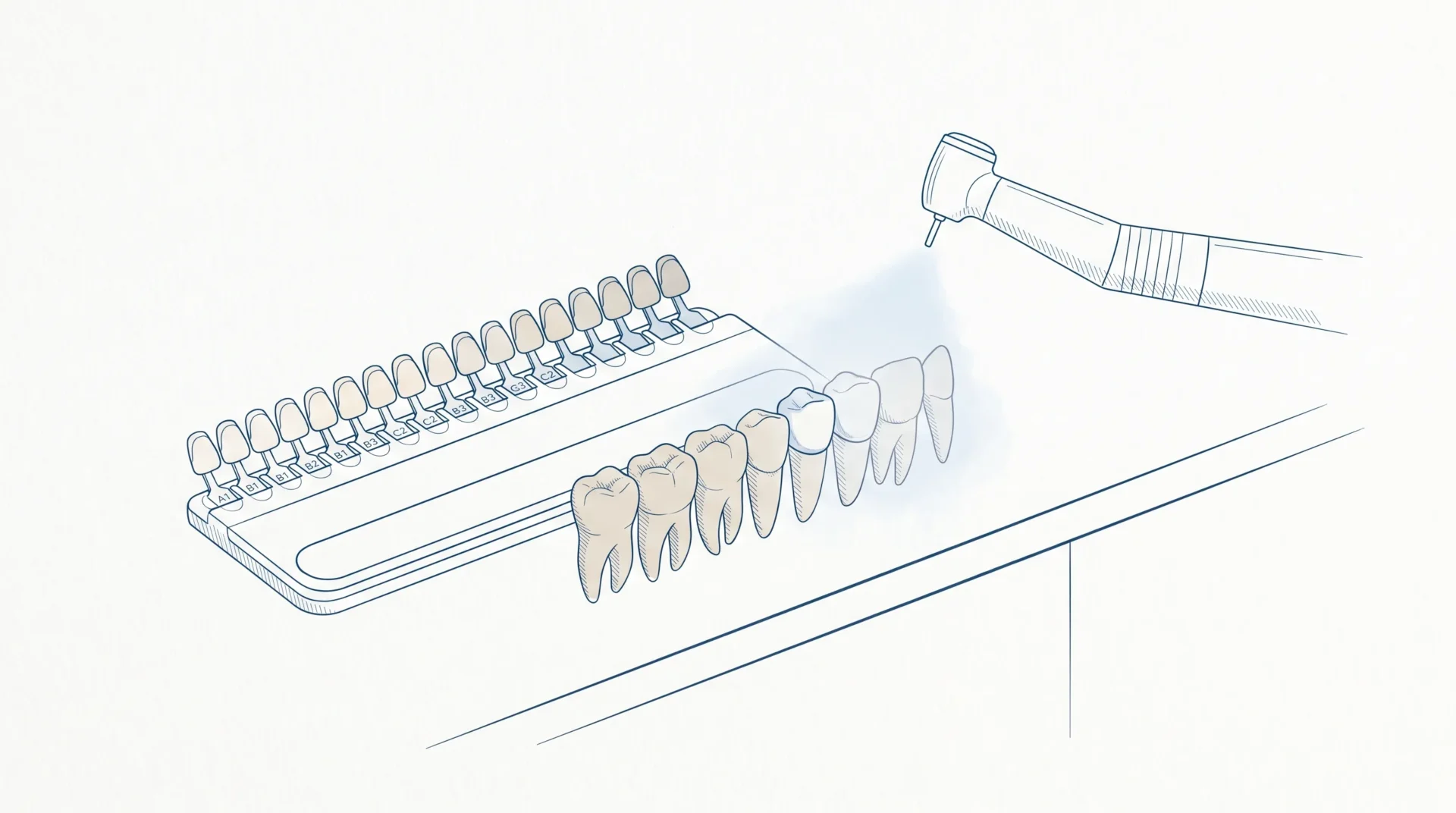
Shade matching may also be part of the discussion. This can involve comparing your teeth with a dental shade guide and considering how visible the crown is when you talk and smile. Lighting, tooth translucency and surrounding teeth can all affect how a crown appears.
Risks and limitations to understand
All dental procedures carry potential benefits and risks. Teeth whitening may cause temporary tooth sensitivity or gum irritation for some people. It may not work well for all types of discolouration, and it will not whiten crowns, veneers, fillings or bridges.
Using whitening products without a dental assessment can also be unhelpful if there is untreated decay, gum disease, cracks, exposed roots or leaking restorations. Whitening over these issues may increase sensitivity or delay care that is more appropriate.
Replacing a crown also needs careful planning. The old crown must be removed, the underlying tooth assessed and a new restoration made to fit the tooth and bite. Possible issues can include sensitivity, bite adjustment needs, gum irritation or the discovery that the tooth needs additional treatment.
Your dentist can explain these points in relation to your own mouth. Suitability depends on factors such as oral health, the condition of the crowned tooth, your bite, your expectations, your medical history and the position of the crown.
Can whitening damage a crown?
Whitening gels are not intended to lighten crown materials, but they do not usually change the colour of sound porcelain or ceramic crowns. The bigger issue is often the uneven colour result between natural teeth and restorations.
However, a crown with poor margins, cracks, leakage or exposed root surface needs assessment before whitening. If whitening gel reaches sensitive areas or a compromised tooth, it may contribute to discomfort. This is one reason a dental check is recommended before starting whitening, especially if you have crowns, veneers, fillings or bridges.
Abrasive whitening products can also be a concern. Some whitening toothpastes, charcoal powders or home remedies may be too abrasive for teeth and restorations if used frequently or incorrectly. If you are unsure about a product, bring it to your dental appointment and ask whether it is suitable for your mouth.
When to speak with a dentist promptly
A colour mismatch alone is not usually urgent. However, some symptoms around a crowned tooth should be assessed sooner, particularly if they suggest damage, infection or a poorly fitting restoration.
Arrange a dental appointment if you notice:
- Pain when biting or chewing
- A crown that feels loose or high in the bite
- Swelling, pus, a pimple on the gum or a bad taste
- A crack, chip or rough edge on the crown
- New sensitivity to hot, cold or sweet foods
- Darkening near the gum line that has changed recently
A dental examination can help determine whether the issue is cosmetic, functional or related to the health of the tooth under the crown.
Frequently asked questions
Can teeth whitening for crowns make porcelain crowns whiter? No. Whitening products do not predictably lighten porcelain, ceramic or zirconia crowns. They are designed to work on natural tooth structure, so the crown will usually remain the same shade.
Can a dentist polish stains off a crown? Sometimes. If the discolouration is only on the surface, a professional clean or polish may improve the appearance. If the crown material itself is the wrong shade, polishing will not change its base colour.
Should I replace my crown after whitening? Not always. Replacement may be considered if the crown no longer matches and the colour difference bothers you, or if the crown has dental issues such as cracking, leakage or poor fit. Your dentist can assess whether replacement is appropriate.
How long should I wait after whitening before matching a new crown? Timing varies. Dentists often allow time for the tooth shade to settle after whitening before selecting the shade for a new crown. Your dentist can advise a suitable timeframe based on the whitening method used.
Do fillings, veneers and bridges whiten like natural teeth? No. Like crowns, these restorations do not whiten in the same way as natural enamel. If you have visible restorations, it is worth discussing shade planning before starting whitening.
Discussing crowns and whitening in Geelong
If you are thinking about whitening and you have one or more crowns, a dental assessment can help you understand what may realistically change and what will not. This can reduce the chance of an uneven shade result and help you decide whether whitening, polishing, crown replacement or no treatment is most appropriate.
To discuss your concerns, you can book an appointment with the team at Dental Spa in Geelong. Your dentist can assess your oral health and explain the potential benefits, risks and alternatives based on your individual circumstances.
Disclaimer
The information provided on this website is for general informational and educational purposes only. It is not intended to replace professional dental advice, diagnosis or treatment. Dental needs and treatment outcomes vary between individuals. Always seek advice from a qualified dental practitioner regarding your specific circumstances before making decisions about your oral health or treatment. A consultation and clinical assessment are required to determine which treatment options may be suitable for you. All dental procedures carry potential risks and benefits, which will be discussed with you before treatment.