
Can You Straighten Bottom Teeth Only With Invisalign?
27 August 2026 | Cosmetic Dentistry, Invisalign, Orthodontics
If you are searching for Invisalign bottom teeth only, the short answer is: sometimes. Invisalign can be planned for the lower teeth alone in selected cases, but it is not suitable for everyone.
The reason is simple: your bottom teeth do not work in isolation. They need to meet your upper teeth comfortably when you bite, chew and speak. Moving only the lower teeth can sometimes improve mild crowding or spacing, but in other cases it may create or worsen bite problems.
A dental assessment is the only way to know whether lower-only Invisalign treatment may be appropriate for your mouth, goals and oral health.
Can Invisalign bottom teeth only treatment be suitable?
Lower-only Invisalign treatment is sometimes called single-arch aligner treatment. It means clear aligners are made to move the bottom teeth while the upper teeth are either left unchanged or managed with retainers, monitoring or another approach.
This may sound straightforward, especially if your concern is limited to the lower front teeth. Many adults notice crowding, twisting or relapse in this area after previous orthodontic treatment. Lower front teeth can also be highly visible when speaking, depending on lip shape and facial movement.
However, clear aligner treatment is not simply about making teeth look straighter from the front. Your dentist also needs to assess how the upper and lower teeth fit together. This is called your occlusion, or bite. A stable bite helps distribute chewing forces more evenly and can reduce the chance of unwanted tooth movement, tooth wear or discomfort.
If you are comparing treatment options more broadly, Dentalspa has also explained how Invisalign works as a clear aligner option and what patients commonly want to know before starting treatment.
Why your bite matters when only moving the bottom teeth
Your teeth move within a system. When the lower teeth are moved forward, backward, rotated or widened, they may contact the upper teeth differently. Even a small change can matter if your bite is already tight, uneven or affected by crowding.
For example, a person with mild lower crowding and a stable bite may be a better candidate for lower-only treatment than someone with a deep bite, underbite, crossbite or significant crowding. In those situations, treating both arches may be more appropriate because the dentist can coordinate how the upper and lower teeth meet.
Bite concerns do not always feel obvious to the patient. You may have no pain and still have a bite relationship that affects whether lower-only aligners are advisable. That is why your assessment will usually look beyond the teeth you can see in the mirror.
When lower teeth only Invisalign may be considered
Lower-only Invisalign treatment may be discussed when the concern is mild and the bite allows safe movement. It is most often considered for limited cosmetic or relapse concerns rather than complex orthodontic changes.
Your dentist may consider lower-only treatment if:
- The lower teeth have mild crowding or spacing
- The upper teeth are already in a stable and acceptable position
- Your bite is balanced enough that lower tooth movement is unlikely to create interference
- Your gums and supporting bone are healthy enough for orthodontic movement
- Your treatment goals are realistic and limited to what lower aligners can reasonably address
This does not mean treatment will be recommended just because these points seem to apply. Your dentist may need photographs, X-rays, scans or impressions to understand the full picture.
When treating both upper and lower teeth may be more appropriate
In many cases, treating both arches gives the dentist more control over the final bite. This can be especially relevant if your main concern on the lower teeth is connected to the position of the upper teeth.
Both-arch treatment may be more suitable if you have:
- Moderate to severe crowding
- A deep bite where the upper teeth heavily overlap the lower teeth
- An underbite, crossbite or open bite
- Tooth wear caused by the way the teeth meet
- A narrow arch that needs broader coordination
- Previous orthodontic relapse affecting both upper and lower teeth
- A midline discrepancy where the centre of the upper and lower teeth does not align
If bite correction is part of the discussion, your dentist may explain whether Invisalign, braces or another orthodontic option is more suitable. Dentalspa has a separate guide comparing Invisalign and braces for straightening teeth, which may be useful if you are weighing up different approaches.
What an assessment usually involves
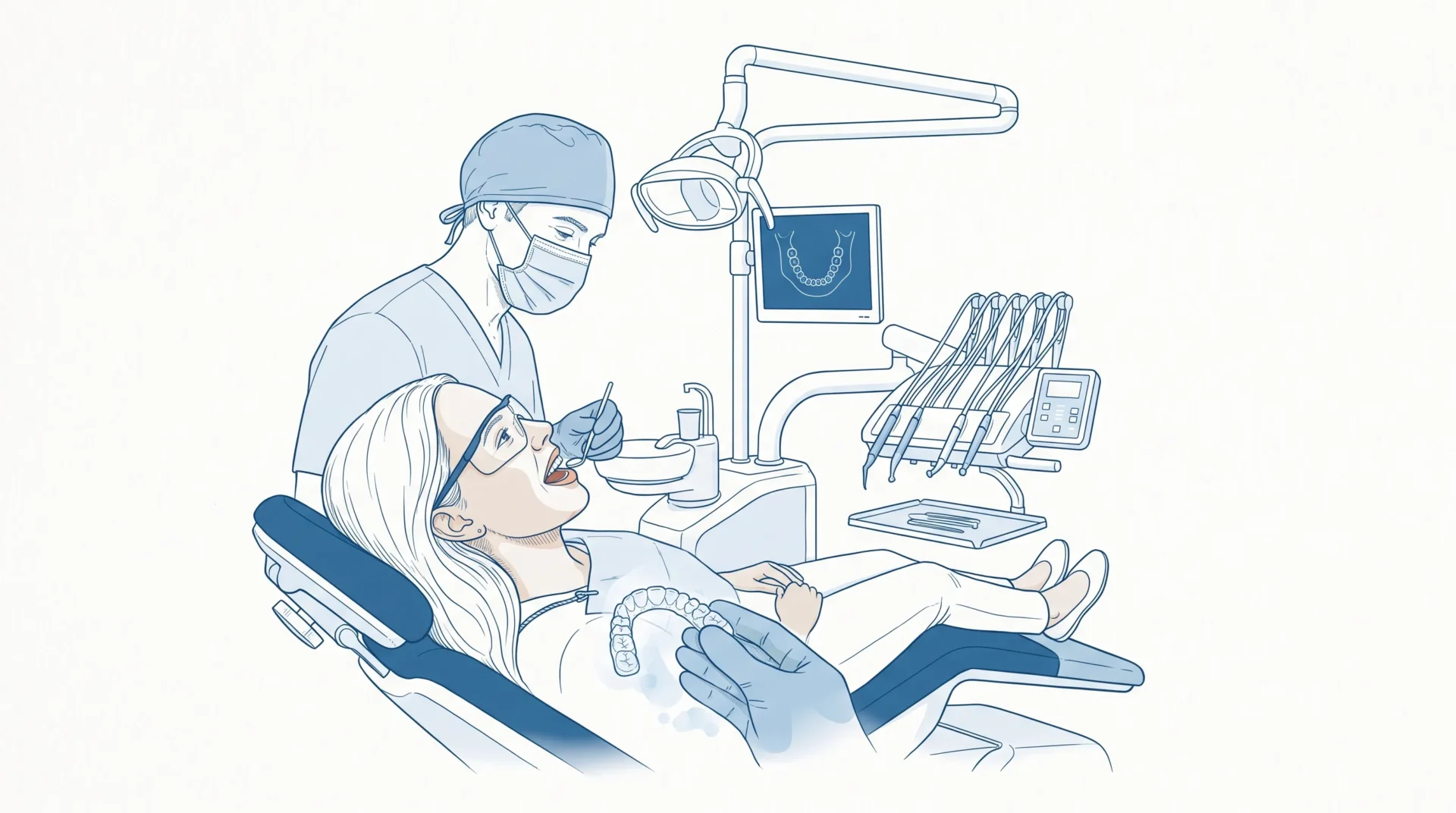
If you visit a dentist to ask about Invisalign for bottom teeth only, the appointment is usually focused on suitability, not pressure to proceed. The aim is to understand your oral health, your bite and what you would like to change.
An assessment may include:
- A conversation about your concerns: Your dentist will ask what you have noticed, how long it has been present and whether you have had orthodontic treatment before.
- An examination of your teeth and gums: Active gum disease, tooth decay or untreated dental problems may need to be managed before orthodontic movement is considered.
- A bite assessment: Your dentist will check how the upper and lower teeth meet, including any heavy contacts or uneven wear.
- Records if treatment may be suitable: This may include dental photographs, X-rays, impressions or digital scans, depending on your circumstances and the treatment planning process.
- A discussion of options: You may be told that lower-only aligners are possible, that both arches should be considered or that another option may be more appropriate.
This process also gives you a chance to ask about treatment timeframes, costs, payment options, aligner wear and likely maintenance after treatment.
Benefits and limitations of treating only the bottom teeth
For suitable patients, lower-only Invisalign treatment may be a more focused way to address a limited concern. It may involve fewer teeth and a narrower treatment goal than full orthodontic treatment.
The main limitation is that movement is restricted to one arch. That can reduce the dentist’s ability to refine the bite or manage problems that involve both upper and lower teeth.
| Consideration | Lower teeth only Invisalign | Upper and lower Invisalign |
|---|---|---|
| Treatment focus | Limited lower tooth movement | Coordinated movement of both arches |
| Bite control | More limited | Often greater control over how teeth meet |
| Suitability | Usually mild, selected cases | May suit a wider range of alignment and bite concerns |
| Treatment planning | Still requires full bite assessment | Requires full bite assessment and arch coordination |
| Retention | Retainers are still usually needed | Retainers are still usually needed |
Lower-only treatment is not necessarily simpler from a clinical point of view. In some mouths, moving fewer teeth while keeping the bite stable can be more restrictive.
Possible risks and responsibilities
All orthodontic treatment has potential benefits and risks. Invisalign is removable, but the teeth still move through biological changes in the surrounding bone and gum support. Your dentist should explain the relevant risks for your mouth before treatment begins.
Possible issues may include temporary pressure or tenderness, gum irritation, changes to the way the teeth meet, tooth decay if oral hygiene is poor, gum recession in susceptible areas or the need for further treatment if teeth do not move as planned. Some people may require small attachments on the teeth or minor enamel reshaping between teeth, known as interproximal reduction, if it is clinically appropriate.
Clear aligners also rely heavily on consistent wear. Invisalign aligners are commonly worn for most of the day and night, and are removed for eating, drinking anything other than water and cleaning your teeth. If you want more detail on daily wear, Dentalspa explains how long Invisalign aligners should usually be worn each day.
Alternatives if lower-only Invisalign is not suitable
If your dentist advises that bottom teeth only treatment is not the right fit, it does not automatically mean you have no options. It usually means another approach may be safer, more predictable or better aligned with your bite.
Possible alternatives may include:
- Invisalign for both arches: This may allow the upper and lower teeth to be moved in a coordinated way.
- Braces: Braces may be considered when more complex movement or bite correction is needed.
- Limited fixed orthodontic treatment: In some cases, a small section of braces may be considered, depending on the tooth movement required.
- Retainers or monitoring: If movement is very mild or treatment is not currently recommended, your dentist may discuss whether monitoring or retention is appropriate.
- Restorative options: Treatments such as bonding or crowns do not move teeth, but may be discussed for shape, wear or tooth structure concerns in selected circumstances.
The right option depends on your oral health, anatomy, bite, budget, goals and willingness to wear appliances as directed.
How long does Invisalign bottom teeth only treatment take?
There is no single timeframe that applies to everyone. Lower-only treatment may be shorter than more complex orthodontic treatment in some cases, but this depends on how far the teeth need to move, how they respond and whether refinements are needed.
Refinements are extra aligners used to improve tooth positioning after the first planned series. They are common in clear aligner treatment and do not necessarily mean something has gone wrong. Teeth do not always move exactly as predicted, so your dentist may reassess and adjust the plan.
Your dentist can give you a more realistic estimate after reviewing your records and treatment goals.
What about cost?
The cost of Invisalign for bottom teeth only varies because treatment plans vary. Factors may include the complexity of tooth movement, the number of aligners, whether both arches are involved, appointment requirements and whether refinements or retainers are included.
It is reasonable to ask for a written estimate before starting. You can also ask what is included, what may involve additional fees and whether payment options are available. Dentalspa Geelong offers payment plans, but your dentist or treatment coordinator will need to explain the options that apply to your individual treatment plan.
Retainers still matter after lower teeth treatment
Teeth can shift after orthodontic treatment, including treatment that only involves the bottom teeth. Retainers help hold the teeth in their new position once aligner treatment is complete.
Retainers may be removable, fixed behind the teeth or a combination of both. The most suitable type depends on your teeth, bite and relapse risk. Your dentist will also explain how often to wear them and how to care for them.
If you have previously had braces or aligners and your lower teeth have moved again, retention will be an important part of the discussion.
Questions to ask your dentist
Before deciding on treatment, consider asking:
- Is my concern limited to the lower teeth, or is my bite also involved?
- Would treating only the bottom teeth affect how my teeth meet?
- Are my gums and supporting bone suitable for tooth movement?
- Would I need attachments, enamel reshaping or refinements?
- What are the benefits, risks and alternatives in my case?
- What type of retainer would I need after treatment?
- What costs are included in the treatment plan?
These questions can help you make a more informed choice and understand why a particular option is being recommended.
Frequently Asked Questions
Can Invisalign be used on bottom teeth only? Yes, Invisalign can sometimes be used on bottom teeth only, but suitability depends on your bite, gum health, tooth position and treatment goals. A dentist needs to assess whether moving only the lower teeth may be appropriate.
Is lower-only Invisalign cheaper than full Invisalign? It may cost less in some cases, but this is not guaranteed. Cost depends on the complexity of treatment, number of aligners, appointment needs, retainers and whether refinements are required.
Will treating only my bottom teeth affect my bite? It can. Even small movements may change how the upper and lower teeth meet. This is one of the main reasons a full bite assessment is needed before recommending lower-only aligners.
Can I get Invisalign just for mild lower crowding? Mild lower crowding may be suitable for Invisalign in selected cases. Your dentist will need to check whether there is enough space, whether the teeth can move safely and whether the bite will remain stable.
Do I still need retainers after Invisalign bottom teeth only treatment? Retainers are usually recommended after orthodontic treatment to help reduce the chance of teeth shifting. Your dentist will advise which retainer option may suit your situation.
Considering Invisalign for bottom teeth in Geelong?
If your lower teeth have shifted, crowded or become harder to clean, a dental examination can help clarify what is happening and which options may be appropriate.
To discuss whether lower-only Invisalign may suit your circumstances, you can book an assessment with Dentalspa Geelong. Your dentist can review your bite, explain the potential benefits and limitations, and outline alternatives if another approach may be more suitable.
Disclaimer
The information provided on this website is for general informational and educational purposes only. It is not intended to replace professional dental advice, diagnosis or treatment. Dental needs and treatment outcomes vary between individuals. Always seek advice from a qualified dental practitioner regarding your specific circumstances before making decisions about your oral health or treatment. A consultation and clinical assessment are required to determine which treatment options may be suitable for you. All dental procedures carry potential risks and benefits, which will be discussed with you before treatment.