
Invisalign Clear Braces: How They Work and Who They May Suit
7 September 2026 | Braces, Invisalign, Orthodontics
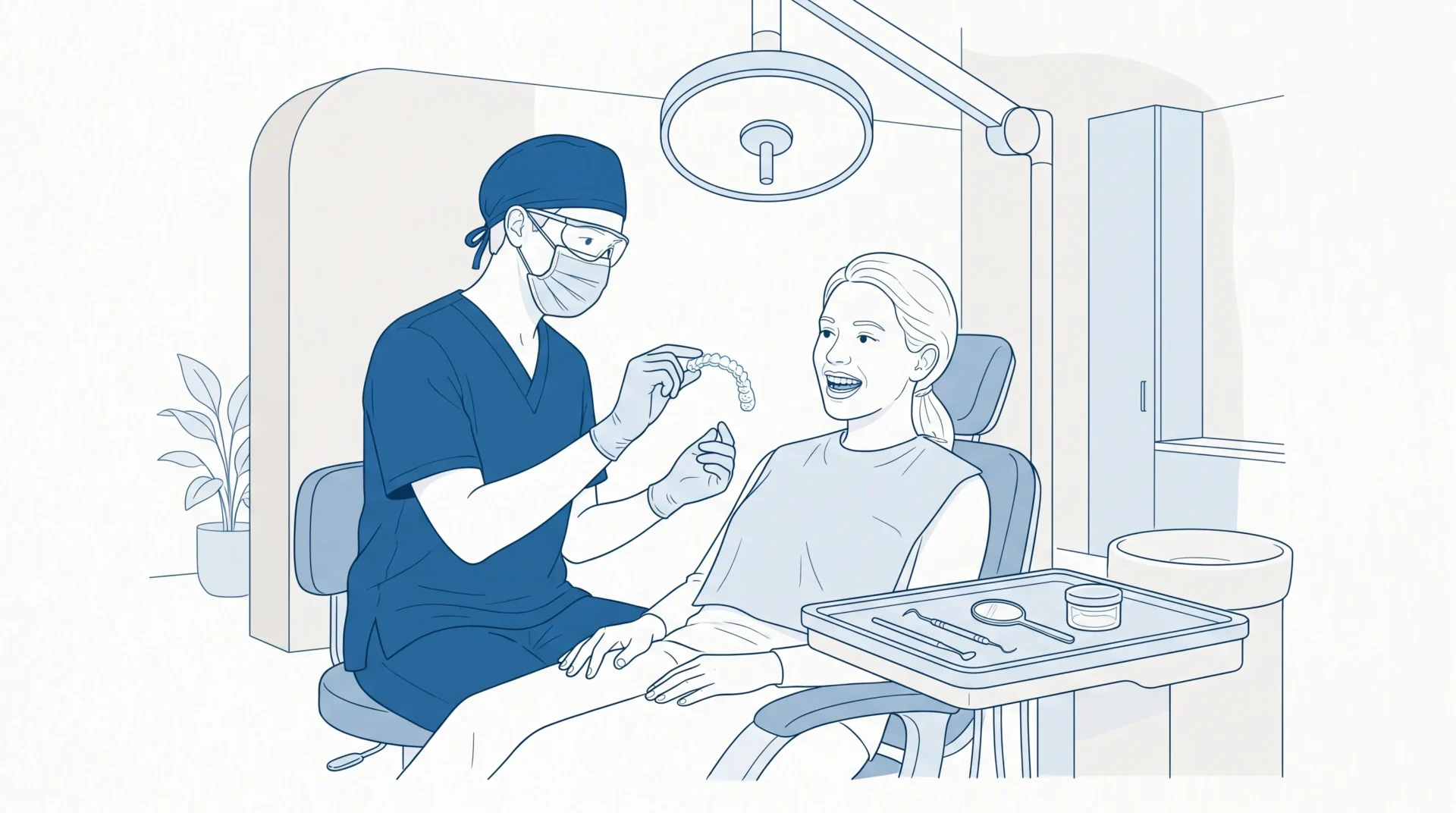
Invisalign clear braces are a common option for people who want to straighten teeth with clear, removable aligners rather than fixed metal braces. Strictly speaking, Invisalign is not a brace. It is a brand of clear aligner system that uses a series of custom-made trays to apply gentle, planned pressure to selected teeth over time.
For many adults and older teenagers, clear aligners may be considered for mild to moderate crowding, spacing or bite concerns. They are not suitable for every case. A dental assessment is needed to check your teeth, gums, bite, jaw relationship and treatment goals before any recommendation can be made.
What are Invisalign clear braces?
The phrase Invisalign clear braces is often used by patients because the goal is similar to braces, straighter tooth position. The way the treatment works is different.
Traditional braces use brackets attached to the teeth and wires that are adjusted during treatment. Invisalign uses removable aligners that fit closely over the teeth. Each aligner is slightly different from the previous one, and the sequence is planned to move teeth in small stages.
The aligners are clear, so they are generally less noticeable than metal braces. They still need to be worn consistently, usually for most of the day and night, except when eating, drinking anything other than water, brushing and flossing. Your dentist will provide instructions specific to your plan.
The Australian Society of Orthodontists provides general patient information about clear aligners and the importance of having treatment properly assessed and monitored by a registered dental professional.
Invisalign Clear Braces: How They Move Teeth
Invisalign treatment starts with planning, not with the aligners themselves. The aim is to understand where your teeth are now, where they can safely move and whether aligners are an appropriate way to get there.
A typical process may include:
- Initial consultation and oral health check: Your dentist examines your teeth, gums, bite and jaw movement. Existing issues such as tooth decay, gum disease or failing restorations may need attention before orthodontic treatment begins.
- Records and treatment planning: Photos, X-rays and digital scans or impressions may be taken. These help the dentist assess tooth position, root position, bone support and bite relationships.
- Custom aligner design: If Invisalign appears suitable, a treatment plan is prepared to map the staged movement of your teeth. This plan helps estimate the number of aligners likely to be needed, although treatment may change depending on how your teeth respond.
- Aligner fitting: You receive your first aligners and instructions on wearing, removing, cleaning and storing them. Some patients may also need small tooth-coloured attachments placed on selected teeth to help aligners grip and guide movement.
- Review appointments: Your dentist checks that the aligners are fitting properly and that teeth are tracking as expected. Adjustments, extra aligners or refinements may be needed in some cases.
- Retention: After active treatment, retainers are usually recommended to help maintain tooth position. Without retention, teeth can gradually shift again.
Some treatment plans may also involve interproximal reduction, which means carefully reshaping a very small amount of enamel between selected teeth to create space. This is not required for everyone and should only be done when clinically appropriate, with your consent.
What dental concerns may Invisalign help with?
Invisalign may be considered for a range of orthodontic concerns, depending on their severity and cause. These may include:
- Mild to moderate crowding, where teeth overlap because there is limited space
- Small gaps between teeth, depending on why the spaces are present
- Some relapse after previous orthodontic treatment
- Certain bite concerns, such as mild overbite, crossbite or open bite issues
- Tooth alignment concerns before some cosmetic or restorative dental treatments
If gaps are your main concern, Dentalspa has a separate guide explaining when Invisalign may help close gaps between teeth and when other options may need to be considered.
More complex bite problems may involve the way the upper and lower jaws relate to each other, not just the position of the teeth. In those situations, aligners may have limitations. Your dentist may discuss fixed braces, referral to an orthodontist or other options if they are more appropriate.
Who may be suited to Invisalign clear braces?
Clear aligners tend to suit patients who are motivated, consistent and comfortable taking responsibility for daily wear. Because the aligners are removable, the treatment relies heavily on patient cooperation.
Invisalign may be worth discussing if you:
- Prefer a less noticeable orthodontic option, if clinically suitable
- Can wear aligners for the recommended hours each day
- Are comfortable removing aligners before meals and drinks other than water
- Have healthy teeth and gums, or are willing to address dental issues first
- Want an option that may make brushing and flossing easier than with fixed braces
- Understand that refinements or changes to the plan may sometimes be needed
Adults often ask about Invisalign because it can fit more easily into work, study and family routines. Older teenagers may also be suitable in some cases, but maturity and compliance are important. If aligners are left out for long periods, treatment may not progress as planned.
Who may need a different option?
Invisalign is not the right choice for every patient. A different approach may be recommended where tooth movement is more complex, where the bite needs significant correction or where oral health needs to be stabilised first.
Clear aligners may be less suitable if you have:
- Severe crowding or spacing that needs complex tooth movement
- Significant jaw discrepancy, such as a skeletal underbite or overbite
- Active gum disease or untreated decay
- Teeth with limited bone support or certain root concerns
- Difficulty committing to consistent aligner wear
- A habit of frequently losing or damaging removable appliances
This does not mean treatment is impossible. It means your dentist needs to assess the situation carefully and explain which options may be safer, more predictable or more suitable for your needs.
Invisalign compared with traditional braces
Many people start by comparing aligners and braces. Neither option is automatically better. The most suitable choice depends on your teeth, bite, lifestyle, oral hygiene, budget and treatment goals.
If you are deciding between options, Dentalspa has a more detailed comparison of clear aligners and braces that may be useful before your appointment.
| Factor | Invisalign clear aligners | Traditional braces |
|---|---|---|
| Appearance | Clear aligners are generally less noticeable when worn | Brackets and wires are visible, although ceramic options may be less noticeable |
| Removability | Removed for eating, drinking, brushing and flossing | Fixed to the teeth throughout treatment |
| Daily responsibility | Requires consistent wear and safe storage | Less dependent on remembering to wear an appliance |
| Oral hygiene | Teeth can be brushed and flossed after removing aligners | Cleaning around brackets and wires takes more care |
| Food choices | Fewer food restrictions because aligners are removed for meals | Some hard or sticky foods may need to be avoided |
| Complex movements | May have limitations in more complex cases | May be recommended for certain complex tooth or bite movements |
| Appointments | Reviews are still required to monitor progress | Adjustments and monitoring are also required |
What day to day Invisalign treatment can involve
Living with aligners is usually straightforward once a routine is established, but there are practical details to understand before starting.
Aligners need to be removed for meals and most drinks. Drinking water with aligners in is generally fine, but sugary, acidic or strongly coloured drinks can sit between the aligner and teeth, which may increase the risk of staining or tooth decay. Brushing before putting aligners back in is ideal where practical. If brushing is not possible, rinsing your mouth and cleaning properly when you can is a reasonable short-term step.
Cleaning the aligners matters too. Hot water can distort them, so lukewarm water is usually safer. Aligners should be stored in their case when not in your mouth. Wrapping them in a serviette at a cafe or restaurant is a common way they are accidentally thrown away.
Some patients notice pressure or tenderness when they change to a new aligner. This usually reflects tooth movement, but severe, worsening or unusual discomfort should be checked. A temporary change in speech can also occur while your tongue adjusts.
For practical habits around cleaning, eating and storage, you may find Dentalspa’s tips for Invisalign wearers helpful.
What to expect at an Invisalign assessment in Geelong
If you are considering Invisalign in Geelong, an assessment is the safest starting point. This appointment is not just about whether your teeth look crowded or spaced. It is about whether orthodontic movement can be carried out appropriately for your oral health.
Your dentist may ask about your dental history, previous orthodontic treatment, medical history, jaw symptoms and what you would like to change. They will examine your teeth and gums, check your bite and discuss any concerns such as grinding, tooth wear, gum recession or missing teeth.
You may be told that Invisalign is a possible option, that braces may be more appropriate or that dental treatment is needed before orthodontics can begin. In some cases, referral to an orthodontist may be recommended, especially where the bite or jaw relationship is complex.
For patients in Geelong, Newtown, Geelong West, East Geelong, Belmont or Highton, a local assessment can make review appointments more convenient. Orthodontic treatment involves monitoring over time, so access to follow-up care is a practical consideration.
Possible risks and limitations to understand
All dental procedures carry potential benefits, limitations and risks. Orthodontic treatment, including clear aligner treatment, is no exception.
Possible issues can include tooth tenderness, gum irritation, aligners not fitting as planned, attachments coming loose, changes to the bite during treatment, relapse after treatment and the need for additional aligners or refinements. If oral hygiene is poor, there may be increased risk of tooth decay, decalcification marks or gum inflammation.
Less common orthodontic risks can include root shortening or effects on the health of teeth with pre-existing problems. This is one reason X-rays and ongoing monitoring may be recommended.
Clear aligners also have lifestyle limitations. They must be worn consistently. If they are frequently left out, treatment may take longer, become less predictable or need to be revised. If retainers are not worn after treatment, teeth can move again.
Your dentist should explain the potential benefits, risks and alternatives in relation to your own mouth before treatment begins.
Questions to ask before deciding
A consultation is a good time to slow down and ask practical questions. You do not need to decide immediately if you are unsure.
Helpful questions include:
- What orthodontic concerns can you see in my case?
- Is Invisalign suitable for my teeth and bite, or would braces be more appropriate?
- Are there any dental issues that need treatment first?
- Will I need attachments, enamel reshaping or elastics?
- How often will I need review appointments?
- What happens if my teeth do not track as planned?
- What are the likely costs, inclusions and payment options?
- What type of retainer may be recommended after treatment?
Costs vary because treatment length, complexity and the number of aligners can differ between patients. Health fund contributions also vary depending on your policy. Dentalspa Geelong offers payment plan options, and the team can explain what applies after your assessment and treatment plan.
Frequently asked questions
Are Invisalign clear braces actually braces? Invisalign is not a fixed brace. It is a clear aligner system. Many people use the phrase clear braces because the treatment goal is tooth straightening, but the appliance is removable rather than attached to the teeth.
How many hours a day do I need to wear Invisalign? Many clear aligner plans require wear for most of the day and night, often around 20 to 22 hours, but you should follow the instructions given for your individual treatment plan.
Can I eat with Invisalign aligners in? Aligners are usually removed for eating. This helps protect the aligners from damage and helps reduce the chance of food or drinks being trapped against your teeth.
Does Invisalign hurt? Some pressure or tenderness can occur, especially when changing to a new aligner. Severe, persistent or unusual discomfort should be assessed by your dentist.
How long does Invisalign treatment take? Treatment time varies depending on the amount and type of tooth movement needed, how consistently the aligners are worn and whether refinements are required. Your dentist can give a more personalised estimate after assessment.
Will my teeth stay straight after Invisalign? Teeth can move after orthodontic treatment. Retainers are usually recommended to help maintain the result, and your dentist will explain how often they should be worn.
Can Invisalign fix an underbite or overbite? Some bite concerns may be suitable for aligners, while others may need braces, specialist orthodontic care or a different approach. The cause and severity of the bite issue need to be assessed first.
Considering Invisalign clear braces in Geelong?
If you are thinking about Invisalign clear braces, a dental examination can help determine whether clear aligners may be suitable for your teeth, gums, bite and goals. Your dentist can also explain possible alternatives, risks, costs and retention before you make a decision.
To discuss your options, you can book an appointment with the team at Dentalspa Geelong. The advice you receive should be based on your individual oral health, not a one-size-fits-all approach.
Disclaimer
The information provided on this website is for general informational and educational purposes only. It is not intended to replace professional dental advice, diagnosis or treatment. Dental needs and treatment outcomes vary between individuals. Always seek advice from a qualified dental practitioner regarding your specific circumstances before making decisions about your oral health or treatment. A consultation and clinical assessment are required to determine which treatment options may be suitable for you. All dental procedures carry potential risks and benefits, which will be discussed with you before treatment.