
How to Choose a Dentist-Made Sports Mouthguard
7 September 2026 | Children's Dentistry, General Dentistry, Preventative Dentistry
If you have searched for 'mouthguards dentist' because sport season is starting, the main thing to know is this: a dentist-made sports mouthguard is made to fit your teeth and mouth, rather than relying on a one-size shape from a shop shelf. A good mouthguard should feel secure, allow you to breathe comfortably and be appropriate for the sport you or your child plays.
For families in Geelong, this often comes up before football, netball, basketball, hockey, martial arts, rugby or cricket season. Mouthguards are also relevant for training, not just match day, because many dental injuries happen during practice.
A sports mouthguard can help reduce the risk of injuries to teeth, lips, cheeks and gums by absorbing and spreading some impact forces. It cannot prevent every injury, and it should not be relied on to prevent concussion, but it is a practical protective item for many contact and collision sports. The Australian Dental Association's Teeth.org.au mouthguard information recommends custom-fitted mouthguards for contact sports and sports where accidental contact is likely.
Why choose a mouthguards dentist for sport?
A dentist-made mouthguard is customised for your mouth. Your dentist checks your teeth, gums, bite and any orthodontic appliances before arranging the mouthguard. This matters because a guard that feels bulky, loose or uncomfortable may be less likely to be worn consistently.
Store-bought options can be convenient, and they may suit some very limited situations, but they are not made from your dental records. A custom mouthguard can usually be designed with your sport, age, dentition and comfort in mind. For children and teenagers, it can also be checked as the mouth changes.
No mouthguard removes risk entirely. Dental injuries can still happen, especially in high-impact situations. However, a well-fitted sports mouthguard may help reduce the likelihood or severity of some dental trauma. If you would like more background on the types of injuries that can occur, Dentalspa has a separate guide to mouthguards and dental injuries in sport.
Custom, boil-and-bite and stock mouthguards: what is the difference?
When choosing a mouthguard, it helps to understand the main types available. The right option depends on the sport, the person wearing it, their oral health and their budget.
| Type of mouthguard | How it is made | Possible advantages | Common limitations |
|---|---|---|---|
| Stock mouthguard | Pre-formed and bought in a standard size | Usually low cost and readily available | Often bulky, may feel loose and is not shaped to your teeth |
| Boil-and-bite mouthguard | Softened in hot water, then moulded at home | More adaptable than a stock guard | Fit depends on the home moulding process and may still feel bulky or unstable |
| Dentist-made mouthguard | Made from an impression or scan of your mouth, then fitted and checked | Customised fit, thickness and comfort can be considered | Requires a dental appointment and has a higher upfront cost than many shop-bought options |
A dentist-made mouthguard is not automatically necessary for every person in every activity. It is commonly considered when there is a realistic risk of impact to the mouth, when comfort is important for regular wear or when a child or adult has orthodontic appliances, previous dental work or a mouth shape that makes generic guards difficult to wear.
What should a good sports mouthguard feel like?
A mouthguard should not need constant biting to stay in place. If you have to clench to stop it falling out, it may interfere with breathing, speech and concentration during sport.
A well-fitting mouthguard generally has these features:
- It sits securely over the teeth it is designed to protect.
- It does not rub heavily against the gums, cheeks or lips.
- It allows comfortable breathing through the mouth.
- It does not make speech unnecessarily difficult for coaching or team communication.
- It has enough thickness for the type of sport, without feeling unmanageably bulky.
- It is easy to insert and remove with clean hands.
Most sports mouthguards are made for the upper teeth. In some circumstances, such as certain bites, braces or particular sporting requirements, your dentist may advise a different design. This is one reason an assessment is useful before deciding what to buy.
How to choose a mouthguards dentist in Geelong
If you are looking for a dentist-made sports mouthguard in Geelong, Newtown, Geelong West, East Geelong, Belmont, Highton or surrounding areas, focus less on advertising claims and more on the assessment process. A good discussion should include the sport being played, the level of contact, age, dental history and whether the wearer has braces or aligners.
| What to ask | Why it matters |
|---|---|
| Will my teeth, gums and bite be checked first? | Existing dental issues, loose teeth or gum discomfort may affect comfort and fit. |
| Is the mouthguard designed for my sport? | Different sports may involve different impact patterns and mouthguard thickness needs. |
| Can the mouthguard be fitted if I have braces? | Orthodontic appliances need extra consideration so the mouthguard does not interfere with treatment. |
| Will I have a fitting appointment? | The finished mouthguard should be checked for comfort, retention and areas that rub. |
| How should I care for it? | Cleaning and storage can affect hygiene, shape and useful life. |
| What is the likely cost before I proceed? | Fees can vary, so you should be given information before making a decision. |
For children and teenagers, it is also worth asking how often the mouthguard should be reviewed. Growing jaws, erupting adult teeth and orthodontic changes can all affect fit.
What happens at a dentist-made mouthguard appointment?
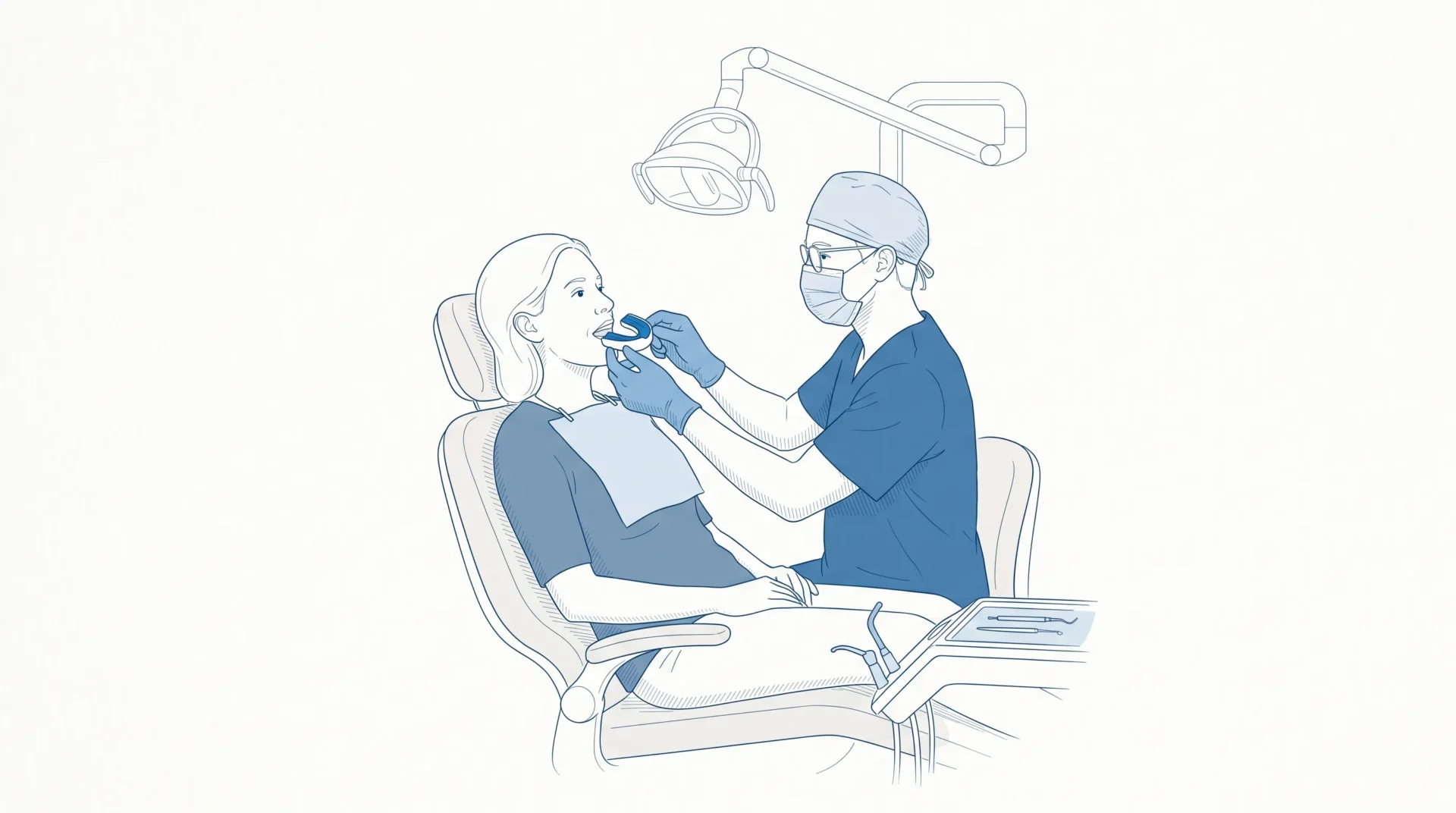
The process is usually straightforward, although exact steps can vary between clinics. Your dentist will assess the mouth first and ask about the sport or activity. They may also ask whether the mouthguard is for school sport, club sport, training, competition or a specific position where facial contact is more likely.
The dentist then takes a record of the teeth. This may involve a dental impression or a digital scan, depending on the clinic's equipment and the situation. The mouthguard is made to match that record. Once it is ready, it should be tried in and checked for comfort, retention and any rough edges.
If the person wearing the mouthguard has braces, a retainer, clear aligners, crowns, missing teeth or erupting adult teeth, the dentist may need to modify the design or recommend review sooner than usual. A clear aligner or retainer is not a substitute for a sports mouthguard because it is not designed to absorb sporting impacts.
Choosing a mouthguard for children and teenagers
Children's mouths change quickly. A mouthguard that fitted well last season may not fit well after adult teeth have erupted, baby teeth have fallen out or orthodontic treatment has started.
For school-aged children, a dentist-made mouthguard may be considered for contact sports, especially where regular training or competition is involved. The dentist can check for areas of pressure and make sure the mouthguard is not sitting awkwardly around loose baby teeth or erupting adult teeth.
Parents often ask whether it is worth making a custom mouthguard if their child is still growing. The answer depends on the sport, the child's mouth and how often they play. Some children may need more frequent replacement than adults, particularly during periods of dental change. Your dentist can explain the likely review schedule based on what they see during the appointment.
Braces, aligners and mouthguards
Orthodontic treatment needs extra care when choosing a sports mouthguard. Braces create raised surfaces on the teeth, and teeth may move throughout treatment. A tight mouthguard made without considering braces may not fit correctly or may place unwanted pressure on brackets and wires.
If you or your child wears braces, speak with your dentist or orthodontic provider before using any mouthguard. A mouthguard for braces may need extra space to fit over the appliances and allow for tooth movement. It may also need replacement or adjustment as treatment progresses.
Clear aligners are different from sports mouthguards. They are thin orthodontic trays designed to move teeth gradually. They are not designed for sporting impacts and should not be treated as protective sports equipment. If you wear aligners, ask your dentist what to do during training and games.
How to care for a dentist-made sports mouthguard
Good care helps keep a mouthguard hygienic and reduces the chance of it losing shape. Heat is one of the main things to avoid, particularly in summer or after sport in a hot car.
Simple care steps include:
- Rinse the mouthguard with cool water after use.
- Clean it gently with a soft toothbrush and mild soap when advised.
- Let it dry before placing it in a ventilated case.
- Keep it away from pets, young children and direct sunlight.
- Do not chew on it, as this can thin or distort the material.
- Bring it to dental check-ups so the fit and wear can be assessed.
Avoid washing a mouthguard in boiling water, putting it through a dishwasher or leaving it in a sports bag for long periods without cleaning. If it develops a persistent smell, cracks, holes or rough edges, have it checked before continuing to use it.
When should a sports mouthguard be replaced?
A mouthguard should be replaced when it no longer fits securely, feels uncomfortable, has visible damage or has changed shape. Children and teenagers may need replacement more often because their teeth and jaws are still developing.
Adults may be able to use a mouthguard for longer if their mouth is stable and the guard is cared for properly, but it should still be checked. Dental work such as fillings, crowns, implants or orthodontic treatment can change how a mouthguard fits.
Before the start of a season, it is sensible to inspect the mouthguard rather than assuming last year's one is still suitable. Dentalspa has a practical checklist on how to check your mouthguard if you are unsure what to look for.
What if a dental injury happens while wearing a mouthguard?
A mouthguard may reduce risk, but it cannot prevent every injury. If a tooth is chipped, loosened, moved or knocked out, arrange prompt dental advice. If a permanent adult tooth is knocked out, avoid scrubbing the tooth, handle it by the crown and seek dental care quickly. If there are serious facial injuries, heavy bleeding, breathing concerns or signs of concussion, seek emergency medical help.
For general guidance on common urgent dental situations, you can read Dentalspa's article on what to do in a dental emergency. Advice can vary depending on whether the injured tooth is a baby tooth or an adult tooth, so professional assessment is important.
Cost and practical considerations
The cost of a dentist-made mouthguard can vary depending on the design, materials, thickness, whether braces are involved and whether extra appointments are needed. Ask for a clear fee estimate before proceeding, including whether a fitting appointment is included.
Some families organise mouthguards before the school or club season begins so there is time for assessment, fabrication and fitting. If cost is a concern, ask the clinic what payment options may be available. It is reasonable to compare practical factors such as appointment times, location, replacement advice and how the finished mouthguard is checked.
Choosing a mouthguard is not only about the initial price. A mouthguard that fits poorly may spend more time in the sports bag than in the mouth. Comfort, retention and suitability for the sport are important parts of value.
Frequently asked questions
Is a dentist-made mouthguard worth it? A dentist-made mouthguard may be worthwhile if you or your child plays a contact sport, has had previous dental injuries, wears braces or finds store-bought mouthguards uncomfortable. Suitability depends on the individual mouth and the type of sport.
How long does it take to get a dentist-made sports mouthguard? Timing varies between clinics and laboratories. In many cases, it involves an assessment, an impression or scan, fabrication of the mouthguard and a fitting appointment. If you need it for a specific season or event, ask about timing when booking.
Can I use a boil-and-bite mouthguard instead? Some people use boil-and-bite mouthguards, but the fit can be less precise than a custom-made option. If the guard is loose, bulky, uncomfortable or difficult to breathe with, ask a dentist to check whether a different option may be more suitable.
Does a mouthguard protect against concussion? A sports mouthguard is designed mainly to help protect the teeth, lips, cheeks and gums. It should not be relied on as concussion prevention. If a head injury is suspected, follow the relevant sport and medical guidance.
Can children wear dentist-made mouthguards if their teeth are still changing? Yes, children can wear custom mouthguards, but they may need more frequent checks or replacement as teeth erupt and jaws grow. A dentist can assess the timing and fit.
Should I wear a mouthguard for training? If there is a risk of impact during training, wearing a mouthguard can be considered. Many accidental knocks happen outside formal games, especially during drills, practice matches and warm-ups.
Discussing a sports mouthguard with a Geelong dentist
A dentist-made sports mouthguard should be chosen based on fit, comfort, sport, age and oral health, not simply colour or price. A dental examination can help determine whether a custom mouthguard may be suitable and what design considerations apply.
To discuss a sports mouthguard for yourself or your child, you can contact Dentalspa Geelong to arrange an assessment. Your dentist can check the mouth, explain the potential benefits and limitations, and talk through suitable options before you decide how to proceed.
Disclaimer
The information provided on this website is for general informational and educational purposes only. It is not intended to replace professional dental advice, diagnosis or treatment. Dental needs and treatment outcomes vary between individuals. Always seek advice from a qualified dental practitioner regarding your specific circumstances before making decisions about your oral health or treatment. A consultation and clinical assessment are required to determine which treatment options may be suitable for you. All dental procedures carry potential risks and benefits, which will be discussed with you before treatment.