
When to See a Geelong Dentist for a Broken Tooth
17 August 2026 | Children's Dentistry, General Dentistry, Preventative Dentistry
A broken tooth is worth taking seriously, even if it seems small. If you are searching for 'dentist Geelong' after biting into something hard, having a sports knock or noticing a sharp edge, the safest next step is to arrange a dental assessment. Some breaks can wait for a routine appointment, but others need prompt care, especially if there is pain, swelling, bleeding or a loose tooth.
This guide cannot diagnose your tooth online, but it can help you decide how quickly to seek care, what to do while waiting and what a dentist may discuss at your appointment.
A broken tooth can mean several different things. It may be a small chip in the enamel, a crack running through the tooth, a broken filling, a fractured crown or a larger break that exposes the inner layers of the tooth. Pain is an important warning sign, but a tooth can still be damaged even if it does not hurt.
When to contact a Geelong dentist for a broken tooth
As a general rule, contact a dentist promptly if a tooth has chipped, cracked or broken. If the break is large, painful or linked to an injury, same-day advice is sensible where possible. If the tooth has only a tiny chip and there is no pain, you may not need emergency treatment, but you should still book a dental appointment so the tooth can be assessed.
The table below gives a practical guide to common broken tooth situations. Timing can vary depending on your symptoms, medical history and the details of the injury.
| Situation | Suggested timing | Why it matters |
|---|---|---|
| Severe tooth pain, facial swelling, fever or a bad taste in the mouth | Contact a dentist promptly, same day if possible | These symptoms may suggest nerve involvement or infection |
| Bleeding that will not settle, facial trauma, possible broken jaw, difficulty breathing or difficulty swallowing | Seek urgent medical care or call Triple Zero (000) if symptoms are serious | These signs may need hospital or emergency medical assessment |
| Adult tooth knocked loose or knocked out | Seek urgent dental advice as soon as possible | Early care may affect what options are available |
| A large piece has broken off or the inner yellow or darker layer is visible | Arrange prompt dental assessment | The tooth may be weakened or sensitive |
| Sharp edge cutting the tongue or cheek | Book a dental visit soon and protect the area temporarily if safe | Sharp enamel or filling material can irritate soft tissue |
| Small chip with no pain or sensitivity | Book a non-urgent dental appointment | The tooth may still need smoothing, sealing or monitoring |
| Broken filling, crown or veneer | Arrange a review rather than trying to repair it yourself | The tooth underneath may be exposed or vulnerable |
What to do before your dental appointment
If there has been a serious injury to the mouth, face or jaw, seek urgent medical advice. For less severe broken teeth, a few simple steps can reduce irritation until you are seen by a dentist.
- Rinse your mouth gently with warm water to clear debris.
- Place a cold compress on the outside of the cheek if there is swelling from an injury.
- Keep any broken tooth fragment, filling or crown in a clean container and bring it to the appointment.
- Avoid chewing on the affected side until the tooth has been assessed.
- Choose soft foods and avoid very hot, cold, hard or sticky foods if the tooth is sensitive.
- If there is a sharp edge, orthodontic wax or sugar-free chewing gum may be used as a short-term cover if it can be placed safely.
- Take non-prescription pain relief only if it is suitable for you and follow the label or pharmacist advice.
Do not put aspirin directly on the gum or tooth, as this can irritate the tissues. Do not use superglue, craft glue or household adhesives to reattach a tooth fragment, crown or filling. These products are not made for the mouth and can make dental treatment more difficult.
When a broken tooth is a dental emergency
Not every chip is an emergency, but some broken teeth should be treated as urgent. Seek prompt dental care if the tooth is very painful, bleeding, loose, displaced or broken after a significant knock. Swelling of the face or gum, fever, pus, a bad taste or difficulty opening the mouth can also require urgent assessment.
For general first aid information after a dental injury, healthdirect’s dental injury guidance is a useful Australian resource.
If you have difficulty breathing or swallowing, heavy bleeding, a major facial injury or symptoms that feel medically serious, call Triple Zero (000) or attend an emergency department. A dental clinic can assess the tooth, but some injuries need medical care first.
Common reasons teeth break
Teeth are strong, but they can still fracture. A tooth may break after a direct knock during sport, a fall or an accident. It can also break when biting something hard, especially if the tooth already has a large filling, decay or an existing crack.
Grinding or clenching can place repeated pressure on teeth over time. Acid wear, tooth decay and older restorations may also weaken tooth structure. Sometimes a tooth breaks without a dramatic event because a small crack has slowly developed.
A dental examination is useful because the visible chip may not show the full extent of the problem. Your dentist may need to check the bite, the gum around the tooth, the condition of existing fillings and whether the nerve inside the tooth has been affected.
What your broken tooth appointment may involve
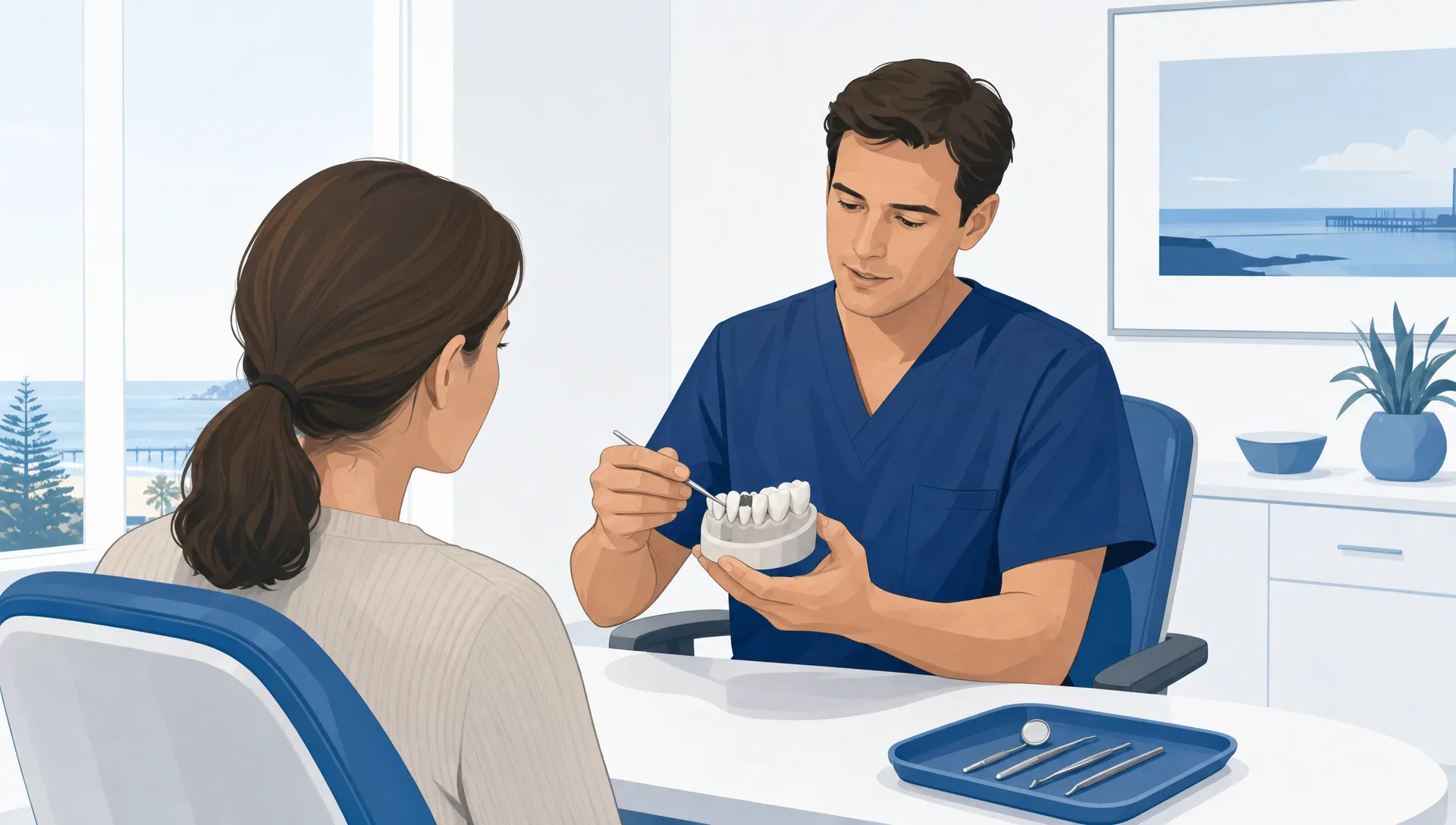
At your appointment, the dentist will usually ask what happened, when it happened and whether you have pain, sensitivity or swelling. They may examine the tooth, gums, bite and nearby teeth. Dental X-rays may be recommended if the dentist needs to check the root, bone level, decay, the depth of a crack or whether the tooth has been affected by trauma.
Depending on the situation, your dentist may smooth a sharp edge, place a temporary dressing, discuss pain management, repair the tooth or plan a more involved restoration. In some cases, the first visit focuses on making the tooth more comfortable and gathering the information needed for a treatment plan.
If dental visits make you anxious, mention this when booking or at the start of the appointment. A calm explanation of what is being checked and why can make the process easier to follow. Your dentist can also explain the potential benefits, limitations, risks and alternatives before treatment proceeds.
Possible treatment options for a broken tooth
Treatment depends on how much tooth structure is missing, whether the nerve is involved, the position of the tooth, your bite, your oral health and your preferences. The same-looking chip can sometimes need different care in different people.
| Possible option | When it may be discussed | Important limitations |
|---|---|---|
| Smoothing or polishing | Very small chips with no sensitivity or structural concern | Does not replace missing tooth structure and may not suit larger breaks |
| Dental bonding or filling | Small to moderate chips or broken filling areas | Filling material can wear, stain or chip over time |
| Inlay, onlay or crown | Larger breaks, heavily filled teeth or teeth needing more coverage | Requires enough healthy tooth structure and may involve more than one visit |
| Root canal therapy with a restoration | If the nerve inside the tooth is inflamed, infected or exposed | Not suitable for every tooth and further restoration is usually needed |
| Extraction | If the tooth is not restorable or the crack extends too far | Replacement options can be discussed, but suitability varies |
| Replacement options such as a bridge, denture or implant | If a tooth has to be removed | Each option has different risks, maintenance needs, costs and suitability factors |
Your own recommendation should come from an examination, not from a general article, because tooth cracks and fractures can be difficult to judge without clinical testing and X-rays.
All dental procedures carry potential risks and benefits. Possible issues may include sensitivity, the need for further treatment, restoration wear, fracture progression, infection or in some cases loss of the tooth. Your dentist can explain which risks are most relevant to your situation.
Does a child with a broken tooth need to see a dentist?
Children should be assessed after a broken tooth, especially if the break followed a fall, sports injury or knock to the mouth. Baby teeth and adult teeth are managed differently, so it is worth getting dental advice rather than assuming the tooth will be fine because it is not permanent.
If a baby tooth is knocked out, do not try to put it back in the socket unless a dental professional specifically directs you to do so. Replacing a baby tooth can risk damaging the developing adult tooth underneath. If an adult tooth is knocked out, urgent dental advice is needed as soon as possible.
Children may not always describe pain clearly. Watch for swelling, bleeding, a darkening tooth, avoiding food, trouble biting or sensitivity to temperature. A dentist can check whether the tooth, gum or developing adult tooth needs monitoring or treatment.
Should you wait if the broken tooth does not hurt?
A lack of pain is reassuring, but it does not always mean the tooth is healthy. Enamel, the hard outer layer of the tooth, does not regrow after it breaks. A small chip may remain stable, but a crack can sometimes spread or allow bacteria to reach deeper areas.
Waiting can also make the tooth more likely to irritate the tongue or cheek, collect plaque around a rough edge or become sensitive later. If the break is minor, the dentist may simply smooth it or monitor it, but that decision is best made after an assessment.
If you are unsure whether a chip is urgent, calling the clinic and describing your symptoms can help determine the most appropriate appointment timing. Mention pain level, swelling, bleeding, how the injury happened and whether the tooth feels loose or sharp.
Choosing who to call in Geelong
When you are comparing options for a broken tooth, practical details matter. Look for a dental clinic that can explain appointment availability, what to bring, whether emergency dental care may be available and what information is needed when you call. If you live or work around Newtown, Geelong West, East Geelong, Belmont or Highton, location may also affect how easily you can attend follow-up visits.
If your search starts online, remember that visibility in search results is not the same as clinical suitability. Clear dental websites can make practical information easier to find, and some practices use healthcare practice marketing services to improve how patients find appointment information online. Your treatment decision should still be based on a dental assessment, a clear explanation of options and an opportunity to ask questions.
It is reasonable to ask what may happen at the first visit, whether X-rays might be needed and whether temporary care can be provided if a final restoration cannot be completed straight away. You can also ask about fees, payment options and whether a written treatment plan can be provided before more complex treatment.
What about cost?
The cost of treating a broken tooth can vary because the treatment can range from smoothing a tiny chip to repairing a large fracture or replacing a tooth that cannot be restored. Factors that may affect fees include the type of appointment, whether X-rays are required, the size and location of the break, the materials used, the number of visits and whether additional care such as root canal therapy is needed.
Before proceeding with treatment, ask what is included, what alternatives may be available and whether there are staged options if the tooth needs more than a simple repair. Dental Spa offers payment options, and the team can discuss these with you where relevant to your treatment plan. If the appointment is for a child, you can also ask whether any government dental benefit arrangements may apply to your circumstances.
Frequently asked questions
Can I leave a broken tooth overnight? If the chip is small, there is no pain, no swelling and no bleeding, it may be reasonable to wait until the next available appointment. Seek urgent advice if the tooth is painful, loose, bleeding, broken after trauma or associated with swelling or fever.
Can a broken tooth heal by itself? The broken enamel or filling will not grow back on its own. Symptoms may settle temporarily, but the tooth should still be assessed so a dentist can check whether repair, monitoring or further treatment is appropriate.
Will I need a crown or root canal? Not always. Small chips may only need smoothing or a filling, while deeper breaks may require a crown, root canal therapy or another option. Whether the nerve is involved is one factor your dentist will assess.
Can I use a pharmacy temporary filling kit? Temporary dental materials may reduce irritation in some situations, but they are not a replacement for an examination. Follow the product instructions carefully and avoid using any material if it increases pain or does not sit safely.
What if a crown, veneer or filling has broken rather than the tooth itself? Keep the broken piece if possible and avoid chewing on that side. Do not glue it back yourself. The dentist can check whether the restoration can be repaired or whether the tooth underneath needs treatment.
Need a broken tooth assessed in Geelong?
A broken tooth is easier to manage when the cause, depth and stability of the fracture are properly assessed. To discuss your symptoms and appointment options, you can contact Dental Spa to arrange a dental assessment in Geelong.
If you have severe pain, facial swelling, heavy bleeding, a knocked-out adult tooth or symptoms after a significant injury, seek urgent dental or medical advice rather than waiting for a routine appointment.
Disclaimer
The information provided on this website is for general informational and educational purposes only. It is not intended to replace professional dental advice, diagnosis or treatment. Dental needs and treatment outcomes vary between individuals. Always seek advice from a qualified dental practitioner regarding your specific circumstances before making decisions about your oral health or treatment. A consultation and clinical assessment are required to determine which treatment options may be suitable for you. All dental procedures carry potential risks and benefits, which will be discussed with you before treatment.