
How to Prepare Your Child for Their First Dental Visit
8 September 2026 | Children's Dentistry, Preventative Dentistry, Tooth Decay
If you’re organising your child’s first kids dental appointment, a little preparation can make the day feel more familiar for everyone. The goal is simple: help your child understand that the dentist is a normal part of looking after their body, much like visiting a GP, maternal and child health nurse or optometrist.
Most first visits are gentle and short. Your child may sit in the dental chair, meet the dentist, have their teeth counted and let the dentist check their gums, bite and oral development. Some children cooperate easily, some need time and some only manage a quick look on the first day. That is still useful.
For families in Geelong, including Newtown, Geelong West, East Geelong, Belmont and Highton, the first visit is also a chance for parents to ask practical questions about brushing, toothpaste, diet, thumb sucking, dummy use, tooth grinding or dental benefits.
When should your child first see a dentist?
Many Australian dental organisations recommend a first dental visit when the first tooth appears or by around 12 months of age. This may sound early, but baby teeth can be affected by decay and early visits help parents get advice before problems develop.
If your child is already older and has not been yet, it is not too late. A first visit at toddler, preschool or school age can still be a helpful starting point. Your dentist can assess your child’s mouth and suggest a review schedule based on their individual risk factors, oral hygiene, diet, medical history and development.
Dentalspa Geelong has a separate guide on when an infant should first visit the dentist if you are preparing for a baby or toddler’s first appointment.
Why early kids dental visits are helpful
A calm first appointment is not only about checking teeth. It can also help your child become familiar with the dental setting before they have a sore tooth or an urgent concern. Children often cope better when the sights, sounds and people are not completely new.
Early visits may help your dentist identify issues such as:
- Early signs of tooth decay
- Problems with brushing technique or plaque build-up
- Gum irritation
- Tooth wear from grinding
- Delayed or unusual tooth eruption
- Bite or jaw development concerns
- Effects of thumb sucking, dummy use or mouth breathing
Not every child will need treatment. In many cases, the appointment is mainly a check-up, conversation and prevention plan. If a clean, fluoride application or X-ray is suggested, your dentist should explain why it may be recommended, what alternatives exist and whether it is suitable for your child.
Before the kids dental visit: what to do at home
Preparation works best when it feels ordinary, not like a major event. Try to start a week or two before the appointment so there is time for your child to ask questions without feeling rushed.
Use simple, neutral language. You might say, “The dentist is going to count your teeth and check how strong they are.” Avoid saying things like “it won’t hurt” or “don’t be scared”, because children often focus on the words “hurt” and “scared”. If your child asks whether something will feel strange, you can answer honestly: “It might feel a bit tickly or different, and you can let us know if you need a pause.”
Pretend play can also be useful. Take turns being the dentist and the patient with a toothbrush and a mirror. Count teeth, open and close mouths and practise sitting still for a short time. Keep it light and stop before your child loses interest.
Books, videos made for children and role-play toys can help some children understand the sequence of events. Choose resources that show routine check-ups rather than dramatic dental treatment.
| Timing | What you can do | Why it may help |
|---|---|---|
| 1 to 2 weeks before | Mention the appointment in a calm, matter-of-fact way | Gives your child time to become familiar with the idea |
| A few days before | Practise opening wide, counting teeth and brushing together | Builds confidence with the same actions used at the dentist |
| The day before | Pack any forms, Medicare details, comfort item or medication list | Reduces stress on the day |
| Appointment day | Allow extra travel time and choose comfortable clothing | Helps your child arrive settled rather than rushed |
Choose the right appointment time
The best appointment time is usually when your child is fed, rested and not rushing from childcare, kinder or school. For babies and toddlers, this may mean avoiding nap time. For some school-age children, a morning appointment works better than the end of a busy day.
If your child is nervous, sensitive to sounds or has additional needs, mention this when booking. The dental team may be able to allow extra time, suggest a quieter appointment time or note helpful communication preferences. A clinical setting can feel overwhelming for some children, and planning ahead may make the experience more manageable.
It can also help to keep the rest of the day simple. Try not to schedule too many activities around the appointment, especially if this is your child’s first time.
What usually happens during a first dental visit?
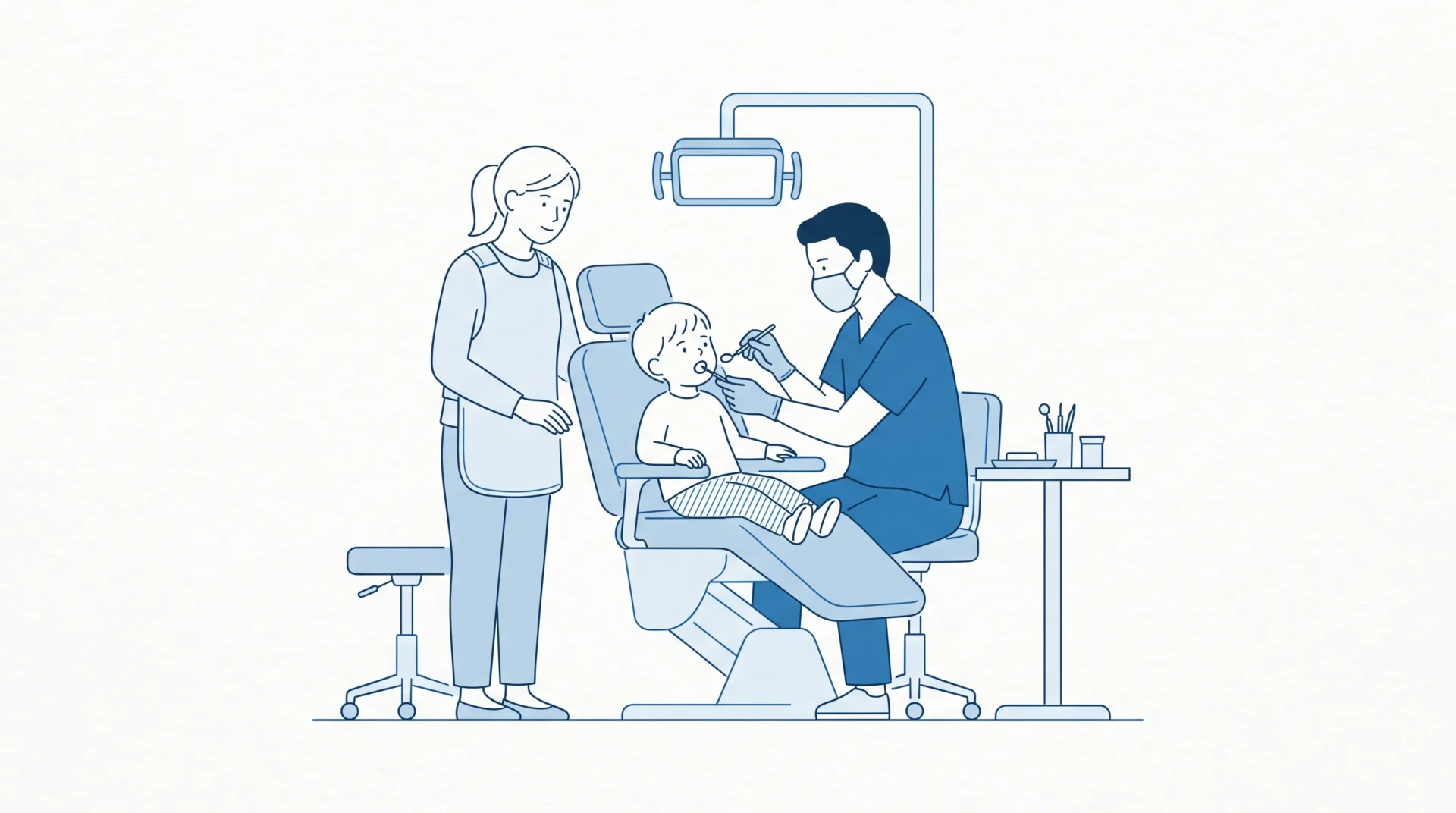
Every child is different, so the appointment may be adapted to their age and comfort level. A baby may be examined while lying on a parent’s lap. A preschooler may sit in the chair for a ride first. An older child may be comfortable with a more complete examination.
A first appointment may include:
- A chat about your child’s medical history, medications, allergies and previous dental experiences
- A look at the teeth, gums, tongue, lips, jaw and bite
- Counting teeth and checking how baby teeth or adult teeth are coming through
- Advice about brushing, flossing, toothpaste and diet
- Discussion about habits such as thumb sucking, dummy use or tooth grinding
- A clean or fluoride treatment if appropriate for your child
- X-rays only if clinically indicated and discussed with you
A dental examination is not a test your child needs to pass. If they only allow a brief look, the visit can still help build familiarity. Your dentist may suggest another review or a gradual approach depending on your child’s needs.
What parents can do during the appointment
Children often look to their parent or carer for cues. If you appear calm and matter-of-fact, your child may feel more settled. This does not mean you need to hide your own nerves, but try to keep your voice slow and reassuring.
Let the dental team explain what they are doing in child-friendly language. If your child asks you a question, answer simply, then allow the dentist to guide the next step. Too many adults talking at once can be confusing for young children.
Praise cooperation rather than results. For example, “You did a great job sitting in the chair” is more helpful than focusing on whether the appointment was “good” or “bad”. If your child becomes upset, it is usually better to pause, acknowledge their feelings and give them time rather than pushing through unnecessarily.
Some children like to bring a comfort item, such as a small toy or soft blanket. If it helps them feel secure and does not interfere with care, this can be a sensible option.
How to prepare an anxious child
It is common for children to feel unsure before their first dental visit. They may be worried about the chair, mask, gloves, bright light or unfamiliar instruments. Some children are also influenced by a parent’s previous dental experiences or comments they have heard from older siblings.
Try these gentle strategies:
- Visit the clinic website together so the building or booking process feels less unknown
- Practise breathing slowly before opening wide
- Agree on a simple stop signal, such as raising a hand
- Use short, honest explanations rather than long warnings
- Avoid offering big rewards that make the appointment seem scary or unusual
- Tell the clinic beforehand if your child has sensory sensitivities, developmental needs or strong dental anxiety
If your child has had a previous difficult healthcare experience, let the dental team know. A gradual first kids dental visit may focus mainly on relationship-building and a simple visual check. Your dentist can then discuss what may be appropriate next, including whether future appointments need extra time or a modified approach.
Brushing and food habits before the first visit
You do not need to overhaul your child’s routine before the appointment. In fact, it is more useful for the dentist to understand what is currently happening at home so advice can be realistic.
Bring up any challenges honestly. Many families find toothbrushing difficult, especially with toddlers. Your dentist can show positioning techniques, suggest age-appropriate brushing habits and discuss whether flossing is needed. For more detail on home prevention, Dentalspa has practical guidance on how to prevent dental decay in children.
Food and drink habits can also affect children’s teeth. Frequent snacking, sipping sweet drinks and going to bed with milk or juice may increase the risk of decay. This does not mean parents should feel blamed or judged. Dental advice should be practical and tailored to your child’s routine, culture, age and health needs.
Will my child need a dental clean?
Not always. Some first visits are mainly an examination and parent discussion. A clean may be suggested if there is plaque or staining, or if your child is old enough and comfortable enough for it to be useful.
A children’s clean is usually different from an adult clean. It may involve polishing the teeth with a small rotating brush and paste, removing plaque or discussing brushing technique. Your dentist should explain what is recommended and why. You can read more about what parents should know about children’s dental cleans if you want to understand this part of care before the appointment.
As with any dental procedure, a clean, fluoride application or X-ray should be recommended based on your child’s clinical needs. Benefits, limitations and possible risks should be discussed where relevant.
Costs, Medicare and children’s dental benefits
Before the appointment, it can be helpful to check whether your child is eligible for the Child Dental Benefits Schedule, often called CDBS. This Australian Government program provides access to benefits for basic dental services for eligible children. Eligibility rules, limits and covered services can change, so it is worth checking current information through Services Australia.
Dentalspa Geelong also has a guide to checking your child’s dental benefits which may help you understand what details to have ready before booking.
If your child is not eligible for CDBS or if a service is not covered, ask the clinic about fees and payment options before treatment proceeds. This gives you time to make an informed decision without pressure.
After the appointment: keep it simple
After the visit, keep your response calm and positive, even if your child found parts of it hard. Focus on what they managed. You might say, “You sat in the chair and opened your mouth for a little while. That helped the dentist check your teeth.”
If the dentist gives brushing, diet or follow-up advice, choose one or two actions to start with. Trying to change everything at once can be difficult for families. Small, consistent routines are often more realistic than a complicated plan.
If another appointment is recommended, ask why, what it may involve and whether there are alternatives. A clinical assessment is needed before any treatment decision, and suitability depends on your child’s oral health, age, cooperation, medical history and individual circumstances.
When to seek dental advice sooner
Some children need dental care before a planned routine visit. Arrange professional advice if your child has tooth pain, facial swelling, a broken tooth, bleeding that does not settle, trauma to the mouth, difficulty eating because of a tooth or a pimple-like swelling on the gum.
If your child has facial swelling with fever, feels very unwell or has difficulty breathing or swallowing, seek urgent medical care. These symptoms should not wait for a routine dental appointment.
Frequently asked questions
What age should a child have their first dental visit? Many Australian dental sources suggest the first visit when the first tooth appears or by around 12 months of age. If your child is older, a first appointment is still worthwhile and your dentist can advise on future visits.
What should I say before a first kids dental appointment? Keep your language simple and neutral. Tell your child the dentist will count their teeth, check their mouth and talk about brushing. Avoid frightening words or long explanations that may create worry.
Will my child need treatment at the first visit? Not necessarily. Many first visits involve an examination, advice and familiarisation. If treatment is suggested, your dentist should explain the reason, possible benefits, risks and alternatives before you decide.
What if my child refuses to open their mouth? This can happen, especially with toddlers or anxious children. The visit may still help them become familiar with the clinic. Your dentist may suggest a shorter review, gradual approach or another appointment.
Can parents stay in the room? In many children’s dental appointments, a parent or carer can stay with the child. The approach may depend on your child’s age, the appointment type and clinical needs.
Arranging a first visit in Geelong
A first dental visit is mainly about checking your child’s oral health, answering your questions and helping your child become familiar with dental care. It does not need to be rushed or overly complicated.
If you would like to discuss your child’s first appointment, you can book an appointment with Dentalspa Geelong. A dental examination can help determine your child’s current needs and what options may be appropriate for their age, comfort level and oral health.
Disclaimer
The information provided on this website is for general informational and educational purposes only. It is not intended to replace professional dental advice, diagnosis or treatment. Dental needs and treatment outcomes vary between individuals. Always seek advice from a qualified dental practitioner regarding your specific circumstances before making decisions about your oral health or treatment. A consultation and clinical assessment are required to determine which treatment options may be suitable for you. All dental procedures carry potential risks and benefits, which will be discussed with you before treatment.