
When Should an Infant First Visit the Dentist?
24 August 2026 | Children's Dentistry, Preventative Dentistry, Tooth Decay
Most babies should have their first dental visit when their first tooth appears or by around 12 months of age, whichever comes first. If you are searching for an infant dentist in Geelong, you may simply be looking for a dentist who is comfortable checking babies and guiding parents through early oral care.
The first visit is usually short, gentle and focused on prevention. It is not about doing unnecessary treatment. It gives your dentist a chance to check how your baby’s teeth and gums are developing, answer feeding and brushing questions and help you feel more confident caring for tiny new teeth at home.
The Australian Dental Association’s public oral health site, Teeth.org.au, explains that a child’s first dental visit should happen when the first tooth appears or by the first birthday.
Why babies should see a dentist so early
It can feel surprising to book a dental appointment before your child can talk, sit still for long or has many teeth. Early dental visits are mainly about preventing problems and helping parents understand what is normal.
Baby teeth matter because they help children chew, learn speech sounds and hold space for adult teeth. They can also develop decay soon after they erupt. Early decay may look like chalky white patches, yellow or brown marks near the gumline or changes in the shape of the tooth surface.
A first dental visit can also help your baby become familiar with the dental setting before they associate it with a problem. For many families, a calm introduction makes future check-ups feel more routine.
What does an infant dentist check?
An infant dentist appointment is usually different from an adult check-up. The dentist understands that a baby may wriggle, cry, want a feed or need to sit on a parent’s lap. That is expected and does not mean the appointment has gone badly.
During an infant dental check, your dentist may assess:
- Which teeth have erupted and whether the timing appears within a normal range
- The gums, lips, tongue and soft tissues of the mouth
- Early signs of tooth decay or enamel concerns
- Brushing habits and whether toothpaste is appropriate for your child’s age
- Feeding patterns that may affect teeth, including bottles, breastfeeding and overnight feeds
- Teething symptoms and ways to keep your baby comfortable
- Any history of falls, bumps or dental injuries
- Whether your child may need follow-up sooner than a routine visit
Your dentist will not diagnose your baby without an examination, and advice should always be tailored to your child’s health, development and circumstances.
When should you book sooner than planned?
You do not need to wait until 12 months if you notice something unusual or have a concern. A dental appointment can help determine whether the issue is part of normal development or needs care.
| Situation | Why a dental check may be helpful |
|---|---|
| A tooth appears very early or looks unusual | Your dentist can check tooth shape, enamel and eruption pattern. |
| White, yellow, brown or rough patches appear on teeth | These can be early signs of enamel change or decay and should be assessed. |
| Your baby has a fall or knocks a tooth or gum | Even if the tooth looks fine, a dentist can check for injury. |
| Swelling, bleeding, pus or facial swelling is present | These symptoms need prompt professional assessment. |
| Feeding seems affected by mouth discomfort | A dentist or other health professional can help assess possible causes. |
| You are unsure how to clean new teeth | Early advice can reduce confusion and support daily care. |
If your baby has facial swelling, fever, significant bleeding, a knocked-out tooth, severe distress or you are concerned about their general health, seek prompt medical or dental advice.
What happens at a baby’s first dental appointment?
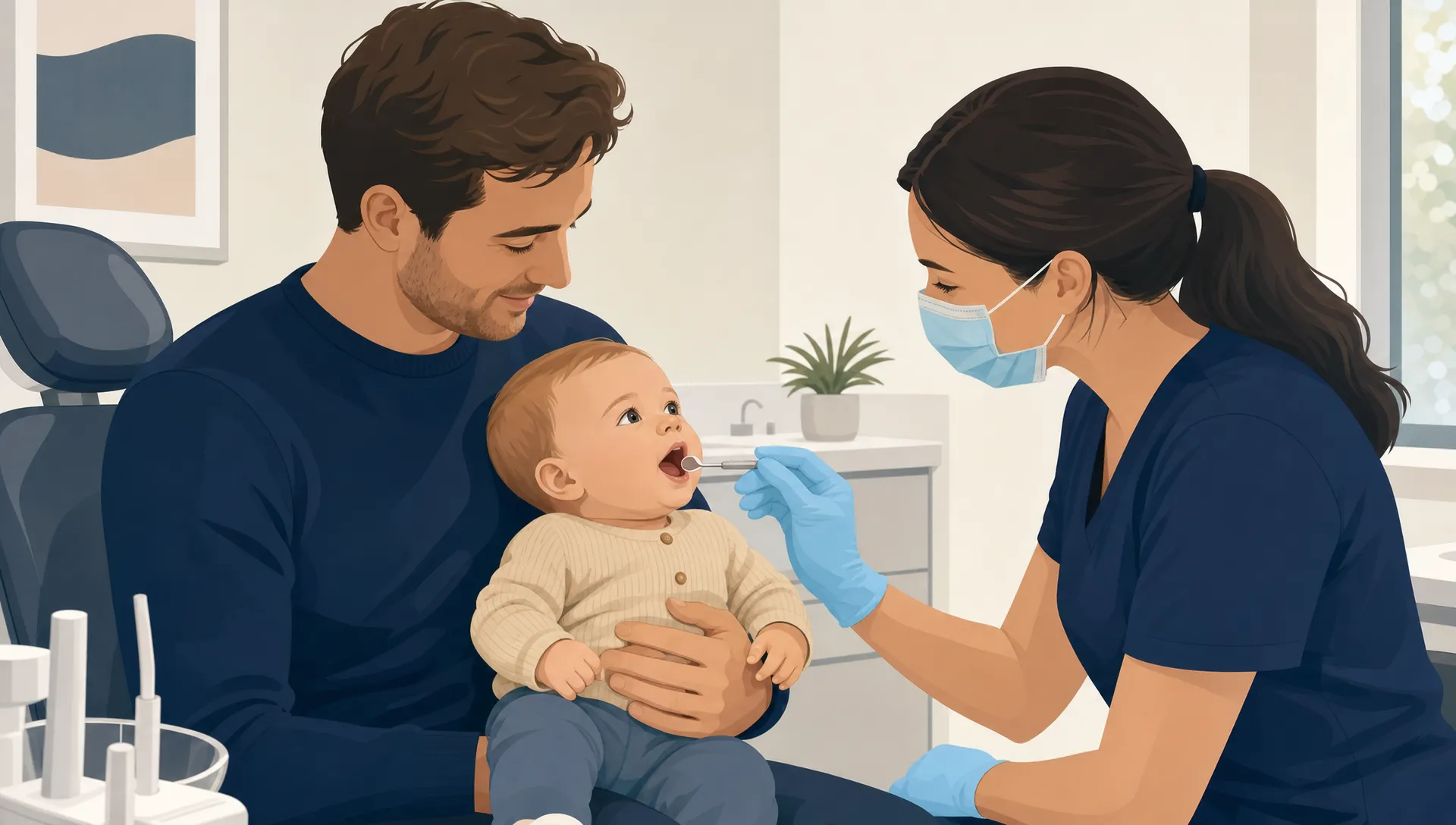
A baby’s first dental visit is usually simple. The dentist may ask questions about your child’s medical history, birth history where relevant, feeding, brushing, teething and any concerns you have noticed.
Many infant checks are done with the baby sitting on a parent’s lap. Some dentists use a knee-to-knee position, where the parent holds the baby facing them and gently lowers the baby back so the dentist can see into the mouth. This can feel unusual the first time, but it allows the dentist to look quickly and safely while the parent stays close.
The dentist may use a small mirror and light to check the teeth and gums. They may also show you how to lift the lip to look along the gumline, where early changes can be easier to miss.
If a concern is found, your dentist can explain the possible options, benefits, limitations and risks. Treatment is not automatically needed just because a baby attends. Often, the main outcome is practical advice and a plan for review.
How to prepare for an infant dental visit
You do not need to do anything elaborate before your baby’s first appointment. A few small steps can make the visit easier for you and your child.
Try to choose an appointment time when your baby is usually fed, rested and less likely to be unsettled. Bring a dummy, comfort item, spare nappy and any medical details your dentist should know. If your baby has a favourite toy or blanket, it is fine to bring it.
It can also help to keep your own language calm and matter-of-fact. Babies pick up on tone even before they understand words. For older babies and toddlers, simple play at home can help them become familiar with opening their mouth and having teeth counted. Dental Spa has more practical ideas in this guide on preparing your child for their first check-up.
Before the visit, write down any questions you want to ask. Common questions include when to start toothpaste, what to do about teething, whether night feeds are affecting teeth and how often your child should return.
Caring for your baby’s teeth before and after the first visit
Oral care starts before a baby has a full set of teeth. Once the first tooth appears, gently clean it twice daily with a soft baby toothbrush. In Australia, guidance generally recommends using water only for children under 18 months unless a dental professional advises otherwise. From 18 months, a low-fluoride children’s toothpaste may be recommended, depending on your child’s needs.
Avoid putting a baby to bed with a bottle containing milk, formula, juice or sweet drinks. If your baby uses a bottle, try not to let them sip from it over long periods once teeth have appeared. For toddlers, encouraging water between meals and limiting frequent sugary snacks can help reduce decay risk.
Breastfeeding, bottle feeding and solids are individual areas for many families, and your dentist should provide advice without judgement. The aim is to help you understand how feeding patterns, tooth eruption and cleaning all work together.
If you are noticing early marks on baby teeth or want more prevention tips for older children, Dental Spa’s article on how to prevent dental decay in children covers brushing routines, diet and regular dental care in more detail.
How often should an infant see the dentist after the first visit?
There is no single recall schedule that suits every child. Some babies and toddlers may only need routine reviews, while others benefit from being checked more often because of early decay signs, enamel concerns, medical factors, feeding patterns or family history.
Your dentist can recommend a review interval after assessing your child’s mouth and risk factors. If you are planning care for more than one child, this guide on how often children should attend the dentist explains why recall timing is usually based on individual needs rather than age alone.
Regular dental visits should not replace daily home care. The main protection for baby teeth comes from consistent brushing, appropriate fluoride use, sensible snacking habits and seeking advice early if something changes.
Finding an infant dentist in Geelong
For parents in Geelong, Newtown, Geelong West, East Geelong, Belmont, Highton and surrounding areas, it can be useful to choose a dental clinic that sees children regularly and explains care in plain language. A baby’s first dental visit should feel unhurried enough for you to ask questions, even if the actual mouth check is brief.
When choosing a dentist for an infant, you may want to ask:
- Does the clinic see babies and toddlers for early dental checks?
- Can a parent stay with the child during the appointment?
- What should I bring to the first visit?
- Does the clinic discuss brushing, feeding and teething advice?
- Are payment options or the Child Dental Benefits Schedule relevant to my child?
The Child Dental Benefits Schedule is an Australian Government program that may help eligible children access basic dental services. Eligibility and coverage can change, so it is best to check the current details through Services Australia or ask the clinic before booking.
Dental Spa in Geelong provides children’s dentistry alongside general, emergency and cosmetic dental care. If your baby is due for their first visit or you have noticed a concern, a dental examination can help clarify what is happening and what, if anything, should be done next.
Frequently asked questions
Can a baby go to the dentist before they have teeth? Yes, if you have concerns about the gums, mouth, feeding, injury or development. For routine care, many babies first attend when the first tooth appears or by around 12 months.
Is it normal for my baby to cry during the appointment? Yes. Crying or wriggling is common and does not mean the visit has failed. Dentists who see infants expect this and usually keep the check brief and gentle.
What if my baby’s first tooth has not come through by 12 months? Tooth eruption timing varies. If no teeth have appeared by around 12 months, a dental check can help assess development and guide whether any follow-up is needed.
Does an infant dental visit include treatment? Usually it is an examination and parent guidance. If your dentist identifies a concern, they can explain suitable options, including the possible benefits, risks and alternatives. A clinical assessment is needed before any treatment is recommended.
Should I clean my baby’s gums before teeth appear? You can gently wipe the gums with a clean, damp cloth if you wish. Once the first tooth appears, brushing with a soft baby toothbrush becomes important.
Booking your baby’s first dental visit in Geelong
If your baby’s first tooth has appeared, your child is approaching their first birthday or you have noticed a change in their mouth, you can arrange an assessment with Dental Spa in Geelong. The dentist can check your child’s teeth and gums, answer your questions and explain what ongoing care may be appropriate for your family.
For individual advice, book an appointment with Dental Spa and bring any concerns you would like to discuss. Treatment recommendations, if needed, will depend on your child’s oral health, medical history and personal circumstances.
Disclaimer
The information provided on this website is for general informational and educational purposes only. It is not intended to replace professional dental advice, diagnosis or treatment. Dental needs and treatment outcomes vary between individuals. Always seek advice from a qualified dental practitioner regarding your specific circumstances before making decisions about your oral health or treatment. A consultation and clinical assessment are required to determine which treatment options may be suitable for you. All dental procedures carry potential risks and benefits, which will be discussed with you before treatment.